Studying at Yonsei can mean very different things. You might be applying for a four-year degree, considering the English-language Underwood International College, spending a semester on exchange, or coming mainly to learn Korean. The university name is shared; the admissions route, tuition bill, campus and classroom experience are not.
That distinction matters before you choose accommodation or start imagining a daily routine in Sinchon. Some international freshmen begin in Songdo, in Incheon. Exchange students face course restrictions that do not apply in the same way to degree students. A Korean Language Institute acceptance is a language-course acceptance, rather than a place in a Yonsei degree.
This guide separates those routes using Yonsei's official sources, including its March 2027 international undergraduate guide, UIC information and Fall 2026 exchange course rules. Fees are labeled by the year and program they cover. Use the appropriate current intake notice before applying; a published guide to one route cannot settle another route's requirements.
Choose your Yonsei route first
A full undergraduate degree through international admission
The general international undergraduate route is for students seeking a Yonsei bachelor's degree in the majors offered through that admission track. The March 2027 guide requires the applicant and both parents to hold non-Korean nationality and sets educational and documentation requirements. Korean descent, changes of nationality and unusual school systems need the guide's detailed eligibility review, rather than a quick assumption based on the passport you currently hold.
This route is separate from UIC. It also includes a separately described Global Leaders College international track. Check the actual major list, the track you are applying through and any department-specific language requirement. For example, the March 2027 guide gives medicine, dentistry, nursing and pharmacy applicants a higher Korean-language evidence requirement than its broad language-evidence options for other majors.
Underwood International College
UIC describes itself as an English-language, four-year liberal arts institution. Its organization includes the Underwood Division, the Humanities, Arts and Social Sciences Division, and the Integrated Science and Engineering Division. An applicant should choose the academic division and available major that fit their interests, rather than treating UIC as an English version of every department at Yonsei.
The UIC overview, division pages and major-specific degree requirements are the useful starting points. UIC has its own application information and tuition schedule. Its scholarship policy is also specific to UIC; it cannot be carried over to general international admission or to the language institute.
Exchange for a semester or academic year
Yonsei defines exchange students as students nominated by an overseas university under a bilateral exchange agreement. The application begins with your home university's international office. Having Yonsei on a general partner list is not enough to establish your own eligibility: the agreement, available places, nomination and any subject restrictions still matter.
Yonsei's exchange page says tuition is paid to the home university, with its application and documentation fee waived in most cases. That does not make the semester free. You still need to check your home tuition, insurance, accommodation, travel and any charges handled by your home institution or a provider. Your home university also decides how the Yonsei courses will count toward your degree.
Visiting study
Visiting study is a different non-degree route. Use the visiting-student information for its current eligibility, application and fee rules. Do not enter an exchange tuition waiver into a visiting-student budget. If a provider arranges the program, identify which amounts are Yonsei charges and which are the provider's charges before comparing offers.
Exchange and visiting students share important academic rules in the Study Abroad at Yonsei program, but that does not make their application or billing arrangements identical. Nor does completing a semester through either route automatically transfer you into a Yonsei degree program.
Korean-language study
Yonsei's Korean Language Institute, usually called KLI, offers a regular intensive program and other separately organized courses. Choose the exact program before discussing price, housing or visa documentation. This guide's KLI figures refer to the regular intensive program, rather than a summer course, an online class or a Korean class taken through exchange.
KLI can be a sensible choice for someone whose main purpose is Korean study. It can also support preparation for a later application. Admission to a degree remains a separate decision, with separate academic eligibility, language evidence, documents and deadlines.
Sinchon, Songdo and MIRAE are different campus decisions
Yonsei's Sinchon campus is in Seoul. Its International Campus is in Songdo, Incheon. MIRAE Campus is a separate Yonsei campus in Wonju, with its own relevant admissions and program information. This article focuses on the Sinchon and International Campus routes described in the sources below; its tuition and application details should not be reused for a MIRAE application.
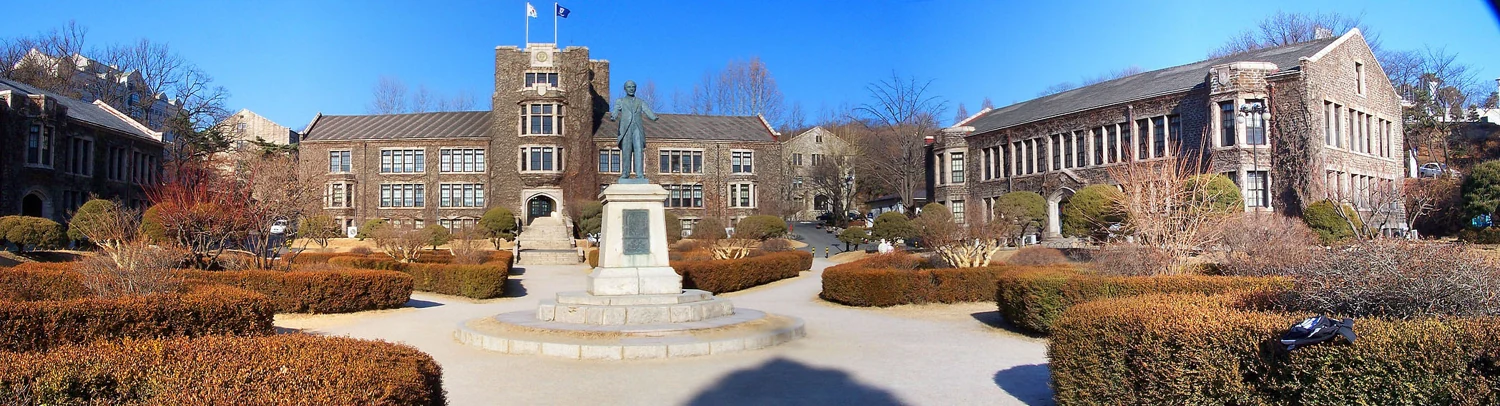
Campus is more than a line in a brochure. It determines where you attend class, which housing office you use and whether a Seoul apartment makes sense for your timetable. A photograph of Yonsei's familiar stone buildings in Sinchon does not establish where your first year will take place.
For UIC, the academic-life page states that all freshmen spend their first year at the International Campus in Songdo. The Underwood Division page is more specific about the next stage: its students move to Sinchon from their second year. Do not use that Underwood Division pattern as a rule for every other UIC division. Check the division's current curriculum and your cohort's arrangements before choosing a long lease.
The March 2027 general international undergraduate guide describes a first-year Global Basic Education Division arrangement at the International Campus. It lists exceptions: medicine, dentistry, nursing and pharmacy students are not affiliated with that division, while Physical Education and Sport Industry Studies students belong for one semester. Later campus location varies by major. These are cohort-specific general-admission arrangements, not UIC or exchange instructions.
For exchange and visiting study, the Fall 2026 academic rules prohibit registration for courses at the International Campus. That is a particularly useful correction to a common planning mistake: a course appearing somewhere in Yonsei's catalog does not make it available to a Sinchon exchange student.
Plan your housing around the campus confirmed for your actual classes. Use a map and a realistic timetable to test the journey, including morning classes and the return after evening activities. We have not verified a universal Sinchon-to-Songdo journey time, and it would not be a reliable basis for every student's housing decision.
How realistic is studying in English?
For a degree seeker, UIC is the clearest English-language route in the materials reviewed here. UIC describes its classes as conducted in English and publishes its Common Curriculum and division-specific degree requirements. Read those requirements for your entry cohort and intended major, including electives, any minor or second major you hope to add, and courses taken outside UIC.
The general international undergraduate guide presents a different picture. Acceptance of English-language evidence at application does not promise an English-medium degree. For the 2027 international and GLC international tracks, the guide specifies Korean-language requirements before entering the major and before graduation: TOPIK level 3 and level 4 respectively, with the designated Yonsei KLI alternatives described in the guide.
These requirements are attached to those tracks and that admission year. They are not a universal Yonsei language rule. In particular, do not impose them on UIC simply because both routes lead to a Yonsei degree, and do not assume an English score removes the general route's later Korean requirements.
For an exchange semester, the question is whether you can assemble a usable set of courses in your subject, at your level, in a language you can study in, and with home-university approval. Search the current catalog and syllabuses, then check the field showing whether the course accepts exchange or visiting students. A previous semester is useful for planning, but it is not a promise that the same course will run again.
Make a primary course list and a genuine fallback list. If only one course fulfills an essential requirement at home, your academic plan may be fragile even when Yonsei offers many English-taught courses overall. Resolve that issue before committing to the semester, rather than hoping to solve it during registration.
Exchange course restrictions worth reading closely
The Fall 2026 course-registration reminder and attached academic guideline give concrete restrictions. They are evidence for that semester and a reason to inspect the equivalent notice for your own intake.
Business courses: the BIZ courses described in the reminder are limited to exchange or visiting students majoring in a business-related field at home who selected Business Administration as their Yonsei major in their application. Eligible students may register for up to four BIZ courses, or 12 credits. A general interest in business does not establish eligibility.
UIC courses: access depends on the major and registration round. Round-one access is limited to students who selected UIC as their Yonsei major; round-two access is subject to available seats. The notice also excludes International Campus courses, specified HASS and ISED departments, and seminars. Being an exchange student at Yonsei does not give unrestricted access to the UIC degree curriculum.
Graduate courses: the reminder limits these to graduate students and, exceptionally, senior undergraduate students. A fourth-year undergraduate may take up to one graduate course with the required approval form and the professor's permission. It is an approval route, rather than an automatic entitlement.
Korean through exchange: KLI courses have a placement process and their own registration timing. The Fall 2026 notice says they can be added in rounds one and two, rather than during the later add-and-drop period. If Korean study is central to your semester, include that timing in your course plan from the start.
Keep the home university's approval separate from Yonsei's permission to register. Both are necessary when you need the course for credit transfer. Save the syllabus and the written approval you receive through your normal university process; a course title alone gives little protection if the content or credit conversion is later disputed.
What Yonsei costs: use the correct bill
There is no single international-student tuition figure that works for all the routes in this article. The year, college, admission track and payment period belong beside every number.
UIC, 2026: its official page lists international-track tuition of KRW 8,202,000 for one semester and KRW 8,416,000 for the first semester. It separately lists miscellaneous student fees of KRW 56,000, or KRW 61,000 in the first semester, with instructions about paying those organizations separately. These are 2026 UIC figures, not a confirmed 2027 invoice or a quote for another Yonsei college.
General international undergraduate study: the March 2027 guide directs successful applicants to Yonsei's tuition information and says students pay the Global Basic Education Division tuition during their affiliation with that division. Use the actual admitted-student bill and applicable college schedule. We are not substituting UIC's amount for that first-year arrangement.
Exchange: begin with your home university's billing terms and the agreement applying to your place. Yonsei's exchange tuition arrangement does not erase home tuition or everyday costs. Visiting study: use the current visiting fee schedule and any separately priced provider arrangement.
KLI regular study, 2026: the regular program lists KRW 1,860,000 tuition per 10-week term and a nonrefundable KRW 120,000 application fee. Confirm materials, insurance and any other charges for the exact program; this tuition line is not an all-inclusive package.
Build the rest of the budget around your actual period in Korea. A semester-long dorm bill may not cover the break afterward. An apartment deposit creates an upfront cash requirement even if it is ultimately refundable. Flights, document authentication, initial accommodation and setup purchases can arrive before your first normal month of spending.
Our guide to viewings, deposits and move-in costs explains the housing side of that planning. Keep a contingency amount available instead of depending on an unawarded scholarship or future part-time earnings to make the initial budget work.
Scholarships: separate consideration from an award
UIC automatically considers newly admitted international applicants for its admissions scholarship. Its page describes a full-tuition award for four years for selected recipients, with continued GPA requirements. Automatic consideration is not a scholarship offer to every admitted student, and the public page does not give a single maintenance GPA that we can reliably insert into this guide.
UIC also describes merit-based and need-based support for enrolled students. The procedures and award standards differ. Read the offer letter or current scholarship notice for the amount, period and continuation conditions that actually apply to you.
For other Yonsei colleges, graduate programs, exchange funding or GKS, use the relevant scheme's own rules. A scholarship that pays tuition may still leave housing and living costs to fund. The Korea Unboxed scholarship guide explains how to compare government, university and exchange funding without treating eligibility as a guaranteed award.
KLI regular study and a later degree
The regular KLI program runs for 10 weeks per term, with 200 teaching hours as described by the institute. It offers levels one to six and morning or afternoon schedules. Its current 2026 page gives weekday morning classes from 9:00 a.m. to 1:00 p.m. and afternoon classes from 2:00 p.m. to 5:50 p.m. The center's teaching-hour convention and daily breaks are part of its own timetable.
For applicants needing KLI's D-4 documentation, the center requires registration for at least two terms, with longer enrollment requirements for specified nationalities. Documents, screening, tuition and issuance of admission paperwork are separate steps. Korea's government distinguishes D-4-1 Korean-language training from D-2 degree study; a center's admission paperwork does not itself grant a visa.
Yonsei's March 2027 general undergraduate guide provides a useful, limited example of a language-to-degree connection. It recognizes designated Yonsei KLI evidence for certain Korean-language arrangements and requirements. It also says certificates from other Korean-language institutions are not accepted for the specified GLC language-test exemption.
That does not make KLI completion a degree-admission guarantee. You still need to meet the degree track's educational and nationality rules, apply on time, submit its documents and be selected. Nor does that Yonsei-specific recognition establish that another university accepts the same certificate.
If a degree is your eventual goal, choose the target program before deciding how long to study Korean. Work backward from its accepted language evidence, score or level, test-result dates and admission calendar. Leave room for a repeated level or a later intake. The sources do not support a promise that every beginner will become degree-ready in six or twelve months.
Housing depends on your student category
Yonsei's housing overview distinguishes Sinchon residences from International Campus arrangements. Match the residence application to your campus and student category. A first-year residential-college arrangement and a separate Sinchon exchange application are different processes.
KLI's regular-program page is especially clear about limited capacity. It says dormitory places accommodate roughly 10 percent of its students, are allocated on a first-come basis, and are available for at most two terms. Meals are not included in the quoted KLI dormitory arrangements. A KLI admission offer therefore does not establish that you have a room.
Housing deadlines can be earlier than the language-course deadline. For Winter 2026, KLI's posted housing prerequisites include document arrival by September 23 and tuition payment by October 2, followed by an October 6 to 9 dormitory application window. Those early prerequisites matter even though the regular course's application calendar runs later. Read the current notice before assuming that an open course application also leaves a dormitory application open to you.
We have not carried the Spring 2026 room prices shown on KLI's page into a Winter 2026 quote. Check the room type, actual covered dates, meals, deposit or other charges, and cancellation conditions in the housing offer for your intake.
If you rent privately, confirm the campus first and compare the complete cash requirement. A room's monthly rent is only one part of the decision. Our rental-deposit guide is a useful next read before paying a private deposit.
Campus life: plan around a real weekly routine
Yonsei's official UIC and study-abroad pages describe student clubs, international activities and support services. These are useful starting points for finding people and activities; they are not a guarantee that every club, event or service will work in English or fit every student's timetable.
A regular language student's weekday routine will be shaped by intensive classes and homework. An exchange student's routine depends on the course timetable they actually secure. A freshman living in Songdo has a different home base from a student attending classes in Sinchon. These differences deserve more attention than a generic description of university nightlife.
Think about the week you need to make sustainable: study time, meals, exercise, groceries, appointments and the journey to class. For off-campus trips, our transportation guide explains the practical basics of using Korea's public transport. Test journeys from your actual address rather than borrowing another student's commute.
Graduate applicants should make a separate academic plan. Yonsei's graduate schools have their own admissions routes, departments, supervision and funding arrangements. UIC undergraduate tuition and an exchange student's course access do not establish what a particular master's or doctoral program offers.
Before applying or paying
- Name the route. Record the degree track, UIC division, exchange agreement, visiting program or exact KLI course.
- Verify eligibility. Read nationality, prior education, language and department requirements for that route and intake.
- Confirm the campus. Include any first-year arrangement and the planned location of later major courses.
- Test the academic plan. For exchange, obtain home-university credit approval and prepare accessible fallback courses.
- Separate the bills. Write tuition, application fees, housing, everyday spending and upfront deposits as distinct amounts.
- Check housing separately. Record eligibility, early prerequisites, the application window and covered dates.
- Use the current calendar. The March 2027 general international undergraduate application closed on September 17, 2026, with documents due by arrival on September 30. That closed window is not UIC's or KLI's calendar.
- Verify immigration requirements independently. Use current government and relevant consular instructions for your nationality and situation.
A strong Yonsei plan is specific enough that you can explain which program you are joining, where you will study, which academic requirements you can meet and how you will fund the full period. If one of those answers is still missing, resolve it before treating the university name as the decision.
Sources and further reading
Official sources checked for this article on October 1, 2026. The admission, tuition and course rules above retain their stated cohort or semester; they should be rechecked for a later intake.
- Yonsei March 2027 international undergraduate admissions guide: tracks, eligibility, language requirements, dates and first-year arrangements.
- UIC overview, academic life and Underwood Division: English-language study and campus pattern.
- UIC Common Curriculum and degree-requirement downloads: academic planning by division and major.
- UIC tuition and scholarships: 2026 amounts and scholarship consideration.
- Yonsei exchange route and visiting route: application and billing distinctions.
- Fall 2026 SAY academic guideline and registration reminder: semester-specific course restrictions.
- KLI regular program: 2026 tuition, timetable, documentation and limited housing.
- Yonsei housing overview: separate campus arrangements.
- Study in Korea: student visa and stay: government visa categories and separate screening.
Hero photograph: Yonsei's Sinchon main buildings, Allen R Francis, Wikimedia Commons; the source file is dated 2006 and released into the public domain. Original photograph and rights record. This archive photograph does not document current rooms or campus conditions.
Korea Unboxed related reading
- Scholarships in Korea for international students: Funding routes, eligibility and award conditions.
- Moving into a Korean apartment: Deposits, viewing and move-in costs.
- Protecting a rental deposit in Korea: Housing decisions and deposit checks.
- Transportation in Korea: Public transport and a practical commuting plan.