May 1, 2026

If you try to understand Korean housing by comparing it directly to what you know, it usually does not work. The structure is different at a fundamental level, and most of the confusion comes from that gap rather than from any single step in the process.
The biggest difference is that housing in Korea is built around deposits, not just monthly rent. Once you understand how that shapes everything else, the system starts to make more sense.
In many countries, renting is straightforward. You pay a security deposit, sign a lease, and pay rent each month. In Korea, the deposit is not just a safety buffer; it is often the core of the entire agreement.
Because of this, everything moves faster, decisions carry more weight upfront, and the expectations around commitment are very different. You are not just choosing a place to live. You are deciding how much money you are willing to lock into that arrangement.
There are two main rental structures you will encounter.
Jeonse (pronounced like jun-say) is a system where you put down a very large deposit and pay little to no monthly rent. The deposit can be anywhere from tens of thousands to hundreds of thousands of dollars depending on the property. The landlord uses that money during your lease period and returns it at the end.
Wolse (pronounced like wol-say) is closer to what most people expect. You pay a smaller deposit and a monthly rent. Even then, the deposit is still much higher than what many foreigners are used to.
The reason deposits are so high is tied to how landlords finance their properties. Your deposit is not just sitting untouched. It is often being used as part of their broader financial structure. That is why reducing it is not always negotiable in the way people expect.

From the outside, giving someone a large sum of money upfront can feel uncomfortable. That reaction is reasonable.
In practice, there are systems in place to reduce risk, such as registration of leases and certain protections tied to your residency status. However, these are not always explained clearly, especially if you are working through a language barrier.
What makes it feel more stressful is the speed of the process. You are often expected to make decisions quickly without fully understanding how those protections work. That combination creates most of the anxiety people feel.
If you have a Korean friend who you feel comfortable asking for help, this can help mitigate risks and scams, as they will tell you if something seems out-of-the-ordinary or predatory about the sale.
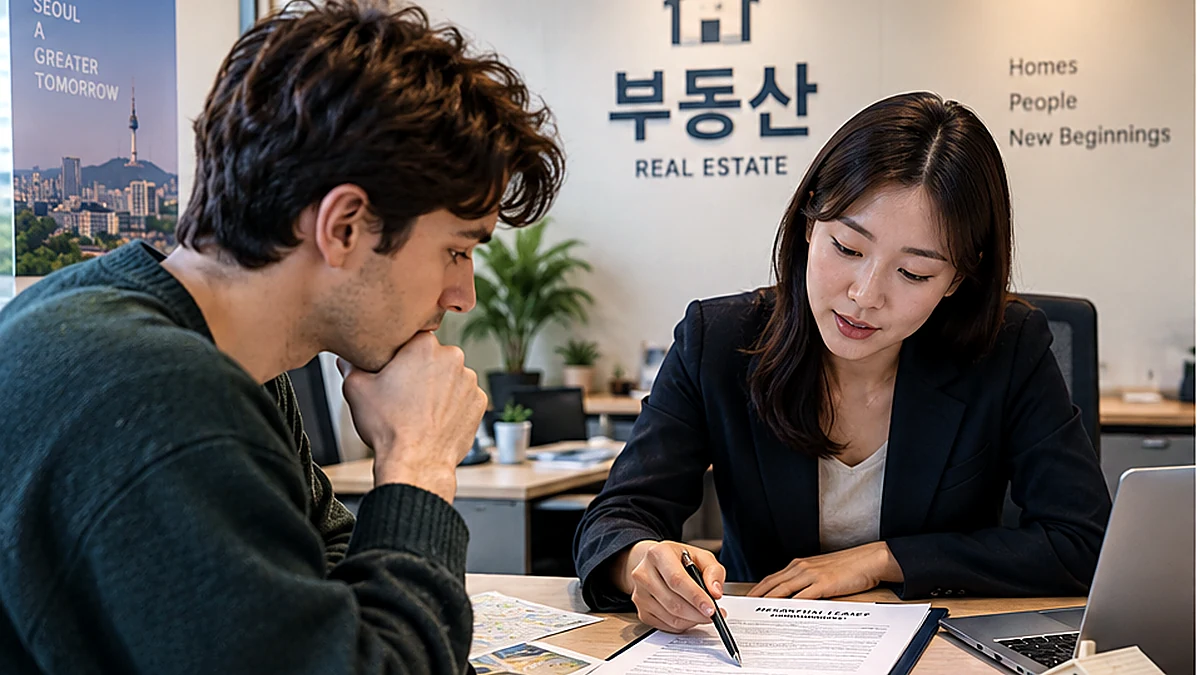
Real estate agents, known as 부동산 (bu-dong-san), are central to the process. You usually do not deal directly with landlords at the beginning (unless you're searching through craigslist ads or other facebook groups / kkt chatrooms). Instead, you walk into a small neighborhood office or contact an agent through a listing.
The interaction can feel transactional and fast. You explain your budget and preferences, and they immediately start showing you options. There is not always a long consultation phase. It is more like filtering in real time.
Agents are incentivized to close deals efficiently. That does not mean they are trying to mislead you, but it does mean they may not slow down to explain every detail unless you ask.
Keep in mind that the language barrier may be a real issue here, and unless you're in a popular foreigner town like Itaewon, you may need help from a Korean to figure it out.
You will often see apartment sizes listed in 평 (pyeong), which is a traditional Korean unit of area. One pyeong is equal to about 3.3 square meters, or roughly 35.5 square feet.
In practice, people use pyeong as a quick way to understand the overall size of a home. For example, a “10 pyeong” place is quite small, usually a studio or one-room unit, while a “30 pyeong” apartment is closer to a standard family-sized home.
One thing that can be confusing is that pyeong sometimes refers to the total floor area, including shared or unusable space, rather than the exact livable area inside the unit. Because of that, two apartments listed with the same pyeong can still feel different in size when you actually visit them.
It is best to treat pyeong as a rough reference point, not an exact measurement.

Many people start their search online, and this is where expectations start to drift from reality.
Listings are often outdated, partially accurate, or intentionally optimized to attract attention. A unit you saw online may not be available, or it may look different in person. Sometimes the listing is simply used to get you in contact with the agent.
This is normal in the Korean market, even if it feels frustrating. The real inventory tends to be shown to you directly once you are working with an agent.
If you come from a market where listings are polished and highly curated, Korean apartment photos can feel confusing or even unreliable.
In many cases, photos are not treated as a primary decision-making tool. They exist to give a rough idea of the space, not to accurately represent it in detail. Because of that, the quality and accuracy of images can vary a lot.
One reason is speed. Apartments in Korea often turn over quickly, and agents are focused on showing units in person rather than maintaining perfectly updated listings. A unit might already be rented, recently vacated, or slightly changed, but the photos remain the same. Updating images is simply not a priority when the expectation is that serious renters will visit in person anyway.
Another factor is how listings are used. Online posts are often meant to start a conversation, not close a deal. It is common for an appealing listing to bring you into contact with an agent, who then shows you a range of options beyond what you initially saw. In that context, the photos are more like a starting point than a promise.
Even when the photos are technically accurate, they can still be misleading. Wide-angle lenses are frequently used to make rooms appear larger than they are. Lighting is often brighter than what you will experience in real conditions. In smaller units like officetels or villas, these differences can be significant. A place that looks open online can feel tight the moment you step inside, so prepare to be disappoinnted in advance.
There is also less emphasis on staging compared to some Western markets. You might see clutter, empty rooms, or inconsistent angles. That does not necessarily mean the property is low quality, but it does make it harder to interpret what you are actually looking at.
I have walked into apartments that looked almost identical in photos but felt completely different in person. Ceiling height, natural light, building noise, and even hallway conditions are rarely captured well in listings, yet they can have a big impact on how livable a place feels.
The practical takeaway is to treat photos as a rough filter, not a reliable representation. The real evaluation happens during the visit. This is why agents tend to move quickly to in-person viewings. From their perspective, that is where the actual decision-making begins.

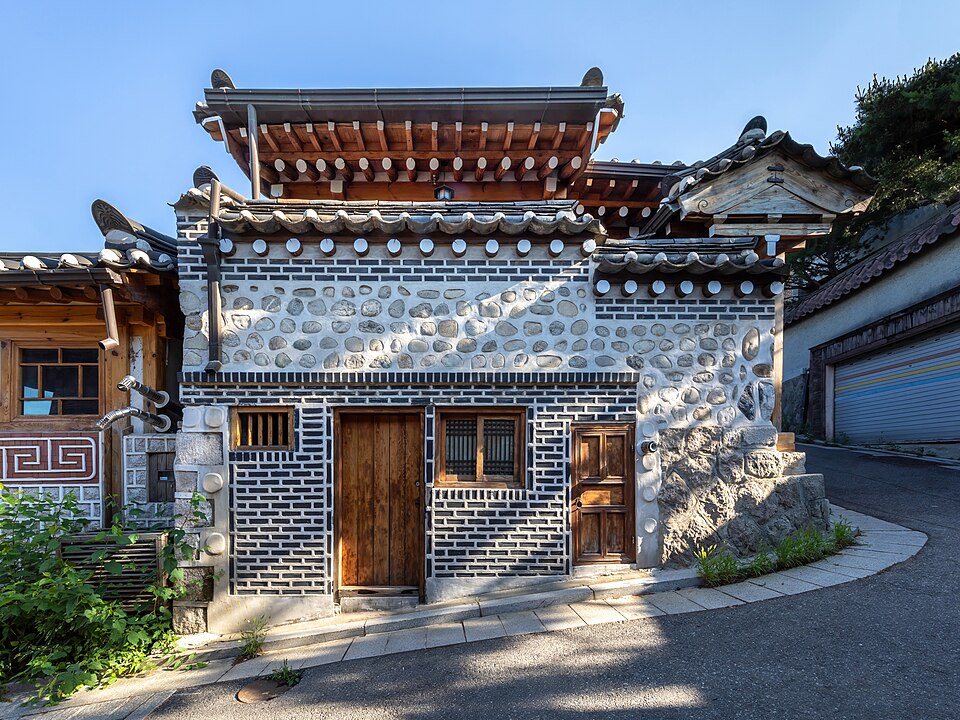
The categories you will see in Korea are simple on the surface, but they hide a lot of variation in how people actually live in them. Price, size, layout, and even expectations around maintenance can shift quite a bit depending on the type.
High-rise apartments, usually just called “apartments” or 아파트, are the most standardized option. These are large, professionally managed complexes with multiple buildings, security, elevators, and shared facilities. Units are typically measured in square meters, but in practical terms, a smaller unit might be around 60–85㎡ (roughly 650–900 sq ft), while family units often range from 85–135㎡ (900–1,450 sq ft) or more. Most layouts include two to four bedrooms, a separate living room, a kitchen, and one or two bathrooms. These are the most expensive option overall. Jeonse deposits can easily reach several hundred thousand dollars in major cities, and even wolse setups often require large deposits with monthly rent layered on top. In return, you get consistency, better insulation, more reliable management, and generally quieter living conditions.
Officetels sit somewhere between residential and commercial housing. They are usually found in mixed-use buildings and are popular with singles and couples. Size-wise, they are much smaller. Many fall in the 20–40㎡ range (roughly 215–430 sq ft), though some newer or premium units go higher. Most officetels are studio-style, meaning the bedroom and living space are combined, with one bathroom and a compact kitchen. Some have a separated sleeping area, but it is still tight. Deposits vary widely but are generally lower than apartments, often ranging from around $5,000 to $50,000 depending on location and quality, with monthly rent filling the gap. One thing people do not expect is that maintenance fees can be relatively high for the size, especially in newer buildings with more amenities. Because they are sometimes classified differently under zoning laws, there can also be subtle differences in taxes or utility costs.
Villas are low-rise residential buildings, usually three to five floors, and they make up a large portion of the housing market. This is where variation becomes more noticeable. A villa unit might be similar in size to a small apartment, around 40–85㎡ (430–900 sq ft), but the layout and condition can differ significantly from one building to another. Most have one to three bedrooms, one bathroom, and a separate kitchen or living area. Prices are typically lower than large apartment complexes, both in deposit and rent, which makes them appealing. You might see deposits ranging from $20,000 to $150,000 depending on the area and whether it is jeonse or wolse. The tradeoff is inconsistency. Some villas are well-maintained and quiet, while others have thin walls, limited parking, or minimal building management. There is no uniform standard.
There are also smaller one-room units, often called 원룸, which overlap with officetels but are usually in older or simpler buildings. These are typically very compact, often 15–30㎡ (160–320 sq ft), with everything in one space except the bathroom. Deposits are on the lower end, sometimes just a few thousand dollars, but monthly rent tends to be higher relative to the size. These are common for students or short-term residents.
What catches many people off guard is that two listings with similar prices can belong to completely different categories and offer very different living experiences. A villa and an officetel might cost roughly the same per month, but one could offer multiple rooms and more space, while the other is newer, more secure, and better located but significantly smaller.
This is why it helps to think beyond just price. The type of building often tells you more about how the place will feel day to day than the listing description itself.
Viewings are usually done in clusters. You might see five or more places in a single session, moving quickly from one to another.
It is common to feel rushed. If you show strong interest in a unit, the agent may encourage you to decide on the spot. This is not necessarily pressure for its own sake. Good units do get taken quickly, and hesitation can mean losing the opportunity.
At the same time, this pace can lead to decisions that are not fully thought through.

Once you decide on a place, things move quickly.
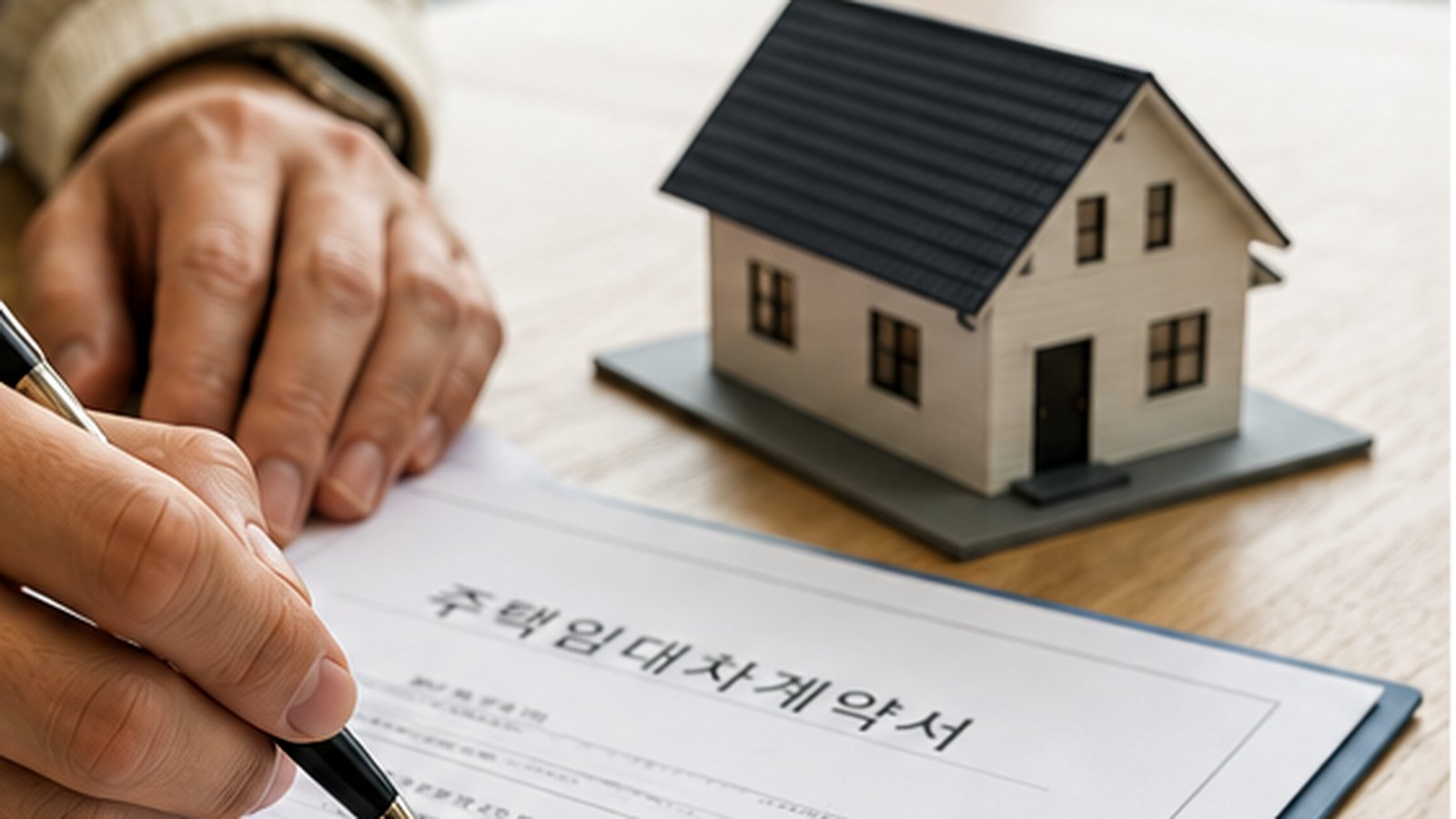
You usually start by paying a contract deposit, known as 계약금 (gae-yag-goom). This is a portion of the full deposit and acts as a commitment, basiscally a down payment. If you back out after this point, you may lose that money.
The final contract is signed shortly after, and the remaining deposit is paid on the move-in date. Timing matters here, and it is often tightly scheduled.
Contracts are typically written in Korean. Even if someone explains parts of it to you, you are often relying on summaries rather than full comprehension.
Ask an AI to summarize it for you if you don't want to bother a Korean friend, though you may still want to confirm with a Korean to be safe.
Beyond the deposit and rent, there are several additional costs that are not always obvious at first.
Maintenance fees can vary significantly depending on the building and can include things like security, cleaning, and shared utilities. Agent fees are also part of the process and are usually calculated as a percentage of the transaction. Utilities are separate and can fluctuate more than expected, especially with heating.
These costs are not hidden in the sense of being secret, but they are not always emphasized unless you ask.
If your Korean is limited, the process becomes more about managing information gaps than just translating words.
Translation apps help, but they are not perfect for legal or financial language. It is easy to misunderstand key terms or miss nuance.
Agents may simplify explanations, sometimes too much. Important details can get reduced to general statements that do not fully capture the implications.
This is where it helps to slow things down. Asking the same question in different ways, confirming numbers, and even stepping away to review details can make a big difference.
There is a point where moving too fast becomes more risky than losing a specific apartment.
Keep in mind that while an against may give you an English copy of your contract to help you understand it, the Korean copy is the one that is legally binding.
This can lead to tricky situations so it is always good to have an actual Korean native look over your contract and make sure it matches up.
One of the most common assumptions is that deposits are flexible in the same way as other countries. In reality, they are often tied directly to the structure of the deal and are not easily adjusted.
Another misunderstanding is expecting long decision timelines. In Korea, hesitation can mean missing out, and the system is built around quick commitments.
Contracts are also less flexible than some people expect. Once signed, the terms are generally fixed, and changing your mind can be costly.

This is one of the few parts of the process where having something structured actually helps. The system moves quickly, and it is easy to forget details in the moment, so having a mental checklist can keep you grounded.
Before you even start visiting places, make sure you understand your real budget in terms of both deposit and monthly costs. In Korea, those two are directly connected, and you will often be asked to adjust one to change the other. If you are unclear on your limits, decisions become much harder under time pressure.
When you are working with an agent, be specific early. Vague preferences lead to wasted time and more confusion. If you care about sunlight, noise, building age, or proximity to transit, say it clearly. Otherwise, you will be shown a wide range of options that do not match what you actually want.
During viewings, focus less on how the place looks at first glance and more on how it will function day to day. Check water pressure, turn on the heating or air conditioning if possible, and pay attention to noise from neighbors or the street. These are things you will not see in photos and are difficult to fix later.
It also helps to keep simple notes or photos for each place you visit. After seeing several units in a short time, they tend to blur together. Having a quick reference makes it easier to compare and avoid second-guessing.
Once you find a place you are seriously considering, shift your attention to verification. Confirm the exact deposit, monthly rent, maintenance fees, and what is included. Ask how utilities are handled and what the average costs look like. Small misunderstandings here can add up quickly.
Before signing anything, take time to review the contract carefully, even if the situation feels rushed. Make sure the names, address, deposit amount, and dates all match what you were told. If you do not fully understand something, ask again or get help translating it properly. This is not the point to rely on assumptions.
It is also worth confirming ownership and checking the property’s registration details if you are dealing with a large deposit. This step is easy to skip when everything feels routine, but it is one of the most important safeguards you have.
Finally, once the contract is signed, follow through on registering your lease and keeping copies of all documents and payment records. These are not just formalities. They are what protect you if anything goes wrong later.
The process in Korea rewards people who stay attentive and ask questions, even when things feel like they are moving fast. A simple, consistent approach is usually enough to avoid most problems.
The part of the system that makes most foreigners uneasy is also where the real risks exist. Large deposits are normal in Korea, but that does not mean every situation is safe. Over the past several years, there have been repeated cases of deposit-related fraud, especially involving jeonse.
One of the more widely discussed issues is often referred to as “jeonse fraud,” where landlords take on multiple tenants’ deposits across different units or properties while the underlying property is already heavily leveraged. When housing prices drop or the landlord runs into financial trouble, they are unable to return deposits at the end of the lease. In some cases, tenants only discover this when they try to move out and the money is simply not there.
Another situation involves mismatches between what a tenant believes they are renting and the legal status of the property. For example, the person collecting your deposit may not actually have proper ownership rights, or there may be existing loans on the property that take priority over your deposit in a worst-case scenario.
Foreigners are not specifically targeted in most cases, but they are more vulnerable because they are less familiar with the system and may not know what to check.
There are a few practical ways to reduce risk without overcomplicating the process.
One of the most important steps is verifying ownership. You can request an official property registry document, which shows who legally owns the property and what loans or claims are attached to it. If the deposit you are paying is high relative to the property’s value, or if there are significant loans already registered, that is a warning sign.
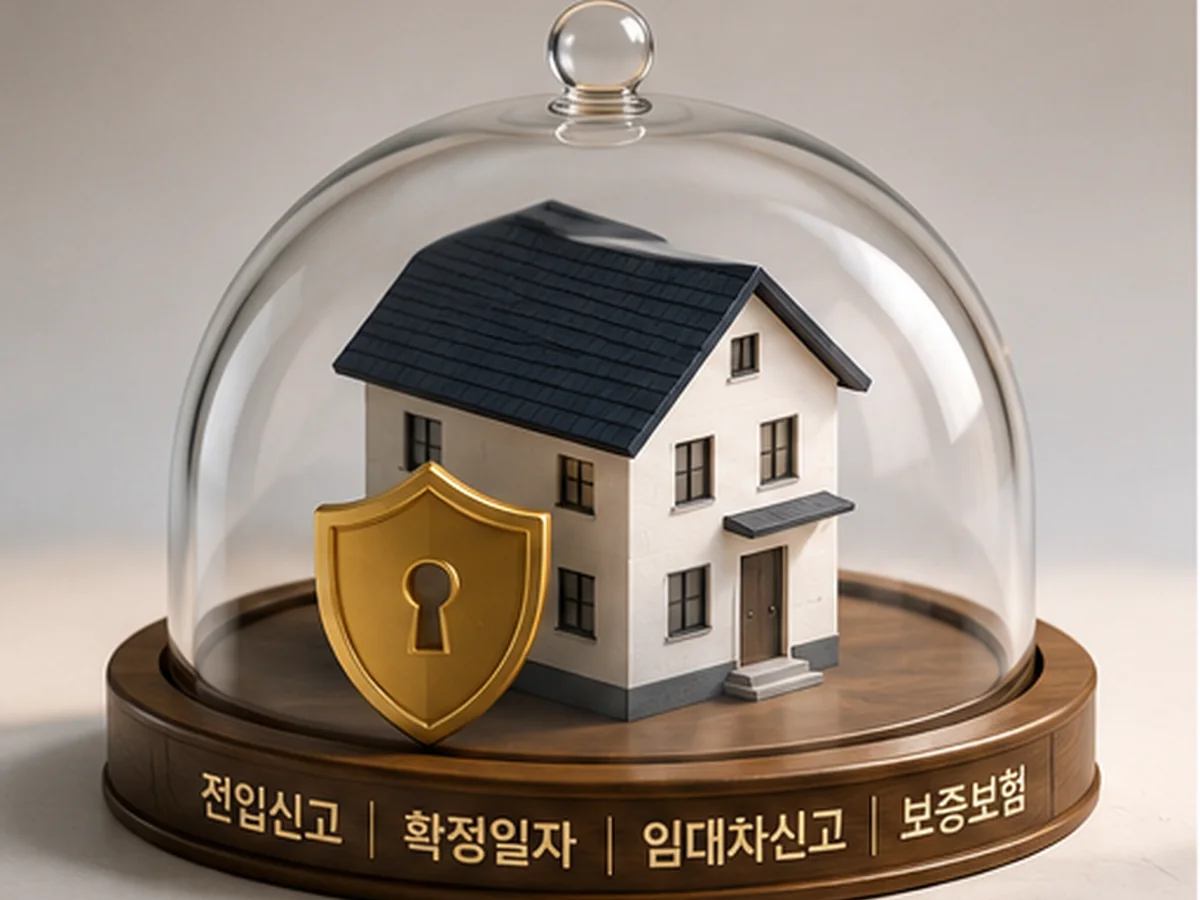
Another key step is registering your lease after signing. This process helps establish your legal priority in getting your deposit back. It is not always explained clearly to foreigners, but it is one of the main protections built into the system.
It is also worth paying attention to deals that seem unusually favorable. A significantly lower deposit for a similar property can sometimes indicate underlying financial pressure on the landlord.
During the contract stage, this is one of the few times where slowing things down is critical. Even if everything else in the process has moved quickly, this is where you want to double check names, amounts, dates, and property details. If something does not match or is unclear, it is better to pause than to proceed.
If possible, having a Korean-speaking friend, colleague, or legal professional review the contract and property details can make a meaningful difference. This is not about distrust, but about making sure nothing is missed in translation or assumption.
Most rentals in Korea proceed without issue, but the scale of the deposit means that when problems do happen, they are serious. Taking a few extra steps to verify and document things properly is what separates a normal experience from a costly mistake.
Moving into a Korean apartment is not difficult once you understand the structure, but it is very different from what many people expect.
The confusion comes less from complexity and more from unfamiliar assumptions. Once you adjust to how deposits, timelines, and decision-making work, the process becomes more manageable.
The key is not to rush your understanding, even if the system itself feels fast.
.svg)

Your Instagram preview will appear here once the widget is published.
👉 Publish your site to see the live Instagram feed.