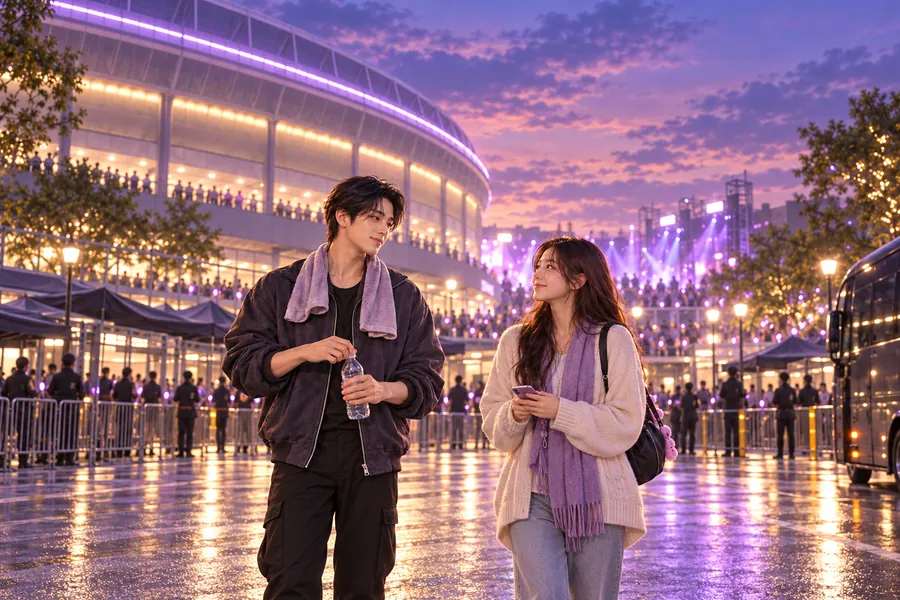
Imagine meeting an artist whose music has kept you company for years. You finally say hello, but the exchange lasts a few seconds. They give a small nod and keep walking. You had pictured a warmer moment, and now you are wondering whether the person you admired is actually rude.
A K-pop idol can seem rude because they are tired, shy, distracted or protecting their private time. A brief encounter rarely tells us which explanation applies. Artists can appreciate fans deeply and still have limited energy for interaction. Understanding that context also leaves room to criticize genuinely disrespectful behavior.
The most helpful accounts come from artists themselves. Lisa, RM, JENNIE, TAEHYUN and Eric Nam have described different parts of life around public attention. Their experiences, alongside research on fame and trust, help explain why warmth on a screen does not always translate into an effortless meeting.
Sources checked: October 19, 2026. Interviews describe the artists' experiences at the dates cited; they do not explain every encounter or establish anyone's current mental health.
Why meeting an idol can feel so personal
A fan brings a history into the encounter. There may be a song associated with a difficult year, a concert they saved for, or a running joke from livestreams. The artist may be meeting that person for the first time. Both can approach the same few seconds with very different levels of familiarity.
That difference does not make the fan's feelings foolish. Music can matter enormously without its maker knowing each listener. It does mean that feeling close to an artist and having an established personal relationship with them are different experiences. Our guide to how Bubble messages and replies work explores how a personal-looking interface can add another layer to that feeling.
Disappointment is understandable when an encounter falls short of something you have imagined for a long time. The harder step is separating that disappointment from a conclusion about the artist's character. A missed wave tells you that the wave was not returned. The reason may remain unknown.
Gratitude and overwhelm can coexist
In her June 2026 Vanity Fair interview, Lisa describes appreciating greater respect for her privacy while sometimes wanting ordinary moments. The profile also records her affection for fans. Wanting some space can sit alongside enjoying their support.
RM expresses a similar complexity in his 2022 conversation with Pharrell Williams. Discussing large performances, he describes nervousness and feeling overwhelmed by the energy, while wanting to return the love he receives and give audiences an exceptional night.
His comments concern performing and its responsibilities, rather than a complaint about an individual fan. They still offer a useful correction to the idea that gratitude should make someone endlessly available. An artist can value an audience and need time to recover after facing it. Having a career they wanted does not remove the effort involved in doing it.
The work behind a few seconds of fanservice
Fanservice means the gestures and interactions through which performers entertain and acknowledge fans. A playful answer or enthusiastic greeting can look spontaneous, even when it is part of a working day that began much earlier.
In a June 2021 Weverse Magazine interview, SEVENTEEN's SEUNGKWAN describes an all-night practice session before filming the television show JOB DongSan as the group prepared a new release. He also speaks warmly about support from CARAT, SEVENTEEN's fans, and wanting to reciprocate it. His account gives a concrete example of work and affection existing together.
That historical interview cannot tell us how much sleep another performer had before a particular clip. It does make the work visible. If a greeting requires someone to summon fresh enthusiasm each time, it takes more effort than a camera records. The fan experiences one meeting; the artist may be moving between many work demands.
It is reasonable to consider fatigue before calling a neutral expression contempt. It is equally reasonable to expect companies to organize manageable schedules. Making every tired interaction a test of an artist's love for fans leaves that organizational responsibility out of the picture.
A quiet person can be a powerful performer
JENNIE describes herself as shy in her October 2024 WIRED interview, explaining that she can be quiet even among friends and different from her stage self. Performing confidently and feeling socially at ease are separate abilities.
A person who commands a stadium may still hesitate in an unexpected conversation. Someone who seems relaxed with their members may be reserved around strangers. JENNIE's account does not settle any disputed incident, but it gives us a reason to be careful about treating low energy or a serious face as evidence of arrogance.
What fame can do to trust
There is another complication beyond tiredness: wondering what an interaction is for. A person might want a conversation, a photo, an introduction or something to post. Those interests can overlap, and wanting a souvenir does not automatically make someone manipulative. The uncertainty is part of the difficulty.
In Donna Rockwell and David Giles's 2009 study of fame, interviews with 15 American celebrities described privacy loss, maintaining a public persona and doubts about other people's motives, alongside benefits of celebrity. This small, older study offers wider context rather than a description of every Korean idol.
Research by Inesi, Gruenfeld and Galinsky, published in 2012, examined how power affected interpretations of generous acts. In the tested settings, people with greater power were more inclined to see favors as serving the giver's interests, with consequences for trust and gratitude. These were studies of power, not K-pop fan encounters. Applying the idea to fame is an interpretation.
The useful possibility is that someone can doubt an approach even when it is sincere. Guardedness may tell us about what the recipient expects, without proving anything bad about the person approaching them.
Power also does not inevitably produce ingratitude. Bartlett, Valdesolo and Arpin's 2020 paper found positive relationships between perceived power and gratitude, with self-esteem helping explain the findings. The different settings and measures matter. Psychology offers possible explanations for behavior; it cannot read an idol's mind from a short video.
Being admired and being known
TXT's TAEHYUN offers a more personal way into this subject. In a June 2021 Weverse Magazine interview, he describes longtime friends who knew him before training and debut and continued seeing him simply as Taehyun. In the same interview, he values communication with MOA, TXT's fandom, and the support of his members.
There is comfort in a relationship where your job does not have to explain your whole identity. A friend can know your ordinary habits, disagree with you and enjoy your company without expecting a performance. That kind of familiarity develops through shared experience. Admiration has a different place, and can still be meaningful.
Eric Nam puts his own approach plainly in a September 2023 GRAMMY.com interview: “Everybody's human. That's all.” Discussing interviewing major artists, he describes getting to know someone and accepting that friendship may or may not follow.
His professional conversations are a different setting from an unexpected fan encounter. Still, the attitude is useful: let the exchange have its own limits. You can admire someone's work without needing them to confirm your importance in return. You also do not need to hide being a fan or perform indifference to seem worthy of their attention.
When fans have a fair complaint
A private outing and a scheduled fan event carry different expectations. Someone declining a photo during dinner is making a choice about their own time. A purchased interaction involves advertised arrangements and professional responsibilities, even though it cannot promise friendship or a particular emotional response.
A 2026 study by Li, Kim and Park examined K-pop video-call events through interviews with ten Chinese women fans and three industry respondents, alongside materials from 2022 to 2024. Participants distinguished concerns about performer attention from company scheduling and event procedures. Their accounts show why disappointment can involve several responsible parties, rather than a simple contest between idols and fans.
Fans can reasonably question missing advertised benefits or poor organization. Deliberate insults deserve scrutiny too. Context helps us assess what happened; it does not require dismissing someone's hurt. The fair questions are what was promised, what can actually be observed and who controlled the part that went wrong.
What a considerate encounter can look like
If you unexpectedly see an artist, consider whether the moment appears open to conversation. Someone eating, handling a private conversation or moving quickly with staff may have little room for an exchange. Follow event rules and staff directions, and let a refusal end the request.
A brief thank-you about their work can be enough. If conversation develops, respond to what they actually say instead of treating every second as a chance to secure a photo or a memorable reaction. A short, comfortable exchange is allowed to stay short.
None of this requires suppressing excitement. You can be delighted, nervous and openly a fan while leaving the other person a choice. Nor does considerate behavior earn a promised reward. The encounter may remain a nod and a few words, and you may still wish it had been warmer.
For online clips, take the same care with conclusions. Consider what happened before and after the excerpt, whether the translation is reliable and whether the person was at work or off duty. Where that context is missing, you can describe an interaction as disappointing without claiming to know the artist's motives.
Can you enjoy fandom without expecting constant warmth?
You do not have to decide that an idol is either perfectly kind or secretly ungrateful. Enjoying their music can coexist with noticing disappointing behavior, changing your spending or stepping back from content that makes you unhappy. Supporting an artist does not require defending every moment of their life.
The same room for complexity belongs to the artist. A person can love performing, feel grateful to fans and still want an ordinary afternoon. Allowing that afternoon to remain ordinary leaves their work available to enjoy without turning every public sighting into another performance.
Sources and further reading
Lisa, Vanity Fair, June 23, 2026; RM and Pharrell Williams, Rolling Stone Korea, December 9, 2022 edition; SEUNGKWAN, Weverse Magazine, June 27, 2021; JENNIE, WIRED, October 14, 2024.
TAEHYUN, Weverse Magazine, June 8, 2021; Eric Nam, GRAMMY.com, September 6, 2023. These are individual accounts; Weverse Magazine is an industry-linked publication.
Rockwell and Giles, Being a Celebrity: A Phenomenology of Fame (2009); Inesi, Gruenfeld and Galinsky, How Power Corrupts Relationships (2012); Bartlett, Valdesolo and Arpin, The Paradox of Power (2020); Li, Kim and Park, When Paid Intimacy Fails (2026).
Related Korea Unboxed reading
Can K-pop Idols Read Your Bubble Messages? explains message delivery, read status and individual attention. Are K-pop Idols Allowed to Date? explores relationships and public expectations.