
Before acting: This guide provides general information, not legal advice. The author is not a lawyer. Rules and options depend on your circumstances; consult a qualified Korean attorney or the relevant official service about a specific case.
Renting in Korea, Part 6 · Sources checked: September 10, 2026
Between booking movers and finding the missing mailbox key, one job should not wait until the last morning: getting your rental deposit back.
A good handover needs a clear end date, a fair inspection, and a repayment plan. Start before the moving truck is waiting downstairs.
Summary
Moving out in Korea starts before the boxes appear. This guide explains how to give notice, prepare for the final inspection, settle bills, and arrange the return of your rental deposit. It also covers a repair-reserve charge some apartment tenants can reclaim and what changes when the landlord cannot pay. The key is to coordinate the handover and protect any unpaid deposit before moving, without neglecting your immigration reporting duties.
Legal note: This guide is general information, not legal advice. The author is not a lawyer. Your contract, registration history, property, and guarantee terms matter. Consult a qualified Korean attorney or an official housing-dispute service before acting on an unpaid deposit.
Give notice before you book the movers
First, find your lease end date. For an ordinary residential lease covered by the Housing Lease Protection Act, the tenant generally needs to communicate nonrenewal at least two months before expiry. When the conditions for automatic renewal are met and neither side gives the required notice, the lease can continue on the same terms. Article 6 explains this renewal rule.
Start around three months before the end as a planning buffer, not an extra legal deadline. Ask the landlord to acknowledge a clear message.
I will not renew the lease for [full address]. I intend to return the apartment when the lease ends on [date]. Please confirm receipt and the arrangements for the final inspection and repayment of my deposit.
Keep the acknowledgment. When receipt may be disputed, consider a formal notice with content certification and delivery confirmation. The official guidance on formal payment demands also explains content-certified mail.
Already renewed, or leaving early? Check which situation applies
A lease that renewed automatically is not the same as a new fixed-term agreement. After automatic, or tacit, renewal, the tenant can give notice at any time, but termination takes effect three months after the landlord receives it. Article 6-2 sets that timing. For illustration, a notice received on September 10 would normally take effect on December 10.
The same termination rule applies when renewal resulted from exercising the statutory renewal-request right, under Article 6-3(4). It does not follow that every renewed contract can be ended with three months’ notice. Check how yours was renewed.
During an ordinary fixed term, a job change or flight home does not itself cancel the lease. You normally need an applicable break clause, a legal ground, or the landlord’s agreement. Official lease-termination guidance explains the distinction. Review the contract guide in Part 4 before negotiating.
When discussing an early release, put the end date, remaining rent, any replacement-tenant arrangement, brokerage costs, and deposit-return date in writing. Do not accept an unexplained brokerage bill simply because someone says it is always the departing tenant’s responsibility.
Ask where the repayment stands
Several weeks before leaving, ask a direct question: will the deposit be available on the agreed termination date? Confirm the amount and ask about proposed deductions. If you borrowed the deposit, check your lender’s repayment instructions before deciding where the landlord should send it.
“When the next tenant arrives” is not a payment date. Once the lease has properly ended, the landlord’s deposit-return obligation and your obligation to return the home are generally simultaneous. The absence of a replacement tenant does not, by itself, remove that obligation. This is explained in the official guidance on what happens when a lease ends.
If repayment sounds uncertain, contact your guarantee provider or a housing adviser now, before your next apartment depends on that money arriving.
Make the final inspection easy to follow
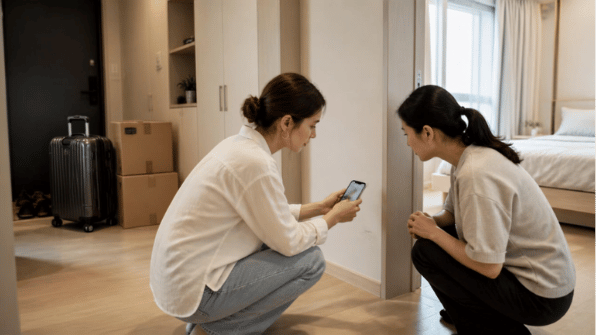
Compare the empty apartment with your move-in photographs. Clean it to the agreed standard, remove your belongings, and take fresh photographs and a slow video before handing it over. The move-in inspection guide in Part 5 explains the records worth keeping.
Ordinary aging and tenant-caused damage are different questions. Faded wallpaper is not the same situation as a burn in the flooring. Ask what caused the problem, whether it was already present, and what the contract actually requires.
A Seoul Central District Court decision discusses ordinary wear and clearly agreed restoration terms. It concerned a commercial property, not an automatic ruling on every apartment deduction. Your contract, evidence, and circumstances still need to be considered.
For a disputed charge, request an itemized explanation and a repair estimate or invoice. Do not sign that every deduction is accepted when it is not. Photographs give both sides something more useful than competing memories.
Settle the bills, including one refund people miss
Ask how final electricity, gas, water, internet, parking, and management charges will be settled. Photograph accessible meters and keep payment receipts. Check with the internet provider whether any router or other equipment needs returning.
If a final bill is not ready, agree in writing how it will be calculated and settled. Avoid an undefined “we will work it out later” deduction.
Apartment renters should also check for the long-term repair reserve, written as 장기수선충당금 on Korean bills. This fund pays for major shared-building repairs. The owner is responsible, but tenants may have paid it through their management bills. Official guidance confirms that tenants can claim back amounts paid on the owner’s behalf when the lease ends.
Ask the management office whether you paid this specific charge and request a statement covering your tenancy. It is not a refund of every maintenance fee, and not every building charges it. Show staff the Korean term rather than trying to pronounce it perfectly.
Arrange the money and the handover together

For an ordinary landlord repayment, arrange the inspection, agreed deductions, transfer, and return of possession as one coordinated handover. The law’s simultaneous-obligation principle does not mean either party must blindly complete everything first. Both sides have corresponding duties.
Have the property ready to return, confirm the agreed payment in your own account, and hand over the keys and access cards as arranged. A transfer screenshot is not the same as money received. If a lender is involved, follow the agreed repayment route.
Keep a short written record of the amount repaid, any deductions, the keys returned, and the handover date. Do not sign a statement saying “deposit received in full” before that is true.
A guarantee claim can require a different sequence. We will get to that below.
If the deposit is unpaid, protect your position before moving
This is where an ordinary move-out becomes a different task. Possession and the legally recognized address record are important to residential tenant protection. For registered foreign residents, foreigner registration and the change-of-place-of-stay report perform the relevant registration function, as confirmed in a Supreme Court decision on foreign tenants.
Giving up the home or changing the address before preserving your rights can put an unpaid deposit at greater risk. Get individual advice before doing so. Part 3 explains how these deposit protections work.
That does not mean keeping an outdated address on record. Registered foreigners generally must report a new place of stay within 15 days after moving under Article 36 of the Immigration Act. Arrange the protective steps before the move, then meet your reporting obligations. People using a different residence-reporting system should confirm their own procedure.
If you remain in the home while awaiting repayment, ask what rent, use charges, and bills remain due. Do not assume the stay is free.
If you must move or leave Korea urgently, contact a Korean attorney about the deposit and 1345 about immigration requirements. Do not assume the housing dispute changes your permission to stay.
A leasehold registration order can preserve existing rights
When the lease has ended and all or part of the deposit remains unpaid, a tenant can apply to the court responsible for the property for a leasehold registration order, called 임차권등기명령. Official guidance explains eligibility and the application.
Once the resulting leasehold registration is entered, previously acquired rights to assert the lease and receive priority repayment can be preserved even after moving. Article 3-3(5) provides this protection. In everyday terms, it can help you keep your existing legal place in the repayment line without continuing to occupy the home.
Submitting the application is not enough. Confirm that registration has actually been completed before relying on it. It does not automatically collect the debt or move you ahead of creditors who already had better rights. If you already moved, seek advice promptly rather than assuming it is either harmless or hopeless.
The Act also allows a tenant to claim application and registration costs from the landlord. Ask an adviser which costs apply in your case.
A deposit-return guarantee has its own handover rules
Already covered by a guarantee? Contact the provider early and follow the instructions for your actual product, rather than improvising.
For example, under HUG’s published deposit-return claim procedure, one standard guarantee event is a deposit still unpaid without a valid reason one month after the lease has ended. It generally calls for completed leasehold registration before the claim, subject to exceptions, and requires surrender of the home before guarantee payment.
That is different from the ordinary landlord-and-tenant exchange described above. It does not mean moving out unprotected and hoping HUG pays later. Coordinate the registration, documents, inspection, and handover with the provider.
A certificate does not produce an automatic payment on moving day. Before signing an extension or settlement with the landlord, ask whether it would affect your coverage or claim. Different products can have different requirements.
Get help before the paperwork becomes urgent
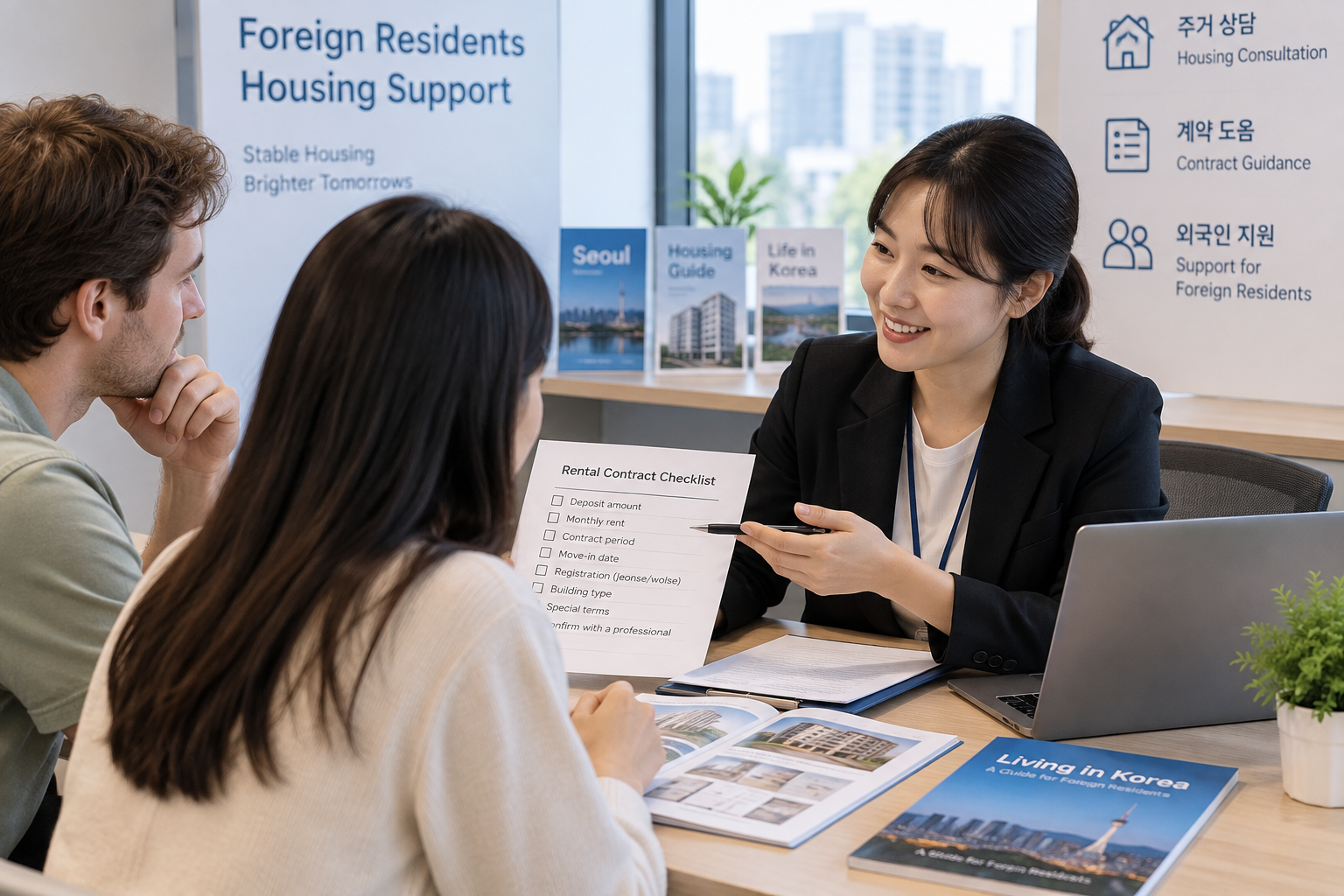
The Korea Real Estate Board and LH lease-dispute mediation system handles disagreements about deposits, lease periods, returning the property, and repairs. It can be a useful route toward agreement without immediately pursuing a lawsuit. However, the other party can decline to participate, so it is not a guaranteed solution.
When needed, official deposit-recovery guidance describes a formal payment demand, payment order, civil mediation, a deposit-return lawsuit, and asset-preservation measures. A payment order may become ordinary litigation if the landlord objects. Choosing the right route depends on the evidence and whether there are assets from which to recover the money.
If you receive court or auction papers, do not put them aside because they are in Korean. Ask a qualified adviser to explain any response deadlines promptly. Bring the lease, payment records, notices and delivery evidence, registration records, guarantee certificate, and inspection photographs.
A good ending is quietly uneventful
Give notice early, agree on the repayment plan, and prepare the inspection records before moving day. Then close the bills and coordinate the deposit with the handover.
If the money is not available, pause the ordinary handover and get help preserving your rights before you move. You can be polite without treating an unclear promise as a completed payment.
The best ending is simple: the old scratch matches the old photograph, the final amount is agreed, the money arrives, and the keys change hands. Keep the records somewhere safe. Then you can turn your attention to the boxes.
Next in the series: Apartment, Officetel, Villa, or One-Room? Korean Housing Types Explained.
Sources and further reading
The legal framework is the Housing Lease Protection Act, including renewal, termination after automatic renewal, and leasehold registration. Practical guidance comes from Easy Law on ending a lease, repair-reserve refunds, and recovering an unpaid deposit.
For product-specific claims, use HUG’s claim instructions. For dispute resolution, see the official lease mediation service. Most linked legal pages are in Korean; arrange reliable translation before relying on them for a specific case.
For the wider reference, visit the housing section of the Korea Knowledge Catalogue.