
You have signed the lease, transferred an uncomfortable amount of money, and finally received the keys.
Congratulations. Take a breath.
Then, before you build the bed, fill the refrigerator, or order enough jajangmyeon to feed the entire floor, give the apartment one proper inspection.
This first hour matters because an empty apartment tells the truth more clearly than a furnished one. Scratches are visible. Water stains have nowhere to hide. You can hear strange noises, smell damp corners, and test appliances without moving three boxes and a suitcase every time something needs checking.
Once you have lived there for several weeks, it becomes harder to prove whether a problem existed before you arrived.
The aim is not to walk around expecting disaster. Most apartments will be perfectly ordinary. The aim is to create a clear record of what you received and make sure the home actually works before the real business of living begins.
Photograph the Apartment Before Unpacking
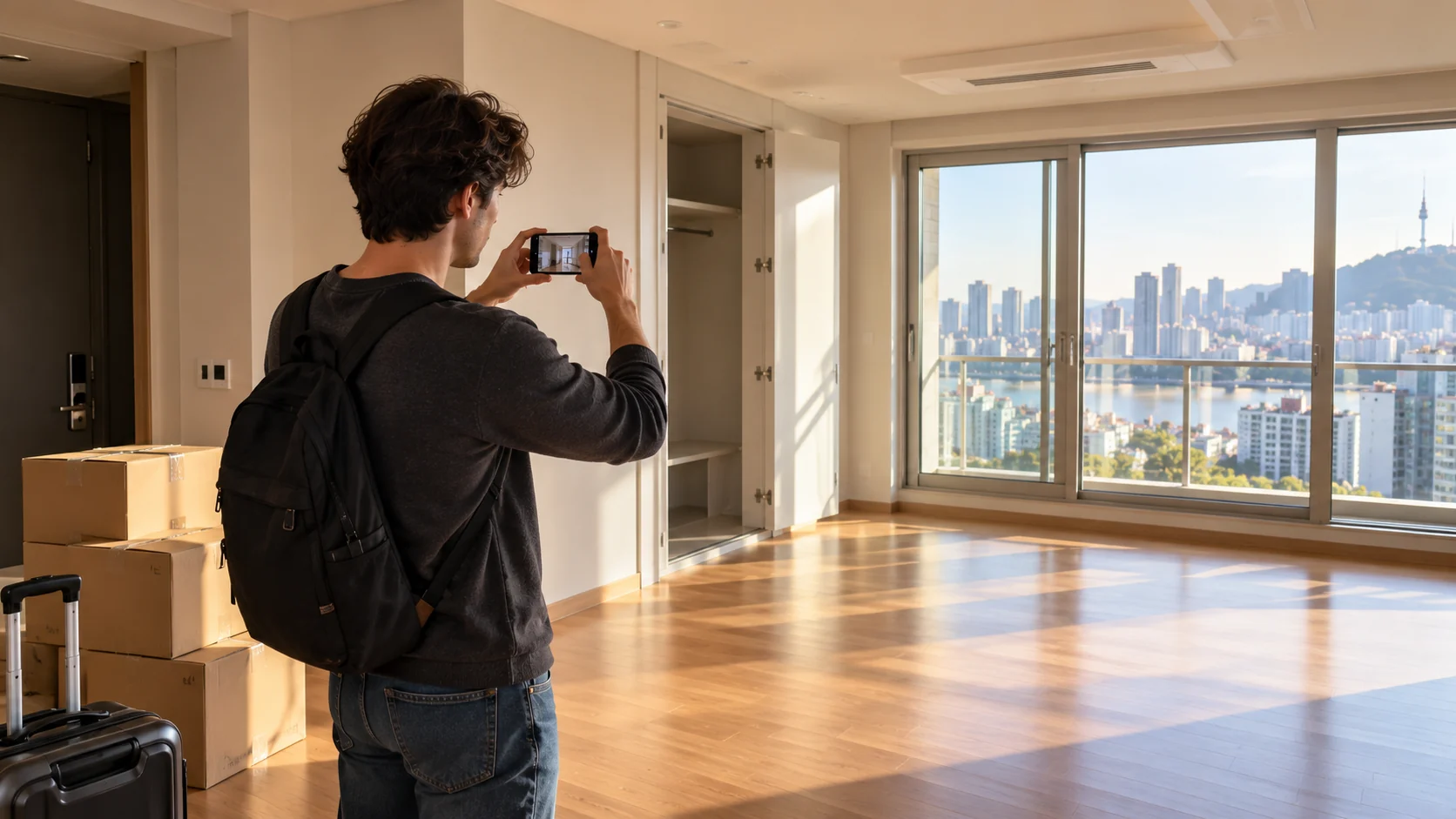
Before moving anything into the apartment, take one slow video from the entrance through every room.
Start with a wide view, then record the walls, ceiling, floor, windows, doors, bathroom, kitchen, storage areas, balcony, and utility space. Open cupboards. Look behind doors. Film the inside of the refrigerator and washing machine.
Do not make a dramatic property-inspection documentary with music and ten camera angles. One continuous, steady video is more useful than fifty mysterious close-ups that you cannot identify later.
After the video, take separate photographs of anything unusual. That includes scratches, chipped flooring, stained wallpaper, cracked tiles, broken handles, damaged furniture, rust, mold, loose outlets, or marks around windows.
Keep the original files with their date information. Back them up somewhere other than your phone.
A photograph does not magically settle every future dispute. It does give you something much stronger than, “I promise that mark was already there.”
Test the Water, Hot Water, and Heating
Begin with the things that make a home livable.
Turn on every faucet. Check both hot and cold water. Let the shower run long enough to confirm that the water becomes hot and stays hot. Flush the toilet. Fill the kitchen and bathroom sinks slightly, then watch how quickly they drain.
Look underneath the sinks while the water is running. A pipe can appear completely innocent until it is asked to do its job.
Check the water pressure in the shower and kitchen. Listen for strange knocking sounds. Watch the floor around the washing-machine connection and bathroom drain.
The same rule applies to the heating system. Ask the landlord or agent to show you how the controller works rather than handing you a remote and saying, “It’s easy.”
Some controllers have separate settings for hot water, room temperature, and floor heating. Take a photograph of the control panel and record a short video of the agent explaining it. That five-minute lesson becomes surprisingly valuable on the first cold evening.
As a general legal starting point, a Korean landlord has a duty to deliver the property and maintain it in a condition suitable for the agreed use during the lease. The contract, the cause of the problem, and the seriousness of the repair can affect who is responsible in a particular case.
In practical terms, report major problems quickly and in writing. Do not quietly arrange an expensive repair and assume the landlord will reimburse you later.
Check for Leaks, Mold, and Damp
Water damage can be patient. It may wait behind wallpaper, underneath a sink, or along a window frame until the rainy season gives it confidence.
Look closely around:
- Window corners and frames
- Bathroom ceilings
- Silicone around the shower and sink
- The wall behind the washing machine
- Kitchen cabinets near plumbing
- Balcony or utility-room drains
- Wallpaper near exterior walls
- The ceiling below an upstairs bathroom
That is more of a list than we normally like around here, but water deserves one.
A musty smell matters even when you cannot immediately see mold. So does wallpaper that looks newly patched in one suspiciously small area.
Take photographs and notify the landlord or agent on the same day. Ask whether the source has already been repaired or whether the area has only been cleaned and covered.
There is a large difference between wiping away visible mold and repairing the moisture problem that caused it.
Test the Appliances Included in Your Lease
A washing machine that looks fine but refuses to spin is not a washing machine. It is a large white cabinet with ambitions.
Test every appliance included with the property.
Run a short washing-machine cycle. Confirm that the refrigerator cools. Switch on the air conditioner, kitchen exhaust fan, microwave, stove, lighting, and any built-in ventilation system.
Check that each included appliance matches the inventory and repair promises in your lease. Our Korean rental contract guide explains where those promises belong. Photograph visible damage and record any item that is missing.
When furniture is included, check the bed frame, mattress, table, chairs, wardrobe, blinds, and storage units. A simple inventory in an email or message is enough for most ordinary situations:
Refrigerator, washing machine, air conditioner, microwave, bed frame, mattress, desk, and two chairs received on move-in day. Existing damage shown in attached photographs.
That message is not glamorous, but neither is paying for somebody else’s broken chair two years later.
Try Every Switch, Socket, Window, and Door
Turn on every light.
Test outlets with a phone charger or another small device. Open and close each window. Check that the locks work and that screens are properly attached.
Make sure interior doors close without scraping the floor. Check sliding doors and balcony doors. Look for cracked glass, loose handles, and gaps that may allow rain or cold air inside.
Try the intercom. Confirm that you can unlock the building entrance from inside the apartment. When the building has an elevator, parcel room, lobby entrance, or parking gate, make sure you understand how each one is accessed.
These are small things until you discover them at 11:30 p.m. while standing outside with groceries.
Change the Digital Door Code
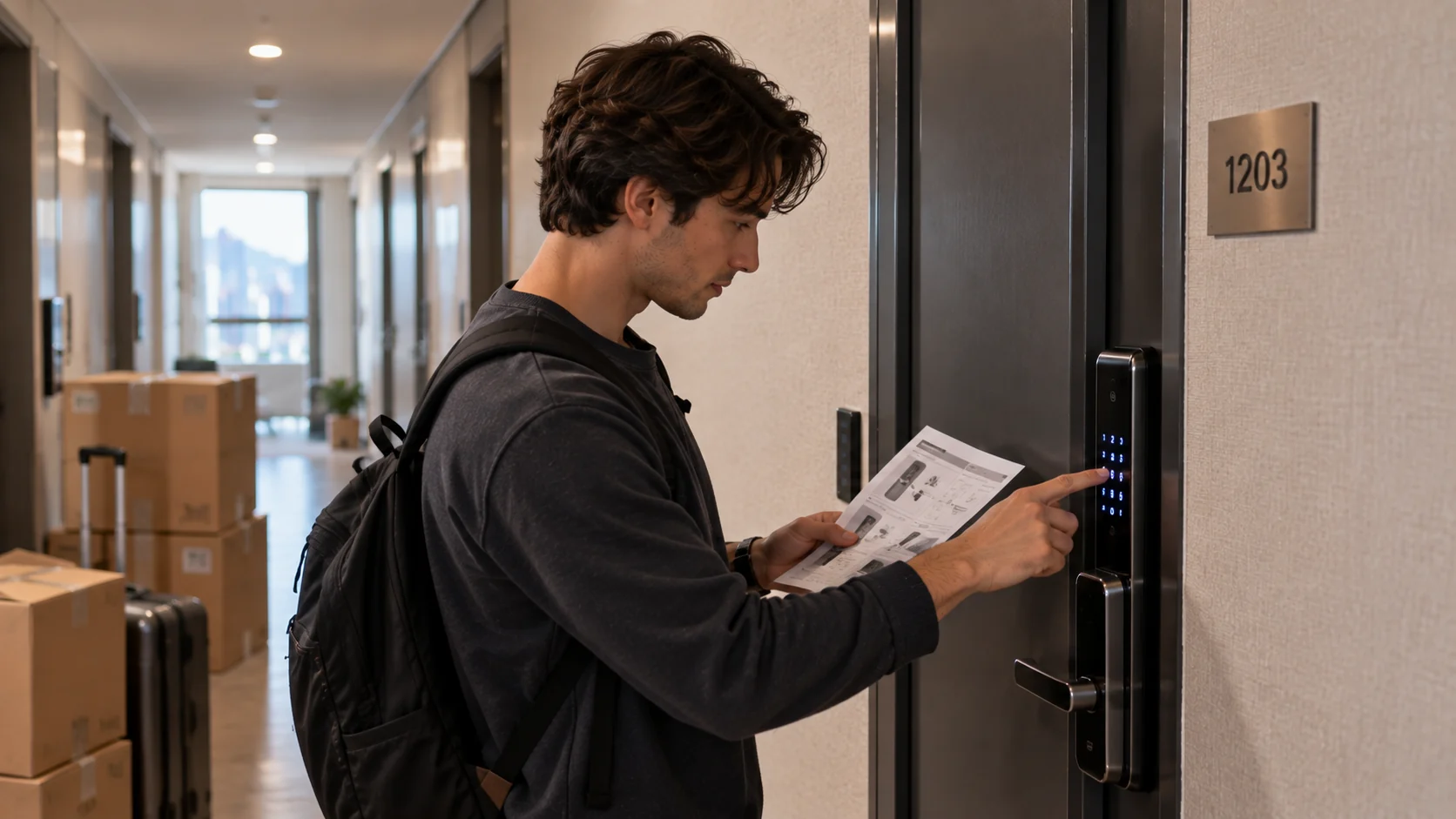
Digital door locks are common in Korean housing. Once the apartment is officially handed over, change the access code rather than continuing to use a number supplied by the previous tenant, landlord, cleaner, or agent.
Ask how to replace the batteries and recognize the low-battery warning. The sound or display varies by model. Find out whether there is an emergency key or an external battery contact, and keep the manufacturer’s instructions somewhere accessible.
Confirm how many physical keys, key cards, parking cards, mailbox keys, and building-access tags you received. Photograph them together and note the total.
Also ask who else is permitted to enter the apartment and under what circumstances. A landlord or repair worker should not casually appear inside because it is convenient for them, though this is rare. Access arrangements should be communicated and agreed upon except in a genuine emergency.
Photograph the Utility Meters
Before using much electricity, gas, or water, photograph any accessible meters.
The photographs create a starting point for your occupancy. They can help if a later bill includes usage from before you moved in.
Ask the landlord, agent, or management office how each service is billed. Depending on the building, some charges may come directly from a utility provider while others appear on the monthly building-management statement.
Confirm whether you need to place an account in your own name, whether an existing account continues, and where bills will be delivered.
Do not assume that the advertised management fee includes water, gas, electricity, heating, internet, or parking. Those details should already have been discussed before signing, but move-in day is a good time to confirm the practical billing process.
Internet service may also require a separate installation appointment. Check whether the apartment already has active service, an installed router, or only a wall connection left by the previous tenant.
Introduce Yourself to the Building
In a large apartment or officetel, the management office can answer questions that the landlord may barely understand.
Ask where parcels are left, how parking is registered, whether movers must reserve the elevator, when recycling is collected, and whom to contact when there is a leak or building-wide utility problem.
Smaller villa buildings may not have a formal management office. In that case, the landlord, agent, building caretaker, or another resident may explain the routine.
Also find the emergency exits and stairwell. Check whether hallway fire doors are blocked. Locate any fire extinguisher or emergency equipment available on your floor.
You are not preparing to live in a bunker. You are learning how the building works before something goes wrong.

Learn the Building’s Garbage and Recycling Rules
Korea does not use one identical garbage routine for every building and neighborhood.
Local governments are responsible for household-waste handling, and the exact bags, collection times, locations, and disposal methods are set through local rules and building systems.
In practice, you will normally need to separate ordinary household waste, recyclable materials, and food waste.
Ordinary waste commonly goes into an approved local pay-as-you-throw bag. Recyclables may be placed in separate building containers or collected on designated days. Food waste may use a special bag, shared container, or RFID system that records disposal.
Do not guess which bin is correct by looking at what another person left there at midnight. Ask the management office or landlord to show you the exact disposal area.
Remove excess liquid before disposing of food waste, and keep packaging out of the food-waste stream. Bones, hard shells, and fruit pits are commonly excluded. Separate recyclable packaging from ordinary waste instead of treating every non-food item as regular trash. Ask the management office or local district about the exact bags, containers, and collection days for your address. Do not assume you will receive a warning before a fine.
The details outside Seoul can differ. Your building’s instructions and local district guidance are the practical authority for your address.
Learn this early. Nothing says “new foreign neighbor” quite like placing six pizza boxes in the wrong area and creating a small diplomatic incident before sunrise.
Complete Your Address Report Promptly
Registered foreign residents must report a change of place of stay within 15 days after moving, under Article 36 of the Immigration Act. The report can be made to the appropriate local government office or the immigration office responsible for the new address, subject to the applicable procedure.
The Immigration Act also states that foreigner registration and the change-of-place-of-stay report substitute for Korean resident registration and the Korean move-in report in relevant legal procedures. This can be important for residential lease protection.
Use the exact legal address, including the correct unit number. Bring or prepare the documents required for your status, which will usually include your Residence Card, passport, and proof of residence such as the lease.
Do not treat the 15-day deadline as an invitation to wait until day 14. Complete the report as soon as practical and keep the confirmation.
Our rental deposit protection guide explains how address reporting connects with possession, the fixed date, housing lease reporting, and deposit-return guarantees. Check those steps alongside the physical move-in inspection.
For immigration questions, Korea’s multilingual Immigration Contact Center can be reached through 1345 inside Korea.
Send One Clear Move-In Message
After the inspection, send the landlord and agent one organized message.
Avoid sending twenty separate photographs with messages such as “this,” “also this,” and “what about here?”
Write something like:
I completed the move-in inspection today. I found an existing scratch near the bedroom door, discoloration below the living-room window, and a washing machine that does not complete its spin cycle. Photographs and video are attached. Please confirm that these conditions existed before my tenancy and let me know when the washing machine will be checked.
Keep the tone calm and factual.
You are creating a record so that you will have evidence in your favor should things get... disagreeable.
When the issue requires repair, ask who will arrange it, who will pay, when the worker will visit, and whether anyone needs permission to enter the apartment.
Do Not Quietly Fix a Major Problem
A dripping faucet or loose cabinet handle may be easy to solve. A broken boiler, serious leak, electrical fault, or damaged appliance can involve meaningful cost and responsibility.
Notify the landlord before commissioning substantial work unless an urgent safety situation makes that impossible. Obtain written agreement about the repair and payment.
Korean law generally places a duty on the landlord to maintain the leased property in a condition suitable for use, but actual responsibility can depend on what broke, why it broke, what the contract says, and whether the tenant caused the damage.
Keep the discussion factual and save the evidence. Photographs and messages can support your position, but they do not guarantee a particular outcome. If responsibility remains disputed, seek an independent housing consultation before agreeing to a large payment or giving up a claim.
Your First Hour, in the Right Order
Before the apartment fills with boxes, complete one steady video and take close-up photographs of existing damage.
Next, test the water, heating, drains, electricity, windows, locks, appliances, and intercom. Record the meter readings, collect every key and access card, and change the digital door code.
Then confirm the utility, internet, parking, parcel, and garbage procedures with the landlord or management office.
Finally, send one written move-in condition report and complete your foreign-resident address procedure promptly.
That is the whole routine.
It may take an hour. Perhaps two, if the washing machine decides to put on a performance.
A Good Move-In Is Quietly Boring
The best move-in inspection ends with nothing dramatic.
The water becomes hot. The drains work. The windows close. The boiler behaves. The landlord confirms the old scratches, and your photographs disappear into a folder that you may never need again.
That is success.
The purpose of the inspection is not to prove that Korean apartments are risky. It is to create a clean starting point between you, the landlord, and the home.
Once that starting point is clear, unpack the boxes, learn the heating controller, buy the correct garbage bags, and make the place yours.
Just photograph the floor before dragging the sofa across it.
If a handover issue involves the owner or the property documents, revisit the apartment checks and keep the evidence with your signed lease.
For the complete renting sequence and other everyday essentials, visit the Korea Knowledge Catalogue’s housing guide.
Sources and Further Reading
Content reviewed: September 10, 2026. Check the linked official guidance before signing, transferring money, or submitting an application.
Civil Act: maintenance and notification duties: Articles 623 and 634 cover the landlord’s general maintenance duty and the tenant’s notice of needed repairs (Korean).
Immigration Act: foreign-resident address reporting: Article 36 sets the reporting period; Article 88-2 explains its relationship with resident registration (Korean).
HiKorea: change-of-place-of-stay instructions: Check documents and the responsible office for an address report (Korean).
Seoul: multilingual housing consultation: Official English information on support for international residents.