
Touring apartments is the enjoyable part of renting in Korea. You compare the sunlight, imagine where your furniture will go, and decide whether the subway is close enough for a rainy Monday morning.
The most important part is much less exciting. It is the paperwork.
Our jeonse versus wolse guide explains why a Korean rental deposit can be far more significant than the security deposit you may know from another country. Now we need to answer the question that comes before any large transfer:
What exactly are you paying for, and what stands between you and getting that money back?
You do not need to become a Korean property lawyer. You do need to understand that every rental has three versions of the same home.
There is the physical home you toured, the legal property recorded by the government, and the financial property that remains after mortgages, previous tenants, taxes, and other claims are considered.
A safe decision requires all three versions to make sense together.
Start With the Exact Property, Not the Listing Name
A listing may say “Hongdae station one-room,” “Gangnam officetel,” or use only a building nickname. That is useful for browsing, but it is not precise enough for a contract.
Before paying even a small reservation amount, ask the agent to send the complete legal address in Korean, including the building, floor, and unit number.
You do not need to read the Korean address yourself. You need a copyable version that can be compared across the contract, property registry, building register, and the unit you physically visited.
A missing unit number or different floor is not a harmless formatting issue. It may mean that the paperwork describes a different legal space.
This deserves particular attention in low-rise buildings, rooftop rooms, basements, and properties that have been divided into several rental units. A number attached to an apartment door does not necessarily prove that the space exists as a separately registered home.
Confirm That the Landlord Is the Registered Owner
The first real check is simple:
Does the person taking your money actually own the property?
Korea’s property registry identifies the registered owner. Compare that name with the landlord’s official identification and the name in the contract. A business card, apartment key, family relationship, or confident explanation does not prove ownership.
Official Korean housing guidance recommends contracting with the registered owner. When someone else signs as a representative, the tenant should verify that person’s authority through documents such as a power of attorney. The fact that someone is the owner’s spouse, child, sibling, or property manager does not by itself give them legal authority to sign the lease.
Treat the payment account with the same care. A request to transfer a large sum to someone other than the registered owner is not automatically fraudulent, but it needs a clear legal explanation that you independently verify.
“This is the account we always use” is not enough.
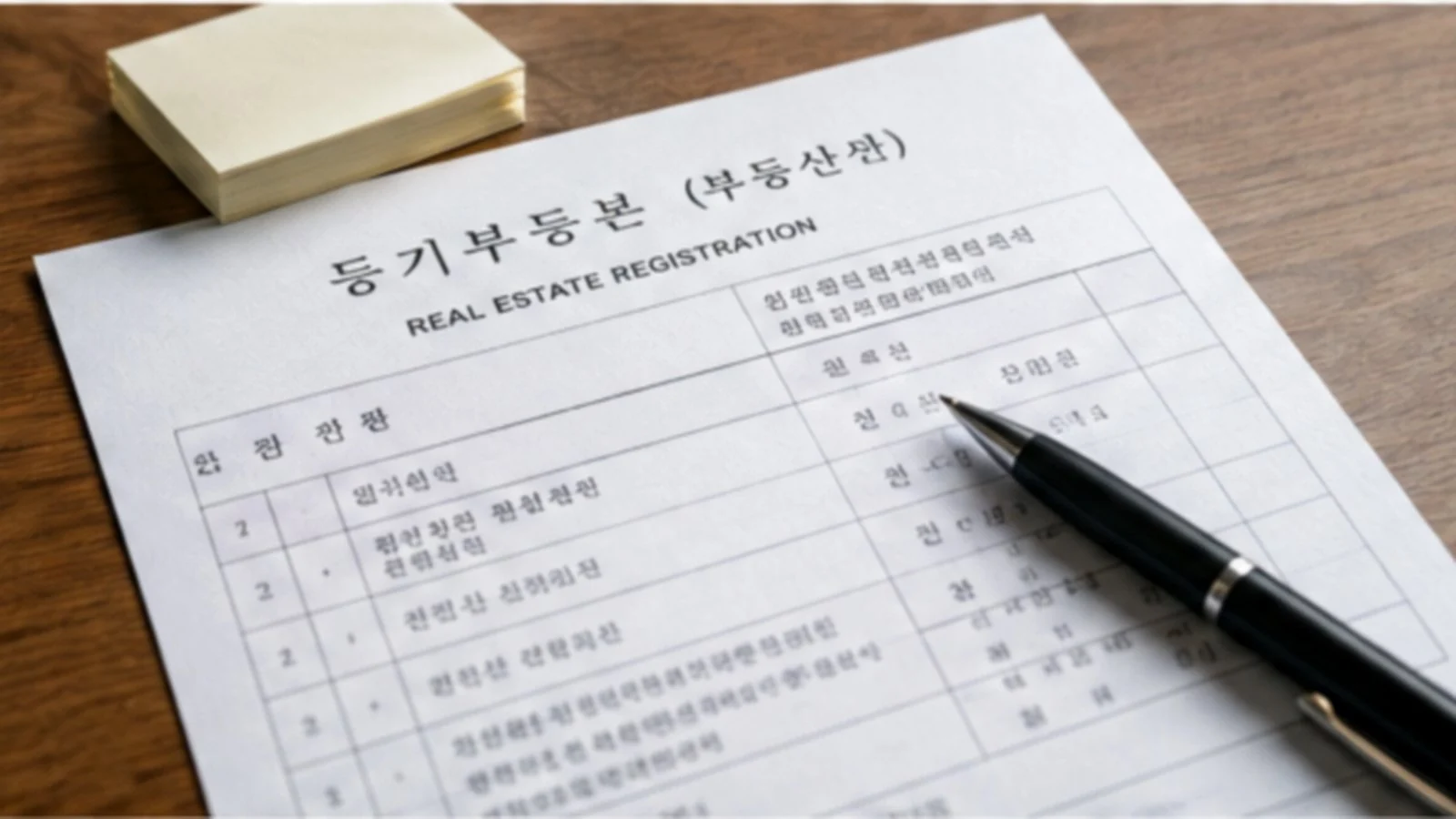
Read the Korean Property Registry: Ownership and Claims
The document commonly called deunggi-bu deungbon is Korea’s property registry record. Its formal English description is usually something similar to a certificate of registered matters.
Anyone can obtain the registry through Korea’s court registration system for the applicable fee. The record has three main parts: the title section describes the property, Gap-gu covers ownership, and Eul-gu covers rights other than ownership, including mortgages and other registered interests.
Because the document is written in Korean, arrange for a trustworthy person to explain it line by line. This might be an independent lawyer, a qualified housing counselor, or an agent whose explanation you can verify.
You do not need to memorize the Korean section names. You need clear answers to three questions:
Who owns the home?
What claims are registered against it?
Which of those claims may rank ahead of your deposit?
Think of the registry as a queue. If the property is eventually sold through an auction, people are not paid simply according to who asks first. The type and timing of their legal rights matter.
A large mortgage registered before your lease can therefore matter far more than the landlord’s promise that the property is “worth plenty.”
Mortgage entries can also be confusing. The registered figure may not be the same as the owner’s current bank balance. Do not accept a verbal statement that the debt has “mostly been repaid” without supporting documents and qualified interpretation.
A Clean Registry Is Not the Whole Story
A registry with no obvious mortgage may feel reassuring. It still does not tell you everything.
In a building with several tenants, earlier deposits may reduce the amount available to repay you. Those tenants may not appear in the ordinary property registry in a way that a beginner can easily identify.
Tax problems can also matter.
Under Article 3-7 of the Housing Lease Protection Act, the landlord must present specified information when entering the lease. This includes information about fixed dates, rent, and deposits connected to the property, along with national and local tax payment certificates. The landlord may instead consent to the tenant accessing the relevant information through the official procedures.
Asking for this information is not rude, dramatic, or an accusation of fraud. It is how you find out whether other claims may compete with your deposit.
When renting part of a multi-household building, ask how many tenants are already there, how much they have deposited, and whether their claims are earlier than yours. HUG, Korea’s public housing guarantee institution, specifically warns about landlords or intermediaries falsely describing senior deposits and mortgages.
The useful calculation is not simply:
Property value minus my deposit
It is closer to:
Realistic property value minus every mortgage, deposit, tax claim, and cost that may be paid before or alongside me
That second calculation is harder, but it is the one that matters.
Check the Building Register Too
The property registry and the building register are different documents.
The property registry tells you about ownership and registered rights. The building register helps confirm how the building and unit are officially recorded, including the formal property type and physical details held by the government.
The building register is available through Government24 and the responsible local office. Ask for the record covering the exact building and unit; a different address or an unrecorded alteration needs an explanation before you pay.
Ask the agent to obtain a current copy, but do not rely only on a spoken summary. Have the important details interpreted independently when the deposit is substantial.
Compare the official record with what you saw during the viewing.
Is the floor correct? Does the area make sense? Is an officetel being described as an ordinary apartment? Does a rooftop or basement room appear in the record? Does the registered unit number match the number on the contract?
A mismatch does not always mean fraud. It always means you need a proper explanation before paying.

Work Out What the Home Is Really Worth
The landlord’s asking price is not evidence of value.
Neither is the size of the deposit being requested.
Look at recent transactions involving genuinely comparable homes. Korea’s official real-estate systems publish sale and rental transaction information, but even official guidance warns that these figures are not an absolute answer. Two units in the same building can differ because of their floor, condition, layout, renovation, timing, and market circumstances.
The better question is not:
What could this apartment sell for in a perfect market?
Ask:
If this property had to be sold under pressure, would the proceeds still cover the earlier mortgages, earlier deposits, taxes, costs, and my deposit?
For a large jeonse deposit, use more than one source of value. Also check whether a deposit-return guarantee provider is willing to recognize the property and deposit amount.
HUG provides market-price and risk-diagnosis services, guarantee services, and consultation channels. Foreign renters may still need language assistance when using the system or discussing their documents.
Make the precheck before committing money, then use our deposit protection guide to understand the documents, reporting steps, and separate guarantee application.
When a provider refuses to cover a property, that refusal is information. Do not let the landlord dismiss it as meaningless without explaining the actual reason.
Slow Down Around Trust-Registered Properties
When the registry shows that a property has been placed in trust, pause the process.
In a trust arrangement, the person who originally owned or developed the home may not have independent authority to rent it to you.
HUG explains that the tenant may need the trust company’s consent or may need to enter the contract with the trust company itself, depending on the arrangement. The underlying trust record must be checked to understand who has authority.
This is not a situation where a friendly verbal explanation is enough.
When nobody can clearly explain who may sign the lease, who may receive the deposit, and what the trust company has approved, walking away is a reasonable decision.
Joint collateral can create another layer of difficulty. One mortgage may secure debt across several properties, so looking only at the unit you want can produce an incomplete picture. HUG advises checking the joint collateral list, the value of the properties involved, and the senior secured claims.
A useful beginner rule is simple:
When the ownership structure becomes more complicated than you can explain back in one clear sentence, do not pay until an independent professional has reviewed it.
Check the Registry Twice
A property registry is a snapshot, not a permanent certificate of safety.
The owner can create a new mortgage, transfer the property, or become subject to a seizure between the day you sign and the day you pay the remaining deposit.
Official Korean housing guidance therefore recommends checking the registry immediately before entering the contract and checking it again just before an interim or final payment.
This second check is easy to skip because move-in day is busy and the agent now feels familiar. It is also the moment when the largest amount of money often leaves your account.
Your contract should contain a professionally reviewed clause preventing the landlord from worsening the property’s legal position before you pay the balance and complete the procedures that protect your deposit.
That clause does not replace the second registry check. It provides another documented layer of protection if the property’s status changes.
Do Not Outsource the Entire Decision to the Agent
A licensed Korean real-estate agent must provide the parties with a property confirmation and explanation document when the transaction is completed. The document is useful, but it is not a promise that your deposit will be returned.
Read it with translation support. Pay particular attention to anything marked unknown, unconfirmed, unavailable, or based only on information supplied by the landlord.
A good agent should be able to explain the exact address, registered owner, registry, building register, mortgages, existing tenants, management fees, and payment process without rushing you.
Pressure is information too.
When someone says that you must transfer money immediately because another renter is waiting, remember that the inconvenience of losing one apartment is much smaller than the inconvenience of chasing a missing deposit.

What You Should Know Before Any Money Leaves Your Account
You should be able to identify the exact legal unit, the registered owner, and the signer’s authority.
You should understand every important registry entry, know about earlier tenants and tax information, and confirm how the unit is officially classified.
You should also have a defensible estimate of value and know whether the property appears eligible for the deposit-protection route you intend to use.
When one of those answers is “the agent said not to worry,” you do not have an answer yet.
The goal is not to make renting in Korea feel frightening. It is to move the decision away from trust and toward evidence.
A warm apartment, a polite landlord, and a professional-looking real-estate office can all be genuine. The documents tell you whether the financial story makes sense.
Next step: Once the property checks make sense, compare every payment and promise against the rental contract before signing.
For the complete renting sequence and other everyday essentials, visit the Korea Knowledge Catalogue’s housing guide.
Sources and Further Reading
Content reviewed: September 10, 2026. Check the linked official guidance before signing, transferring money, or submitting an application.
HUG: property registry checks: The title, ownership, and mortgage sections, plus claims that may not be obvious from the registry (Korean).
HUG: checking the landlord and representative: Identity, authority, and payment-account checks (Korean).
HUG: trust-registered properties: Trust records and authority to enter a lease (Korean).
Housing Lease Protection Act: Article 3-7 covers information the landlord must present, including tenancy and tax information (Korean).
HUG: Safe Jeonse app: Official property-information and risk-checking services (Korean).