If you are in Korea on Thursday, November 19, 2026, a school exam may briefly affect your journey. Suneung, Korea’s national university entrance exam, brings extra early trains, traffic controls near test centres and a carefully timed quiet period. You can still enjoy your trip. A few checks will help you avoid an awkward pickup or a surprise schedule change.
What visitors need to know
- Flying on November 19? Check your airline’s latest departure or arrival information.
- Taking a taxi near a school? Allow room to walk to a pickup point outside a controlled area.
- Have a morning appointment? Confirm its opening time directly.
- Walking past a test centre? Keep noise down and leave entrances clear.
The special arrangements support students getting to their exams and hearing the listening test. They do not amount to a general shutdown of tourist attractions, restaurants or shops.
The travel changes on November 19
The Ministry of Education’s 2026 exam-day measures ask government offices and businesses to move the start of work to after 10 a.m. Subway services in the Seoul metropolitan area will be increased between 6 a.m. and 8:10 a.m., when students are heading to their test centres.
Vehicles will be restricted from 200 metres around test centres. During the English listening test, 1:10–1:35 p.m. KST, aircraft and helicopter takeoff and landing schedules will be adjusted to reduce noise. Buses and trains near the centres are asked to travel slowly and avoid horns, while nearby events and construction should keep noise to a minimum.
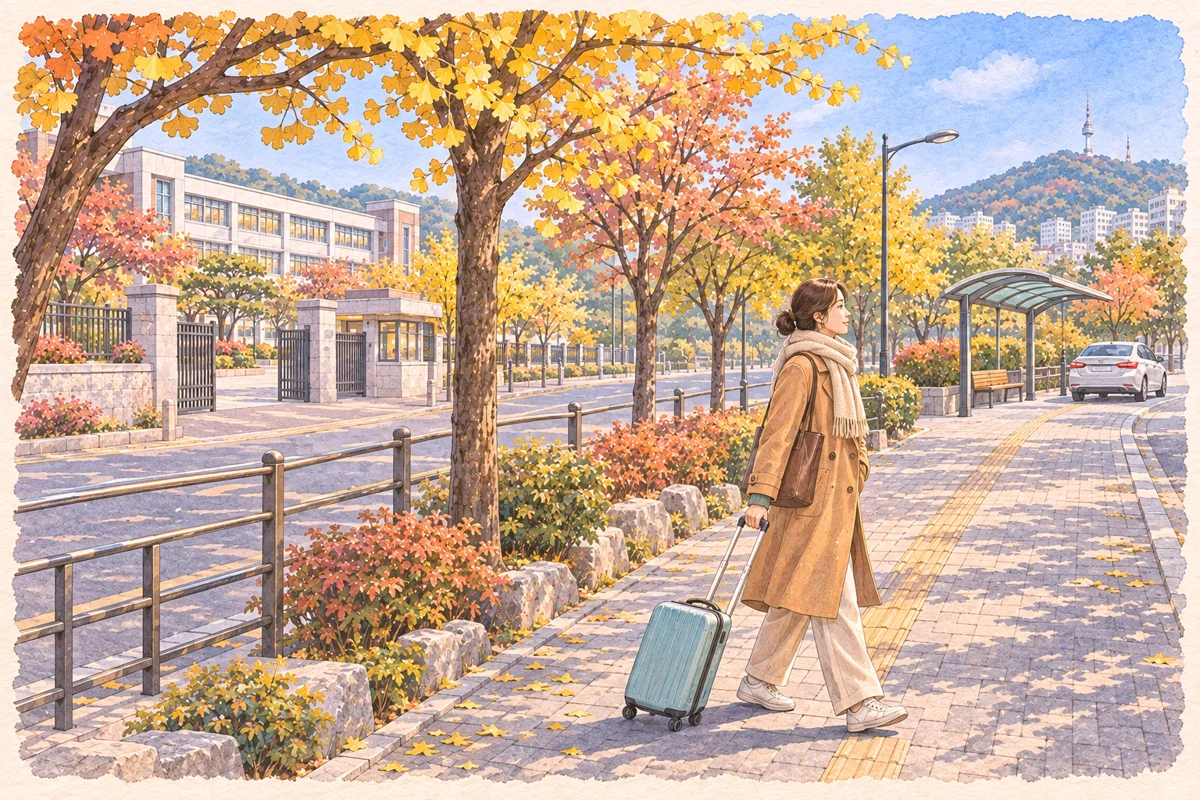
For visitors, the practical issue is your own route. If your hotel or appointment is close to a school being used as a test centre, check where a driver can stop. An extra block on foot is easier to plan before you are standing beside a suitcase.
For a flight, follow the airline’s schedule and notifications rather than assuming the airport is closed for the day. Keep your usual airport-arrival buffer. Our airport-to-Seoul planner guide can help you compare the ground-transport part of the journey.
Will shops and attractions open late?
The request to shift working hours is aimed at reducing the morning commute. It does not establish one opening time for every business. A museum visit, salon booking or hotel check-in should be checked with that particular provider.
If you have a flexible sightseeing day, keep your first stop flexible too. Save any booking confirmation and the venue’s contact details before leaving your accommodation. You do not need to cancel your itinerary simply because it is exam day.
Why K-pop fans joke about “banned songs”
Suneung also has a very different soundtrack online. Some songs are jokingly called “exam-banned songs” because their hooks are so persistent that students worry they will play on a loop in their heads.
SHINee’s Ring Ding Dong is a classic example. Soompi’s coverage describes its reputation as a song students try to avoid before the test. The nickname is a joke about an earworm, not an official ban on listening to K-pop.
For a fan, it is a small but memorable piece of context: a song you love for being impossible to forget is exactly the song somebody else may be avoiding before a long exam. Keep the playlist in your headphones around schools, and save the singalong for later.
If you are planning a fan-focused day elsewhere in Seoul, our K-pop birthday café guide explains how to find an event and what to expect.
Why one exam carries so much weight
To a visitor, the extra trains and quiet skies can look like an extraordinary response to an ordinary school test. To a student, Suneung sits at the end of years of preparation, with a university place and a hoped-for future on the other side.
It is not the only route into a Korean university, and a score does not decide an entire life. But the OECD’s 2026 review of Korean education describes Suneung as a major selection tool, particularly for the most sought-after universities. It connects that intense competition to a divided labour market, where pay, security and benefits can differ sharply between jobs. The ambition is often about stability as much as prestige.
That helps explain why parents can feel so invested. Education is a family expense and a source of hope, not simply a private contest between teenagers. Yet adding admissions routes has not automatically eased the burden: the OECD notes that meeting several different criteria can make preparation more complicated and increase reliance on tutoring.
The work behind the exam-day photographs
The school gate is only the visible end of the story. Preparation can combine ordinary classes, homework, practice papers, independent study and lessons at private academies known as hagwon. The precise routine varies, but the additional time and money are substantial.
For a sense of scale, Korea’s 2024 private-education survey found that 80% of elementary, middle and high school students participated in private education. Across all students surveyed, participation averaged 7.6 hours a week and spending averaged ₩474,000 a month. These figures cover private education across school ages, not total study time or a typical Suneung candidate’s schedule. They show how preparation extends beyond the school day and into household budgets.
Academic pressure is also something students report themselves. A study using the 2015 Korea Youth Risk Behavior Survey found that academic performance was a more common major stressor among high school students than among middle school students. Behind an exam-day send-off may be years of sustained effort, anxious comparison and family sacrifice.

A modern exam with a history of reform
Suneung is not an unchanged ancient tradition. It was introduced in 1993 for the 1994 university-entry year. The reform aimed to move beyond the memorisation associated with its predecessor and assess thinking skills. In its first year, candidates could take it twice, in August and November, and submit the better result. Difficulty differences between the two sittings prompted a move to one annual sitting the following year, as Edaily’s history of the first exam recounts.
The test has continued to change. Research tracing its English section documents repeated changes to structure, materials, difficulty and score reporting. The enduring argument is not simply whether students should work hard, but how fairly a national test can recognise their abilities and what kind of learning it rewards.
Academic pressure, mental health and suicide
Academic pressure can weigh heavily on students’ mental health. Research links academic stress with suicidal thoughts among Korean adolescents, alongside other pressures at home and in their relationships.
A 2024 study of 77,363 adolescents, using surveys from 2015 and 2020, found associations between several types of stress and suicidal thoughts. Family and home stress had the strongest association; academic achievement was one part of a wider picture. The survey measured self-reported thoughts and attempts; it did not track the effect of Suneung results.
As the World Health Organization explains, suicide arises from interacting factors rather than one event. Taking school pressure seriously means making room for support, relationships and mental health care, not treating tragedy as an inevitable consequence of a low score. A student’s need for care does not end when the exam does.
If this subject is personal for you or someone you know, Korea’s 109 suicide-prevention counselling line operates 24 hours a day.
Why Korea makes room for the day
The national measures have a practical purpose: help candidates reach their desks and prevent outside noise from interfering with the test. They also make sense as a public acknowledgement of the effort students have already made. A delayed commute or a quieter street is a small accommodation compared with the preparation behind that morning.
Respecting the day does not require believing the system is perfect. It means giving the people taking part the fairest, calmest conditions possible. For a visitor, that turns a curious travel disruption into something more understandable: the city briefly making space for its students.
A little consideration goes a long way
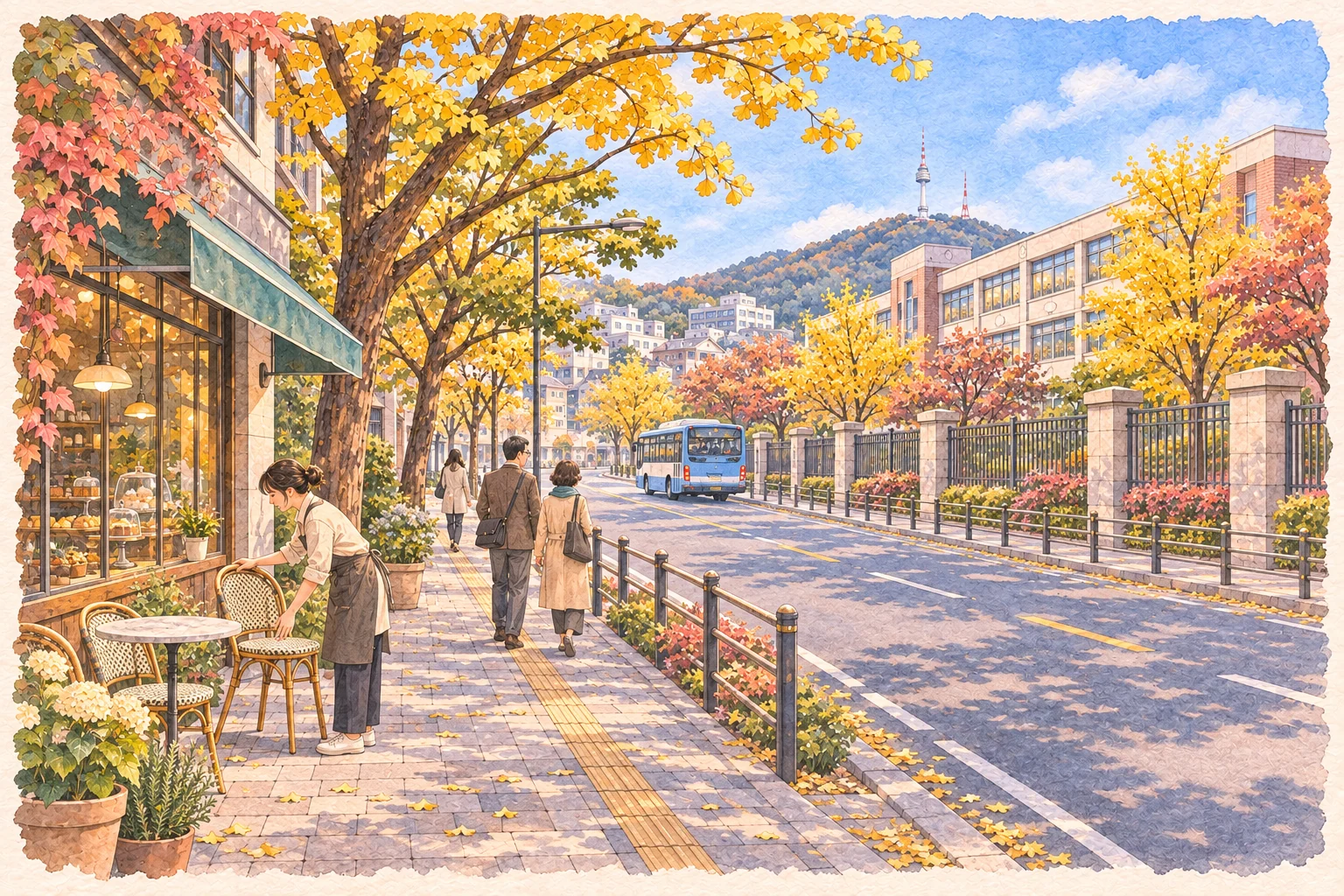
School gates can be busy with students, families and staff. Give people space, avoid gathering around entrances and do not treat an anxious student’s arrival as a photo opportunity. If a driver or staff member asks you to move to a quieter pickup spot, follow the local directions.
The day is still yours to explore. Check the few details that touch your plans, keep the volume low near test centres and let students get on with theirs.
Sources and further reading
Sources checked November 10, 2026. All times are Korea Standard Time.
Ministry of Education via Korea Policy Briefing: November 19 exam-day transport and noise measures (October 20, 2026).
Soompi: the exam-season nickname associated with SHINee’s Ring Ding Dong (August 26, 2018).