Sogang can mean a full degree in Seoul, a semester that counts toward your degree elsewhere, or ten weeks spent getting more comfortable speaking Korean. Those experiences share a university name and a neighborhood, but they come with different applications, tuition bills, course choices, and housing arrangements. Choosing the right route makes the rest of the research much easier.
The useful starting point is your ordinary Tuesday. Would you be in a graduate seminar conducted in English, taking undergraduate courses approved by your home university, or spending four hours in a Korean-language classroom before going home to review? Sogang has options for each. This guide explains how they fit together, where English is a realistic academic plan, and what deserves a closer look before you commit.
Sources checked: October 2, 2026. Fees below retain their stated program and period. A 2026 price is a planning reference for that route, rather than a confirmed bill for a later intake.
Start with the route you actually need
A degree applicant enters through undergraduate international admissions or the relevant graduate school. An exchange student stays enrolled at a partner university and arrives through nomination. A visiting student applies independently for a semester abroad while remaining enrolled at a recognized institution. A Korean Language Education Center student applies to KLEC for a language course, which does not itself enroll them in a Sogang degree.
Sogang now groups exchange and visiting students under the Sogang Semester Abroad Program, or SSAP. They share an academic and student-support framework, but their tuition arrangements differ: exchange tuition follows the agreement with the home institution, while visiting tuition is paid directly to Sogang. A home university's partnership is therefore more than a convenient introduction. It determines which application and payment route is available to you.
For a degree, use the international undergraduate admissions guide or your graduate school's own instructions. For standalone Korean study, use KLEC registration. Keeping those pages separate prevents a language-course benefit, exchange arrangement, or graduate scholarship from quietly becoming an assumption about every international student.
Undergraduate degrees: choose the subject and its teaching language together
The undergraduate major directory covers humanities, social sciences, economics, business, media and arts, natural sciences, engineering, computing, and Loyola International College. It also tells applicants to use the announced admissions guide for the units actually recruiting. A subject appearing on the university's website is useful for exploration, but the intake guide determines whether you can apply to it now.
As of our check, the admissions site posts the Spring 2027 international guide. Start there for applicant and parental nationality rules, previous education, accepted language evidence, documents, and the application timetable. The degree route should be settled before you spend money on translating or authenticating records. Transfer and first-year entry also deserve their own reading; one student's successful application does not establish another student's eligibility.
For an undergraduate option with a clear English-medium statement, look closely at the Geppert School of International Studies within Loyola International College. Its official description specifies an all-English curriculum with International Relations, International Commerce, and Asian Studies tracks. Those tracks have different intellectual centers, from politics to international economics and business to the study of Asia across disciplines. Choosing among them is a subject decision as well as a language decision.
Geppert is an undergraduate school. Sogang's Graduate School of International Studies, discussed below, is a separate graduate route. Likewise, a major with “global” in its name does not establish an English-only degree by itself. For other undergraduate subjects, build a plausible semester from required courses, their teaching languages, and any general-education or graduation requirements. That is a more useful test than counting English electives anywhere on campus.
Graduate study: General Graduate School and GSIS have different rules
Research applicants should begin with the General Graduate School's international guide. Its Fall 2026 department table separately identifies admissions language evidence and teaching language. For example, it lists the Global Korean Studies major as an English track with English instruction, while Korean Language Education within the same department is taught in Korean. Physics is also listed as an English track. Other departments use Korean, mixed instruction, or subject-specific languages, with teaching arrangements potentially varying by semester.
This is why an accepted English test score does not, on its own, answer whether you can complete a graduate program in English. The curriculum, supervisor, research group, and thesis requirements still have to fit your plan. When approaching a department, a concrete research interest and a short list of relevant courses will get you further than a general request to study at Sogang.
The Spring 2027 GSIS international admissions page is much more explicit: all courses and academic activities are conducted in English. It recruits master's and doctoral students in International Relations, International Trade, International Finance, and Korea & East Asia Studies. Its degree-program page describes full-time study and says it does not offer evening courses.
For Spring 2027, GSIS requires valid English evidence unless an exemption applies, including documented study in a degree conducted entirely in English. Its admissions page states no minimum English test score, but scholarship conditions include separate score requirements. Treat admission eligibility, competitive selection, and funding as three related decisions.
Exchange and visiting study: plan around courses you can actually take
Under SSAP eligibility, exchange applicants need nomination from their home institution, at least one completed semester of higher education by nomination, and their home institution's study-abroad requirements. Visiting applicants need enrollment at a recognized higher-education institution and at least one completed semester before participation; they apply directly without partner nomination.
The SSAP academic overview gives undergraduate students a normal load of 9–15 credits and graduate students 3–12. Undergraduate participants cannot take graduate courses. Graduate participants may take undergraduate and graduate courses, subject to their agreement, eligibility, and individual course requirements. Most courses carry three credits, but your home university decides how those credits count toward your degree.
Sogang says approximately 15–20% of its undergraduate courses are taught in English. It also makes an essential distinction: an English-taught course is not necessarily open to SSAP students. The course-offering instructions explain how to select the relevant year and semester in the catalog and filter courses for exchange and visiting students. Use the course information and available syllabus to evaluate content, prerequisites, assessment, and credit recognition.
Previous semesters are helpful when your learning agreement is due before the new list appears. They are evidence of what has been offered, rather than a reservation for the next semester. Prepare alternatives in the same subject area so one unavailable class does not leave a hole in your home degree.
The registration page describes a dedicated online process for undergraduate exchange and visiting students, with exact instructions sent by email. Graduate-level registration follows a different process involving instructor approval. Follow the instructions for your level and intake, and give your home university enough time to approve substitutions.
KLEC: Korean study with a substantial daily workload
The Korean Language Education Center is a separate application route that can suit someone whose main goal is language learning. Its teaching descriptions emphasize communication and speaking activities while also including listening, reading, and writing. That tells you something useful about classroom priorities; it does not promise a particular level of fluency after one term.
The morning regular course, KGP200, runs for ten weeks with 200 classroom hours, Monday through Friday from 9 a.m. to 1 p.m. The afternoon regular course, KAP200, also has 200 hours, from 1:30 p.m. to 5:30 p.m. Both list levels 1–6 and classes of no more than 16 students.
Four classroom hours leave part of the day free, but the course still occupies the working week. Leave room for homework, review, commuting, and ordinary life in Korean. Choosing morning or afternoon is partly about when you learn best and partly about how the rest of your routine will work.
The lighter KGP60 evening course meets on Monday, Tuesday, and Thursday from 6:50 p.m. to 8:40 p.m., totaling 60 hours across ten weeks. It opens in spring and fall rather than all four regular sessions. Its level availability and whether a class runs depend on enrollment, so it is a different commitment from the weekday intensive program.
KLEC registration is open to foreigners or overseas Koreans with a high-school diploma or higher. New students with prior Korean study take placement tests; beginners can choose level 1. For applicants who need the language-training visa route, the center requires at least two regular terms and additional documents. That is the center's admission and document process; receiving acceptance is not a guarantee of immigration approval.
If Korean study is preparation for a later degree, work backward from that degree's current admissions guide. A KLEC completion certificate, TOPIK result, and English-medium qualification serve different purposes. Finishing a language level can strengthen an application without settling nationality eligibility, academic selection, or the degree's own language requirements.
Korean alongside exchange: three options with different tradeoffs
SSAP students have an optional Korean component, but its formats should not be lumped together. The exchange and visiting Korean-program page describes the intensive KAP200 as worth 12 credits. It takes up most of a normal undergraduate semester's credit load and a large block of every weekday. It makes sense when learning Korean is a central academic purpose of the visit.
An intensive tuition waiver may apply to exchange students majoring or minoring in Korean or Asian Studies who also have a professor's recommendation. That is a limited eligibility route, not a general free Korean-course offer for all exchange or visiting students. Resolve the waiver with the exchange office before including it in your budget.
KGP60 is the evening option with three SSAP credits and a separately payable fee. Use KLEC's evening-course page for its actual 60-hour timetable. A third option, Korean Language & Culture through Global Korean Studies, is a regular three-credit undergraduate course with no additional tuition under the SSAP arrangement. It combines language and cultural content and is subject to course registration.
The choice is really about the semester you want. An intensive course leaves much less room for academic subjects. An evening course preserves daytime study but adds another recurring commitment. A regular academic Korean course can be easier to fit into the timetable, provided you get a place and its level and content suit you.
Tuition and scholarships: keep each program's numbers attached to it
KLEC's current fee table, revised from Spring 2026, lists KRW 1,860,000 for a morning regular term, KRW 1,800,000 for an afternoon regular term, and KRW 700,000 for the evening term. New students add a KRW 100,000 nonrefundable fee, making the listed initial totals KRW 1,960,000, KRW 1,900,000, and KRW 800,000 respectively. Materials are purchased separately. Housing and everyday living costs sit outside those course totals.
For a graduate planning reference, the General Graduate School's Fall 2026 guide lists semester tuition of KRW 5,735,000 for humanities and social sciences, KRW 6,874,000 for natural sciences, and KRW 7,650,000 for engineering and integrated knowledge. It separately lists a KRW 1,042,000 admission fee and KRW 15,000 student-association fee. Those figures do not establish undergraduate or GSIS tuition, and the guide says the next intake's amounts may change.
Undergraduate applicants should obtain the fee for their admitting unit and intake from international admissions. Visiting students should obtain their direct-enrollment bill from SSAP. Keeping those amounts open until the relevant office confirms them is more useful than using a university-wide average that mixes different programs.
For enrolled international students, Global Scholarship I and II offer selected tuition awards at several levels. Their listed previous-semester requirements include at least 12 earned credits, with different GPA thresholds for academic-excellence and financial-need awards. Applications recur each semester. Minimum eligibility should not be treated as a guaranteed reduction in your next bill.
Graduate funding has its own continuation rules. The General Graduate School's Fall 2026 Global Scholarship requires a regular-semester GPA of at least 3.5 out of 4.3 for the following semester, with credit and program conditions. GSIS awards range from 25% to 100% of tuition, but later awards depend on academic performance, credit requirements, English evidence, competition, and available funding. Budget from the award actually offered, including its renewal terms. Our scholarship guide explains how to compare these mechanisms.
Housing changes with your student category
For SSAP, Gonzaga Hall accommodation offers furnished double rooms with a private bathroom, internet, and shared facilities. Housing is requested through the SSAP application. Read the offer for the residence period, payment, meal arrangements, required documents, and rules; cooking is not allowed in the rooms. The room and residence period matter as much as the headline price.
New international General Graduate School students have a different process. Its Fall 2026 guide directs them to apply through the graduate-school office and describes first-come placement. Its 2026 room-only reference is KRW 2,112,200 for a semester or KRW 3,132,500 for six months in a two-person room, with meals excluded. Use the instructions sent after admission for your own intake.
Standalone regular KLEC students need to plan for private housing. The center's registration page explicitly says regular-course students cannot receive dormitory accommodation. The summer special program's possible dormitory arrangement is a separate exception, offered first come. It should not enter a regular-term housing budget.
For private accommodation, compare the commute, total upfront payment, contract length, furnishings, and utilities. A short course or one-semester stay may need a different arrangement from a four-year degree. Our guide to moving into a Korean apartment explains the rental mechanics.
Campus life in Mapo: make the neighborhood work for your routine
Sogang's Seoul campus is at 35 Baekbeom-ro in Mapo-gu. Its campus directions identify access from Sinchon on Line 2, Daeheung on Line 6, and the nearby Sogang University station. When comparing rooms, route the journey to your actual teaching building. The same neighborhood can produce quite different daily walks.
Exchange and visiting students have a built-in introduction through Hands Up for Gathering, or HUG. SSAP applicants are automatically included in its buddy program, and the organization lists activities such as field trips, cultural events, and Korean tutoring. That offers a practical first point of contact with Sogang students. Friendships still develop through repeated contact, whether in class, a club, a language exchange, or a shared routine.
Degree students and language students should look for the support and activities attached to their own enrollment. Being on the same campus does not mean every orientation, buddy arrangement, or facility follows the same access rules. On arrival, the priorities are pleasantly ordinary: find your classrooms, understand your timetable, get comfortable with the commute, and set up the essentials. Our guides to Korean transportation and the first things to arrange after landing cover that groundwork.
Is Sogang a good fit for your plan?
Sogang deserves a closer look if you want an identified English-medium international-studies program, an exchange semester with workable course access, or Korean study that makes communication a large part of the classroom day. The strongest fit is specific: a curriculum you want, language requirements you can meet, a bill you can support, and housing that works for your student category.
Before committing, assemble those four pieces for one route rather than borrowing the best feature from each. A degree scholarship, exchange dormitory, and language-center timetable can all be real without belonging to the same student experience. Once your plan holds together on its own terms, the campus and neighborhood become much easier to imagine as part of your daily life.
Sources and further reading
International undergraduate admissions guide: current intake and application instructions.
Undergraduate majors: subject directory and recruiting-unit distinction.
Geppert School of International Studies: undergraduate tracks and all-English curriculum.
General Graduate School international admissions: Fall 2026 guide, department languages, fees, scholarships, and housing.
GSIS Spring 2027 international admissions: eligibility, English instruction, and scholarship conditions.
GSIS degree programs: subject areas and full-time study.
Institutional scholarships: continuing-student awards and applications.
SSAP program, academic overview, course offerings, and registration: exchange and visiting routes and course access.
SSAP Korean study, accommodation, and HUG activities: route-specific student life.
KLEC morning, afternoon, evening, and registration: workload, fees, documents, and housing eligibility.
Campus location and campus directions: address and nearby transit.
Korea Unboxed related reading
Scholarships for international students in Korea
How moving into a Korean apartment actually works
Getting set up after landing in Korea
Image credit
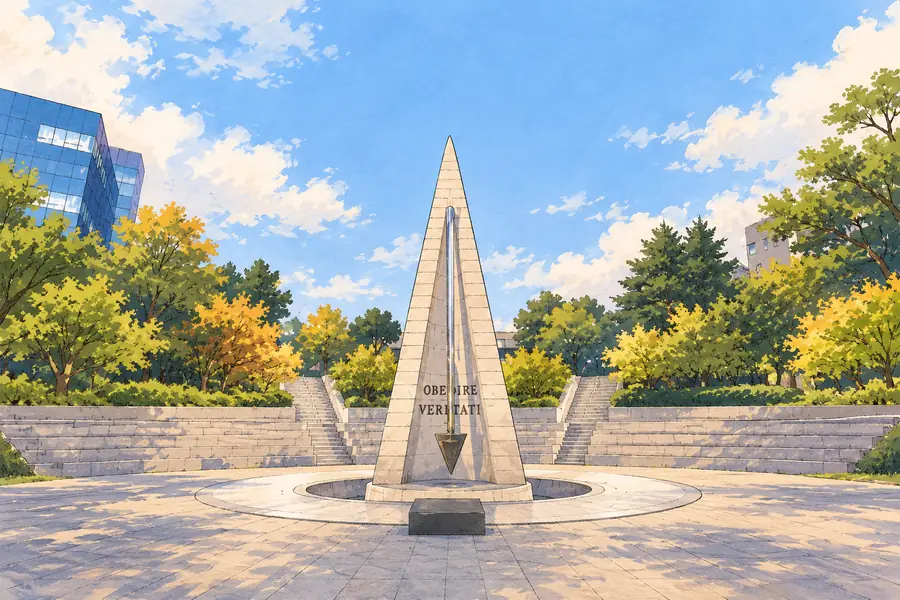
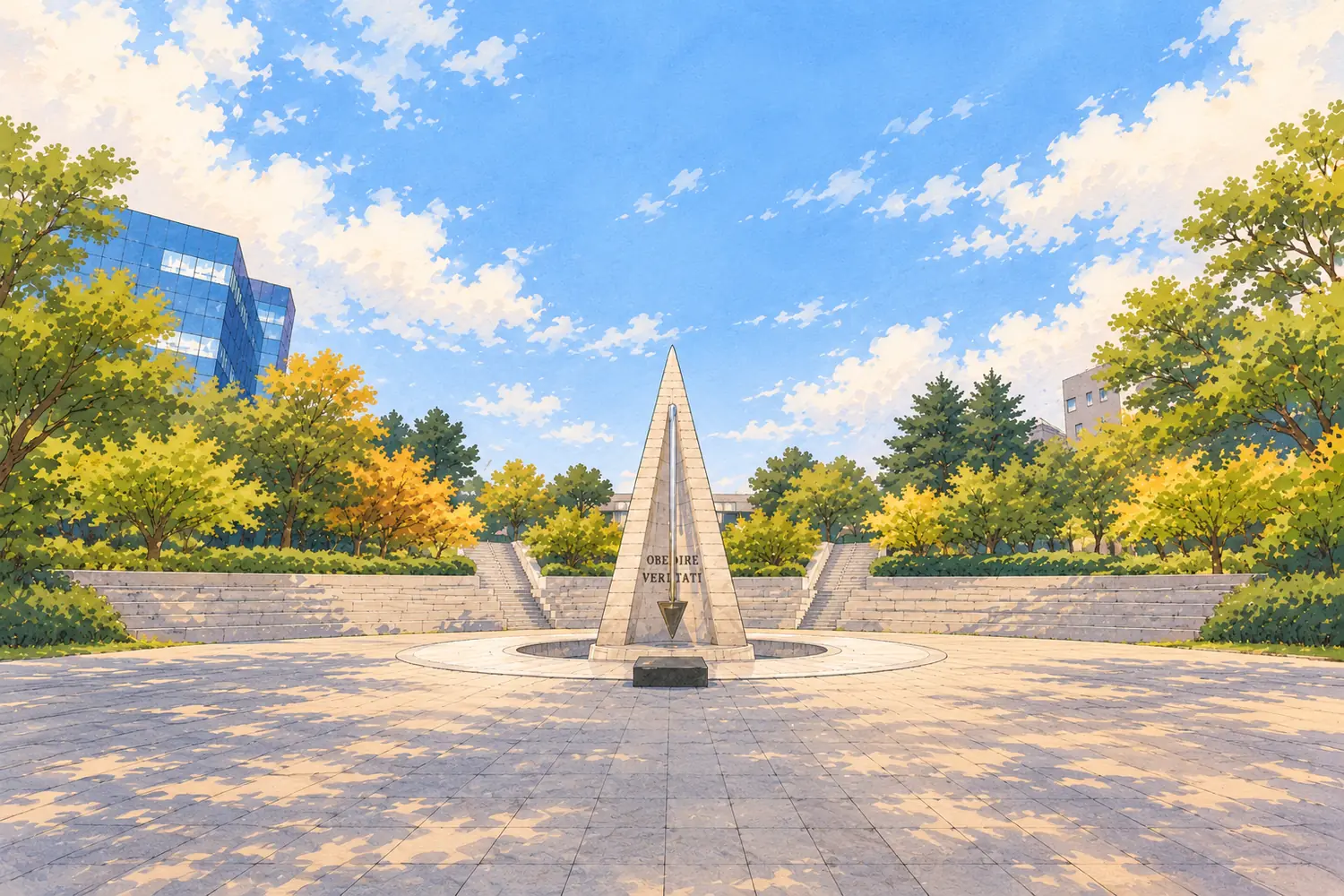
AI-generated illustration of Sogang University’s Albatross Tower and surrounding campus, based on a 2021 photograph by 알로스 via Wikimedia Commons, available under CC0 1.0. This is an illustration, not a documentary photograph. Optimized as WebP; display crops may vary.