Christmas Day is a public holiday in South Korea. It can mean a Christmas Eve service, a dinner reservation with someone you love, an outing with friends, or an evening at home. What often surprises visitors is how much of the celebration happens out in the city: people head to illuminated streets, cafés, and department-store displays. That public side of Christmas has a longer history than the giant trees and limited-edition cakes suggest.
When Christmas Eve meant a rare night out
The National Archives of Korea traces Christmas observances to the late nineteenth century. In 1897, Paichai School reportedly hung hundreds of lanterns near its hall for Christmas. The archives connect the form of those lanterns with Korean Buddhist customs. The display was at a school, and its mix of local forms and a newly introduced celebration shows how early Christmas began taking on a shape of its own in Korea.
Going out and exchanging gifts already featured in newspaper accounts from the 1930s. Then Christmas Eve acquired another draw. In his study of the 1950s, historian Bang Won-il describes how an exception to the nighttime curfew let young people stay out celebrating while churches held overnight worship, plays, and early-morning caroling. The curfew exception was one reason the night stood out, rather than a single explanation for the modern date-night tradition.
At church: worship, carols, and a neighborhood gathering
For many Christians in Korea, the birth of Jesus is the heart of Christmas. How it is observed depends on the congregation and family. A Catholic parish might hold a Christmas Eve Mass; a Protestant congregation might organize worship, music, or a Nativity play. The Korean tradition of saebyeoksong (새벽송), singing Christmas carols in the early hours, is documented in church history. It should not be taken as a timetable for a church today.
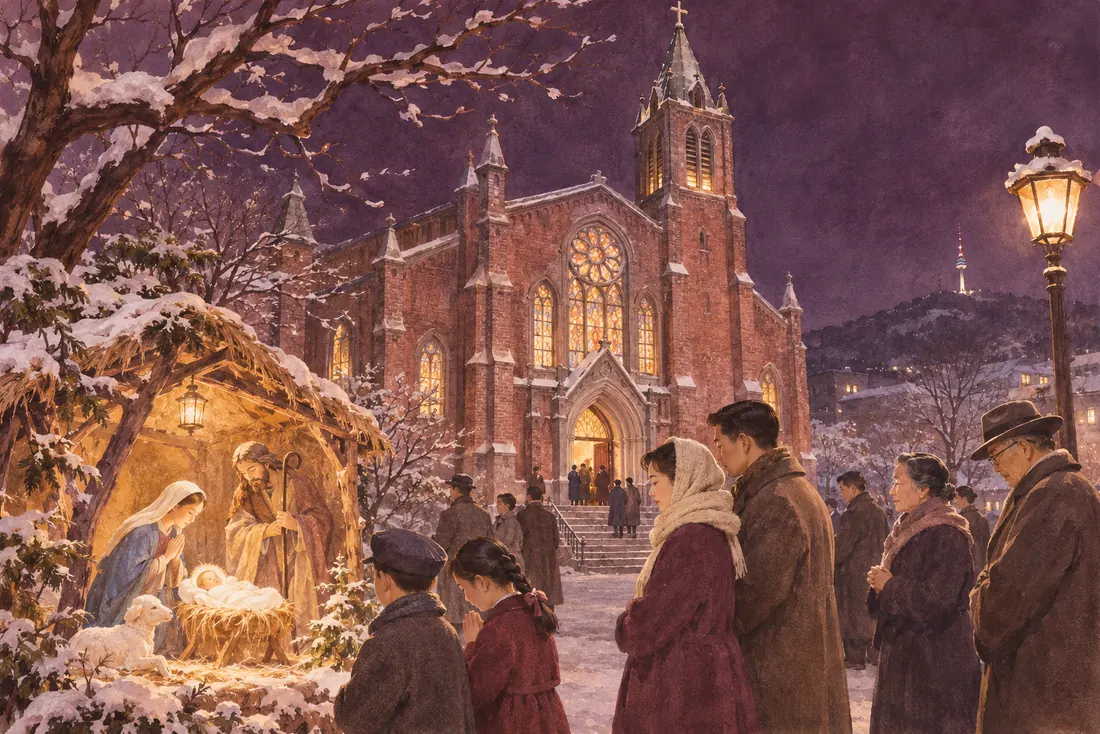
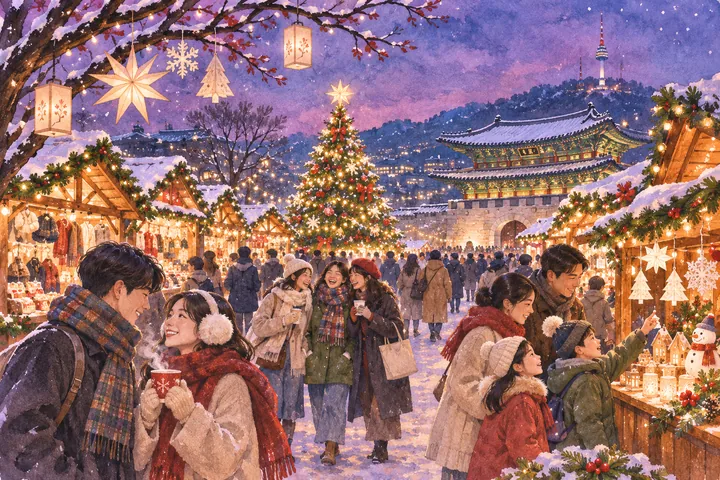
Myeongdong offers a specific example of worship and public celebration sharing a neighborhood. In a 1959 account cited by Bang, people attended midnight Mass at the cathedral and took photos by an outdoor Nativity. The Archdiocese’s 2025 program brought Mass, a market, live music, and social-welfare stalls into the same precinct. The two snapshots are decades apart, but both show why a walk through Myeongdong can take you past very different ways of spending Christmas.
Out in the city: dates, friends, and a cake worth picking up
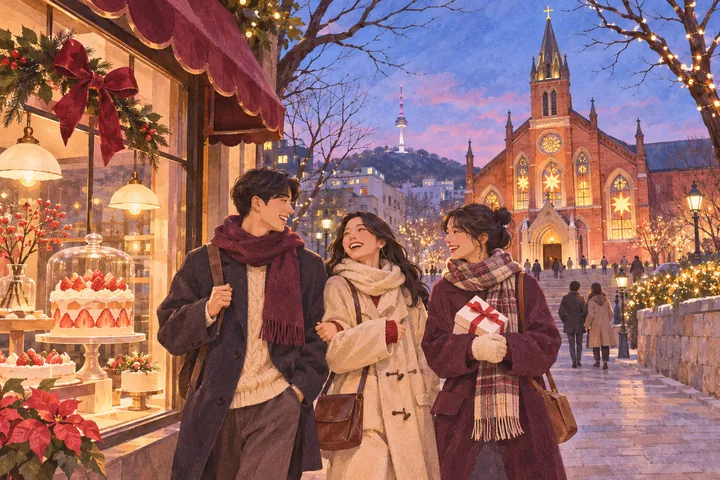
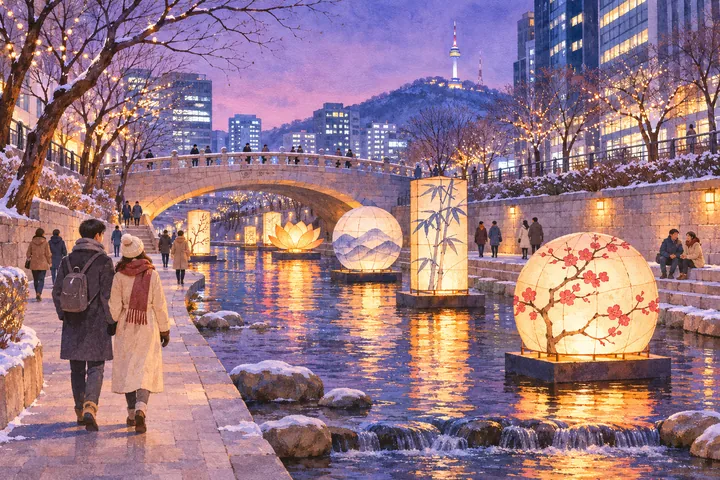
Visit Seoul describes the romantic side of the holiday alongside religious and family celebrations. A date might be dinner followed by a walk under the lights. Friends can make the same evening out of it; families might choose a daytime display or stop for dessert. A December crowd outside a department store tells you where people are gathering, not how everyone celebrates.
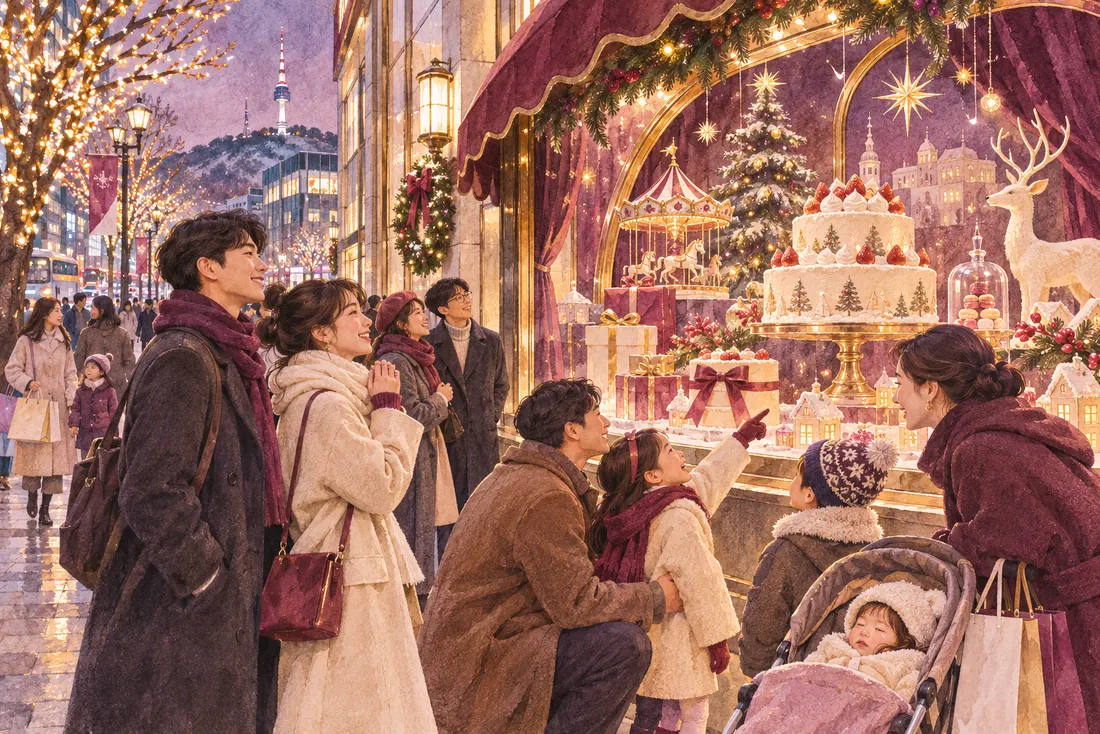
Retailers give people reasons to make a trip themselves. In its 2026 campaign, Starfield Library at COEX built a display around a story in which a dokkaebi, a figure from Korean folklore, becomes Santa. The installation let visitors step into scenes from the story and read it in the library. That is a useful example of how businesses market Christmas as an outing: the scene itself is something to come for, even without a shopping list.
Christmas cake can play a smaller version of that role. A bakery display gives a group something to choose together or someone a dessert to bring home. Korea.net’s year-end feature puts cakes alongside lights and markets as part of the public-facing season. There is no single Christmas menu to expect. If there is a particular cake you want, check whether the shop takes preorders rather than assuming it will be on the counter on December 25.
At home: a small tree, a full tree, or no tree
Some households decorate and exchange gifts; others keep the day low-key. One way to decorate without moving furniture is a tabletop tree, a wreath, or a string of lights. Korean retailers offer trees as small as 40 centimeters. That is an example of what is available, not a measure of how many people decorate. Floor space and storage are practical considerations, but so are family habits, personal taste, and whether someone celebrates at all.
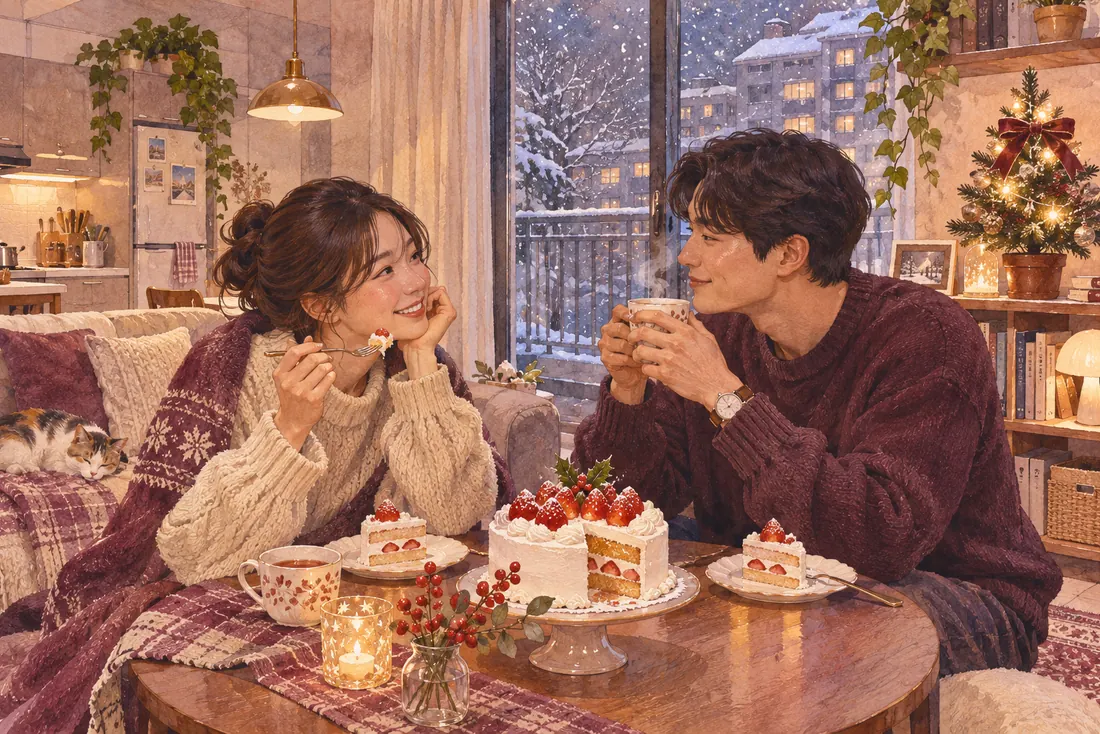
A little tree beside an apartment window can be as much a part of the season as a towering tree outside a department store. They just belong to different moments: one stays with you after you come home, the other gives you somewhere to go with someone.
How to join in on a visit
- For a service: Check the parish or congregation’s current notices for language, times, and visitor guidance. Be mindful of worshippers, and ask before taking photos.
- For lights, markets, or a meal: Check the exact venue and date. December 25 is a public holiday, but that does not tell you whether an individual restaurant is open, whether a pop-up is walk-in, or when a projection runs.
- For a quieter Christmas: Pick up a dessert or find a neighborhood display instead of building your evening around the busiest installation.
For the rest of the year, our guide to Korean holidays and seasonal traditions explains where Christmas sits alongside Seollal, Buddha’s Birthday, Chuseok, and Dongji.
Planning a visit? See this season’s Christmas events across Korea or our Seoul winter lights walking guide.
Sources and further reading
- National Archives of Korea: Christmas in the historical record.
- Bang Won-il: The Study of Christmas in 1950s Korea. See the article’s Myeongdong account on page 22.
- A liturgical study of Korean Christmas dawn caroling.
- Archdiocese of Seoul: Myeongdong Christmas program, 2025.
- Visit Seoul: Public holidays and Christmas observance.
- Shinsegae Property: Starfield Library’s 2026 Christmas installation.
- Korea.net: Christmas lights, cakes, and year-end gatherings.