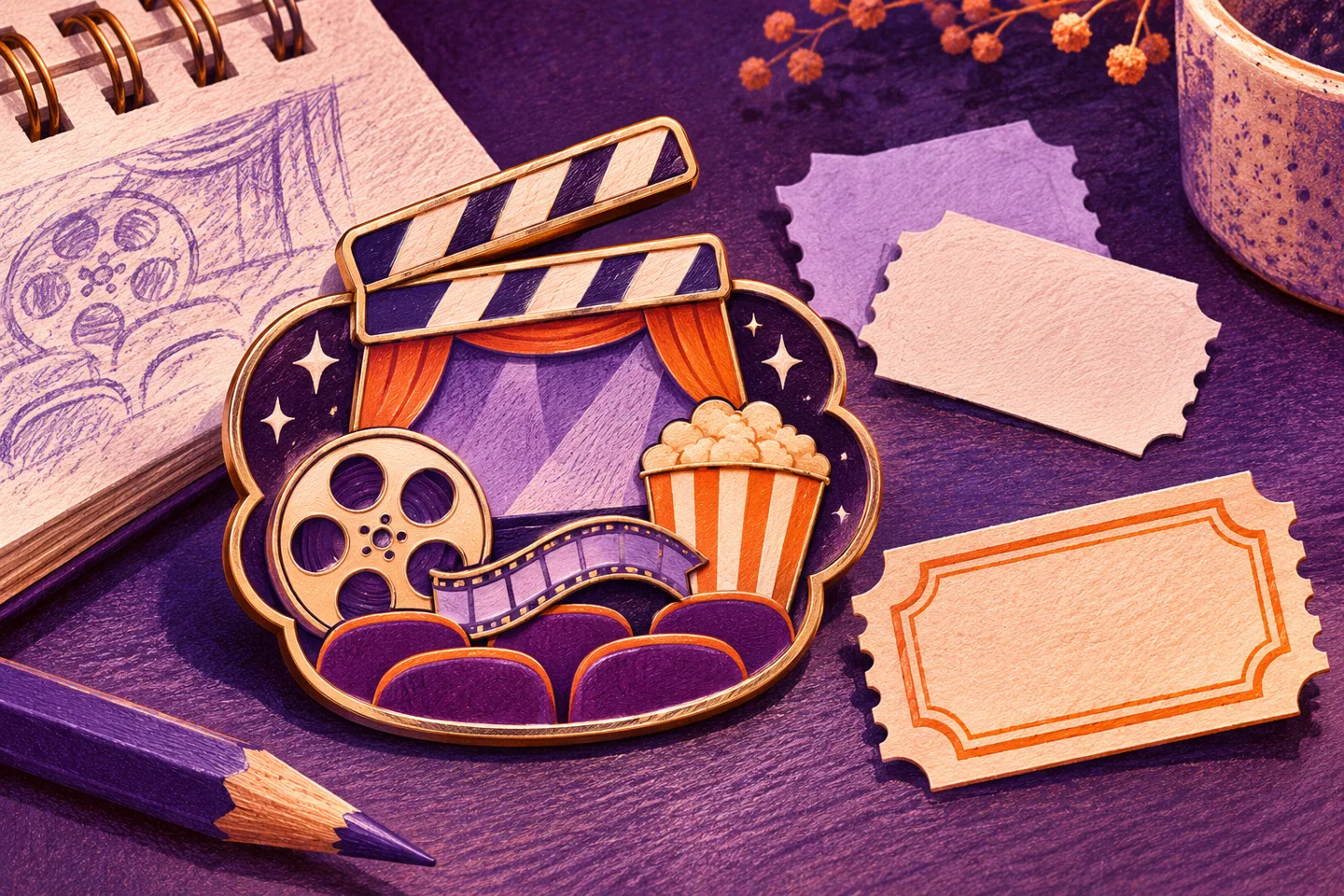
A festival badge can bring back the night you saw a film with friends. A keepsake styled as a lottery ticket can remind you of a drama even when the title is nowhere in sight. Both give a fan something specific to remember. If you’re planning merchandise for a screening, a launch, or a creator-led event, start by asking what that moment is. Then choose an object that can carry it.
Seoul design studio Tokak (또각), led by Yoon Ja-young, offers three ways to do that: a badge tied to a festival, a paper collectible tied to a drama, and a box that turns a story’s countdown into something you can open. Consumer researcher Russell Belk’s work offers a way to read those designs and a useful question for the next project: where would someone put this after they get home?
What Tokak gives fans to take home
The festival badge: remember being there
The 22nd Mise-en-scène Short Film Festival announced a metal badge made in collaboration with Tokak. [1] A pin is small enough to bring home from a screening and easy to wear on a bag or leave next to a stack of tickets. Its connection is to the festival itself. A filmgoer could use it to remember attending that edition or to signal an interest in independent cinema.
The Dear X lottery ticket: hold a piece of the story
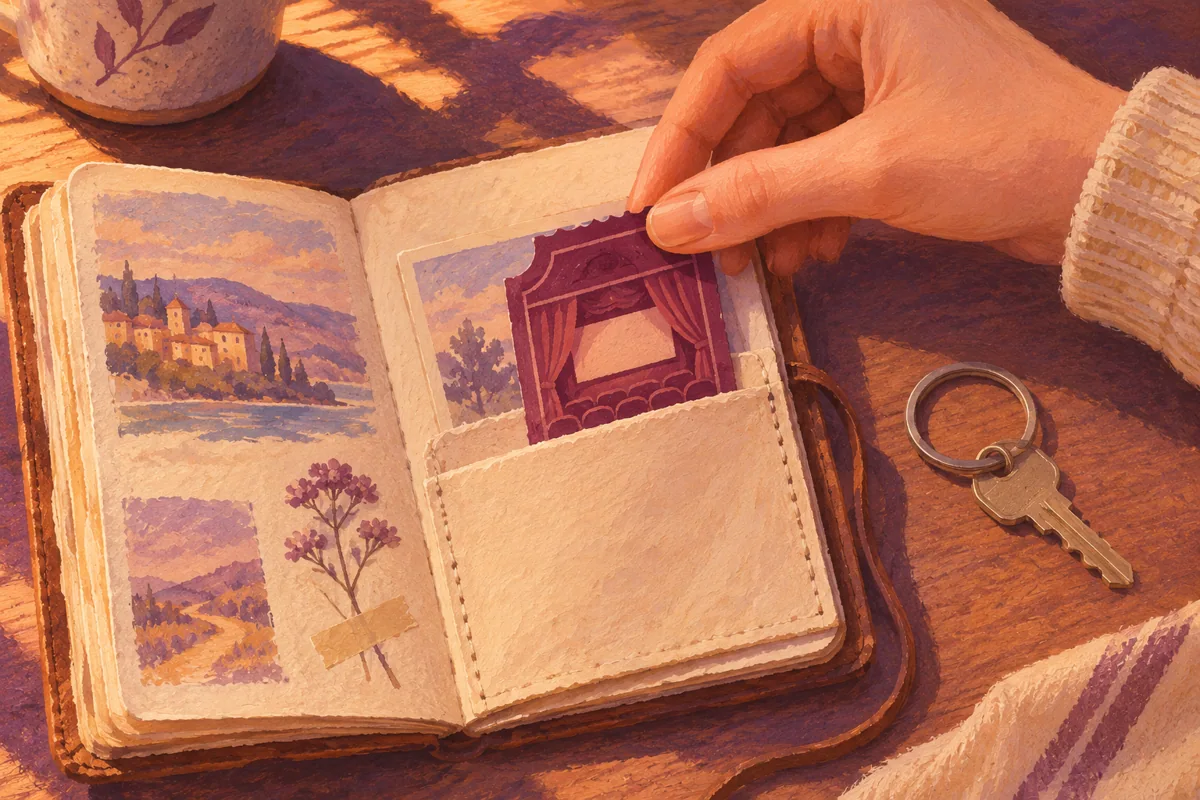
In its visit to Tokak’s studio, Cine21 identified a lottery-ticket collectible among the official merchandise the studio made for the Korean drama Dear X. [2] Compared with the festival badge, the reference is narrower. A ticket feels like it could belong inside the drama. Someone who recognizes the reference can tuck it into a notebook or show it to another viewer. Paper works because the format already looks familiar.
The Way Back Love box: make the countdown something fans can do
In Way Back Love, a young woman learns that she has one week left to live. [3] Yoon told Cine21 that she and TVING planned an advent-calendar-style set around that seven-day premise. The box had seven compartments, with keepsakes including a badge, a calendar, and stickers. She also described the practical complication: each item ran on a different production schedule. [4] The sequence of openings makes the form part of the idea. It also gives a smaller team a reason to test a simpler version, such as a set of folded cards, before committing to a multi-part box.
Why a small object can matter
In his 1988 paper Possessions and the Extended Self, Belk argued that possessions can help people form and express a sense of who they are. He also described how souvenirs hold onto experiences and feelings that would otherwise be hard to pin down. [5] A badge on a bag can say something about the wearer’s interests. A ticket saved in a drawer can matter just as much to its owner, even when no one else sees it.
That’s a useful way to interpret Tokak’s work. The examples show design choices, and Yoon’s account explains how the countdown informed one of them. They don’t tell us how many people kept the items, how much they sold, or whether Tokak drew on Belk. For a creator deciding what to produce, the insight is to give the object a second life you can picture: someone wears it, files it away, puts it on a desk, or opens it with a friend.
How to test one merch idea before a full run
- Find a detail the audience already talks about. Look at fan comments, reviews, and conversations after a screening. Notice which scene, ritual, or phrase people bring up unprompted. If you have two good candidates, sketch one object for each.
- Pick a form that fits what fans might do with it. A pin can travel on a bag; a paper insert can fit inside a journal; a simple foldout can give fans a sequence to uncover. For example, imagine a small cinema whose regulars always photograph the chalkboard listing its midnight movies. A foldout version of that board gives those regulars something they already recognize in a format that folds into a pocket.
- Make a sample and show it without explaining the reference. Ask a few people who know the work, “What does this remind you of?” and “Where would you put it?” Listen for specific answers, like “the third screening” or “in the sleeve where I keep my tickets.” If people need the pitch to recognize the idea, revise the visual clue or choose another detail.
- Check the unglamorous parts before you order. Ask for a physical proof, check the minimum quantity and lead time, and work out how people will receive it. Try the clasp, fold the paper, or open the package yourself. Confirm permission for any artwork, character, dialogue, logo, or other material you don’t own. A straightforward piece you can deliver on time leaves you room to learn.
A one-sentence brief for a first sample
For [audience], turn [a detail they already recognize] into [an object] they can [wear, keep, or use] after [the experience].
After a small run, check two things separately. Orders and pickups tell you who wanted the item at launch. A later conversation about where the object ended up tells you something different. That second answer is where you learn whether the keepsake was worth making again.
Sources
- Mise-en-scène Short Film Festival: official 2026 merchandise announcement.
- Cine21: visit to Tokak’s design studio, including the Dear X ticket.
- CJ ENM: Way Back Love, official synopsis.
- Cine21: Yoon Ja-young’s commentary on her merchandise projects, including the Way Back Love box.
- Russell W. Belk, “Possessions and the Extended Self,” Journal of Consumer Research 15, no. 2 (1988): 139–168.
