
A creator sends over a product video. The timing works, the reveal lands on the beat, and the song is immediately recognizable. Your team wants to post it, run it as an ad and use a shorter version on the website.
Before approving those versions, ask what permission covers the music in each one. A track appearing in an app, a creator being able to select it and your brand having permission to reuse the finished video are different questions.
For a brand campaign, choose the music alongside the distribution plan. Confirm the accounts, platforms, territories, paid uses and dates before an editor builds the entire sequence around a particular song. This guide explains a practical review process, using current platform guidance and a fictional Korean brand campaign. It is general editorial guidance, not legal advice about a specific track or jurisdiction.
Platform guidance checked November 7, 2026, KST. Recheck the terms for your track and planned use before publication.
Start with the campaign you intend to run
Imagine a fictional Seoul accessories brand commissioning a creator to demonstrate a travel pouch. The initial brief says “one short video.” During review, the brand adds an Instagram Reel, a TikTok post, paid promotion in Korea and Japan, and a product-page version.
Those additions affect what the team needs to check. The creator may have chosen a sound for one platform, while the brand is now asking for several uses. An approval that says only “social media” leaves too much unexplained.
Write a short distribution brief before choosing the track:
- Which brand and creator accounts will publish the video?
- Which platforms and website pages will carry it?
- Will it be an ordinary post, a paid ad or an ad delivered through the creator’s account?
- Which territories does the proposed permission cover, and where will the campaign run?
- How long will the campaign run, and can the post remain online afterward?
- Will the team make shorter edits, translated versions or other adaptations?
Ad targeting and licence territory need to be considered separately. A campaign aimed at viewers in Korea may also have a publicly accessible post. Explain the actual distribution to the rights provider rather than assuming that the targeting settings answer every territorial question.
Check the music library and the type of content
TikTok distinguishes its general music library from its Commercial Music Library. Its business guidance directs businesses to the commercial library for commercial TikTok activity, including ordinary brand posts, video ads and branded content. Publishing without an advertising budget does not, by itself, make a brand’s promotional post a personal use. TikTok’s Commercial Music Library guidance
The selection still needs to match the campaign. TikTok’s instructions say to choose the region where the campaign will run and offer filters for usable placements. Check the actual track and planned placement rather than treating the library’s name as the end of the review. How to use TikTok’s Commercial Music Library
Other products have different restrictions. YouTube’s Creator Music rules exclude commercial brand channels dedicated to promoting their brands, goods or services. They also prohibit using Creator Music tracks in paid creator videos primarily dedicated to endorsing or promoting a brand or service. That rule concerns Creator Music specifically; it is not a description of every music option on YouTube. YouTube’s eligibility and restrictions
For an Instagram Reel or another destination, check that service’s current commercial-use terms and the specific music source. Do not carry over an answer from TikTok, YouTube or a different account simply because the song title is the same.
Understand what needs permission
The music in a video can involve both the underlying song and a particular recording. The U.S. Copyright Office explains these as separate works. In its guidance on audiovisual use, permission for the composition is commonly called a synchronization licence, while permission for the recording is commonly called a master-use licence. This is U.S. guidance, not a complete statement of Korean or international law. U.S. Copyright Office guide, pages 2 and 12
The practical question is whether the permission you are relying on covers all the relevant rights for the proposed use. A commercial library or licensing provider may handle those rights within its terms. For a separately negotiated track, ask who controls the rights and what that party is able to grant. Do not assume that the performer alone can approve every use.
A new recording of a familiar song also needs review. Producing your own recording does not settle the separate question of permission for the underlying composition. For a campaign built around a particular K-pop song, involve a qualified rights specialist early enough to change the creative plan if clearance is unavailable or outside the budget.
A creator agreement needs an audio handoff
Permission from a creator to reuse their video should not be treated as proof that third-party music is cleared. Ask the creator to identify the track, its source and the permission being relied on. Then compare that evidence with the distribution brief.
TikTok’s October 2026 guidance for TikTok One collaborations recommends Commercial Sounds and says availability and usage rights can vary by track, region, account or campaign. It also warns against downloading those sounds and reposting them on other platforms. TikTok One music guidance
For the fictional travel-pouch campaign, that means a TikTok-ready version is not automatically the Instagram, advertising or website master. The team can take one of three practical approaches:
- Clear one track for the full agreed campaign, if the appropriate rights are available.
- Make separate versions with music cleared for each destination and use.
- Use a version built around narration and recorded product sounds, after checking that the recording contains no uncleared background music.
Ask for a clean export without the music, plus agreed separate narration and original product-sound files where permitted. Request standalone licensed music files only if the applicable terms permit their transfer. Define these deliverables in the creator agreement rather than assuming they will be included. A replacement track may require new timing, so keep a little editing time available before launch.
Do not use shortcuts as clearance evidence
“We credited the artist,” “another brand used it” and “we bought the song” do not establish permission for your campaign. YouTube addresses each of these assumptions in its copyright guidance. It also warns that using only a few seconds can still create copyright problems. YouTube’s common copyright myths
Likewise, an “original audio” label is a starting point for identifying the sound, not a completed rights check. Ask what is actually in the recording. It might include a song playing in the shop, a sampled track or music added during editing.
There is no useful campaign-planning rule that a certain number of seconds is always safe. If the proposed use depends on a legal exception rather than permission, have an appropriately qualified adviser assess that use in the relevant jurisdiction. A short promotional clip is not enough information to resolve the question.
Keep a small approval record with each final version
The review does not need to become a large spreadsheet. A short record beside the final video can show the team what has actually been checked:
- The exact track and recording, with the source link or identifier.
- The licence or applicable platform terms, together with the date checked.
- The covered brand, creator accounts, platforms and placements.
- Territories, permitted edits, campaign dates and any expiry conditions.
- Whether the permission covers paid use and the intended website use.
- Any attribution requirements or other conditions that affect publication.
- The final video filename and the person responsible for resolving questions.
A saved screenshot can document what the team saw. It does not expand the permission or replace the full terms. If the licence is unclear about client work, advertising, translations or continued availability after a subscription ends, ask the provider before using the track in that way.
For the fictional pouch video, the approval record should distinguish the TikTok version, the Instagram version and the website version. A later request to run an additional ad becomes a fresh check against the recorded scope, rather than a guess based on an old export.
Give the editor a workable choice
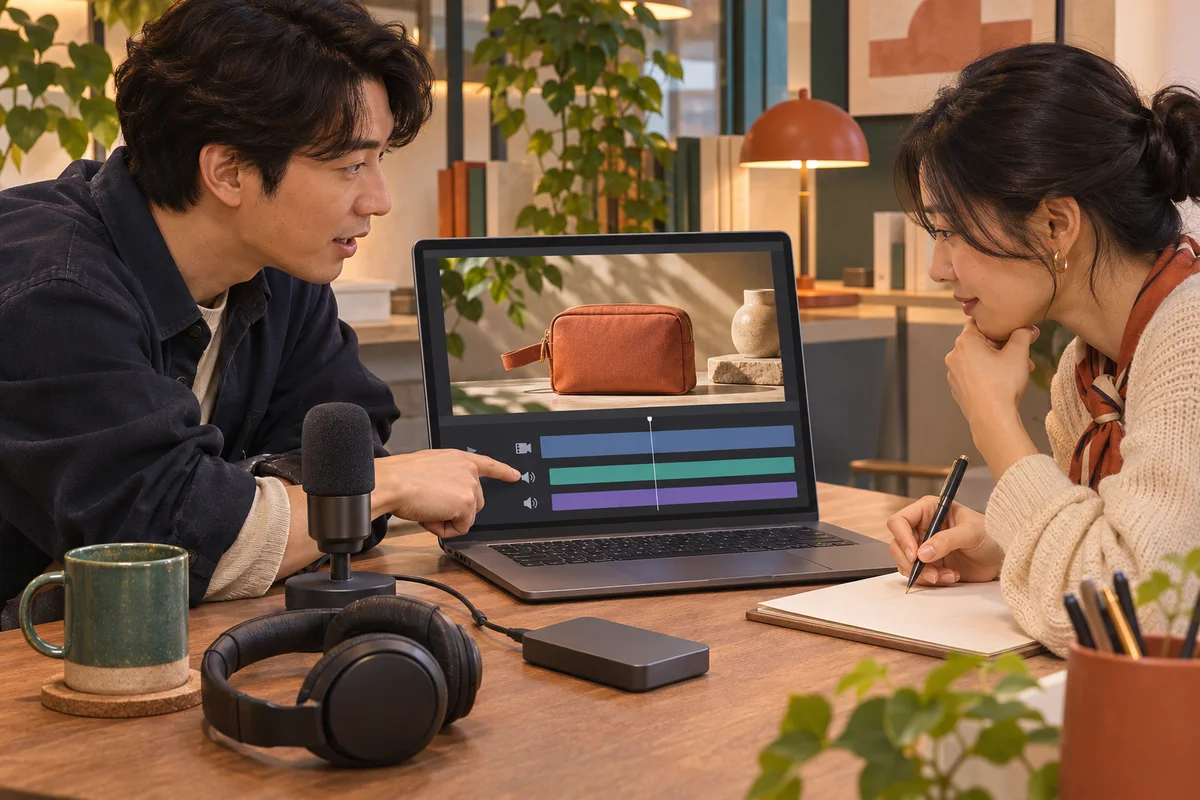
The most useful music decision arrives before the final cut. Tell the editor what is covered, which uses still need an answer and which alternative is ready if the preferred track cannot be cleared.
The recognizable song may be worth licensing when it is central to the campaign. A different track may be the better production choice when the video depends on a product demonstration, a clear voiceover or a result the viewer can see. Judge that creative trade-off after the rights review, with enough time to edit well.
Before the next creator shoot, add one line to the brief: “Please propose music against the agreed platforms, paid uses, territories and campaign dates, and include a clean version without music in the agreed deliverables.” Then assign someone to review the evidence before publication.
For the wider collaboration brief, see how to pitch Korean brands as an international creator.
Sources and further reading
- TikTok: About the Commercial Music Library Commercial use on TikTok.
- TikTok: How to use the Commercial Music Library Region and usable-placement checks.
- TikTok: Music copyright for TikTok One creator collaborations Updated October 2026. Track-specific rights and restrictions on reuse across platforms.
- U.S. Copyright Office: How Songwriters, Composers, and Performers Get Paid Pages 2 and 12 distinguish the composition, recording and audiovisual permissions. U.S. guidance, not a Korean legal opinion.
- YouTube: Creator Music eligibility and restrictions Rules for the Creator Music product specifically.
- YouTube: Common copyright myths Why credit, a purchase or a short excerpt does not establish campaign permission.
Sources checked November 7, 2026, KST. Recheck the applicable terms for the actual track, account and campaign. These sources do not clear a specific song.