A product page can call a cream “lightweight.” A customer testing it can tell you whether it still feels tacky after a minute. Those are different kinds of information. At Amore Seongsu’s original Beauty Library in Seoul, shoppers could learn the second kind for themselves before deciding what to buy. For a small retailer, the useful question is which part of the buying decision would get easier if you let customers try the product. [1]
About the flagship move: Amore announced November 29, 2026 as the original store’s last day and a planned reopening on Yeonmujang-gil in late January 2027. This case describes the original store; the new layout and reopening day are not confirmed here. [1]
What the Beauty Library let shoppers do
The original flagship occupied a former auto repair space in Seongsu. Amore described a private Cleansing Room where visitors could prepare their skin, a Beauty Library with more than 1,000 products to explore, and a Garden Lounge where they could try cosmetics at their own pace. The rooms gave different parts of a product trial their own space: getting ready, comparing options, and taking time to decide. [1]
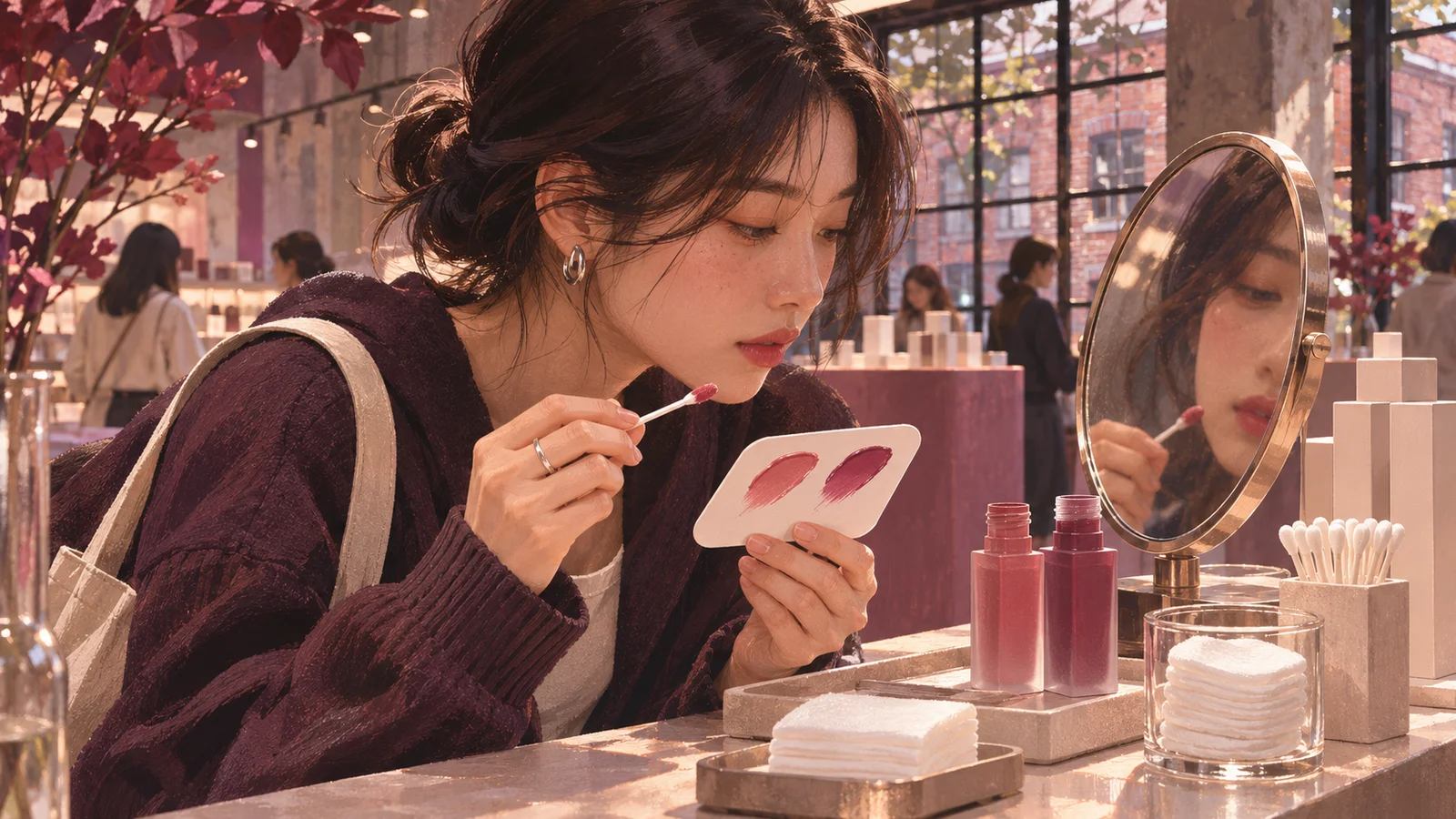
Imagine trying two lip colors. The shelf display can help you narrow them down, but it can’t show you which one feels more comfortable or how each shade looks against your own skin. An in-store trial gives you a way to find out. That’s the portable part of the Beauty Library’s design. A shop can offer two well-chosen testers and a mirror without building a whole room around them.
Why touching something can change a decision
It can make the product feel more like yours
In a 2009 paper, consumer researchers Joann Peck and Suzanne B. Shu found that touching an object could increase perceived ownership, the feeling that it’s already a little bit yours. How participants valued the object also depended on whether the experience of touching it was pleasant. A shopper can feel a stronger connection to something they’ve handled and still decide they don’t like how it feels. [2]
It can also answer a question the label can’t
In separate research, Peck and Terry L. Childers looked at how people use touch to judge products. They found that blocking access to touch can make some shoppers less sure of their judgments, particularly those who want to handle a product before buying it. The value of touch depends on what the customer needs to assess. You can read a bottle’s volume on the label; you might want to hold it to see whether you can open it one-handed. [3]
These are two distinct effects: feeling a sense of ownership and feeling better informed. Neither study measured the Beauty Library’s performance, and the store layout alone doesn’t tell us whether it increased sales. It does show what a retailer can do to make firsthand comparison possible.
Try it with one product and one customer question
Start with something customers already ask: “Which moisturizer feels less sticky?” is specific enough to test. “Which one is better?” usually isn’t.
- Choose two comparable options. At a small skincare counter, put out two textures in the same price range, using clean testers and separate single-use applicators. Keep the quantities, instructions, and setup consistent.
- Give the customer a fair comparison. Invite them to apply each to a different spot, wait one minute, and decide which feels less tacky. Don’t tell them what they should feel. If you’re observing several trials, alternate which product is tried first.
- Ask what the trial clarified. Try one neutral question: “Could you tell the difference, or are you still unsure?” Then ask which they would prefer and why. A shopper choosing neither may still tell you the demo helped them decide.
- Fix the confusing part first. If customers can tell the finishes apart but still don’t know which suits them, improve the comparison labels or staff explanation. If they can’t tell the difference in the demo, reconsider whether you picked a meaningful contrast.
For an online-only shop, try a close-up showing the two textures under the same light and a plain-language description of each finish. If touch is central to the decision, consider a small sample pair. Photos can help narrow the choice, but they can’t reproduce what a formula feels like on the skin. [3]
Amore gave shoppers room to find out what worked for them. A small brand can do the same with a simple comparison that answers one real question. If you’re deciding which parts of a product experience can be communicated visually, our IKEA Gangdong showroom case looks at a related problem: helping shoppers picture a product in use.
Sources
- Amore Seongsu: store relocation notice and original layout, Global Amore Mall.
- Joann Peck and Suzanne B. Shu, “The Effect of Mere Touch on Perceived Ownership”, Journal of Consumer Research, 2009.
- Joann Peck and Terry L. Childers, “To Have and to Hold: The Influence of Haptic Information on Product Judgments”, Journal of Marketing, 2003.
