Chocolate-covered sticks, a date that looks like the snack, and a small excuse to give someone a treat. Here is what November 11 means in Korea, and an easy way to take part.
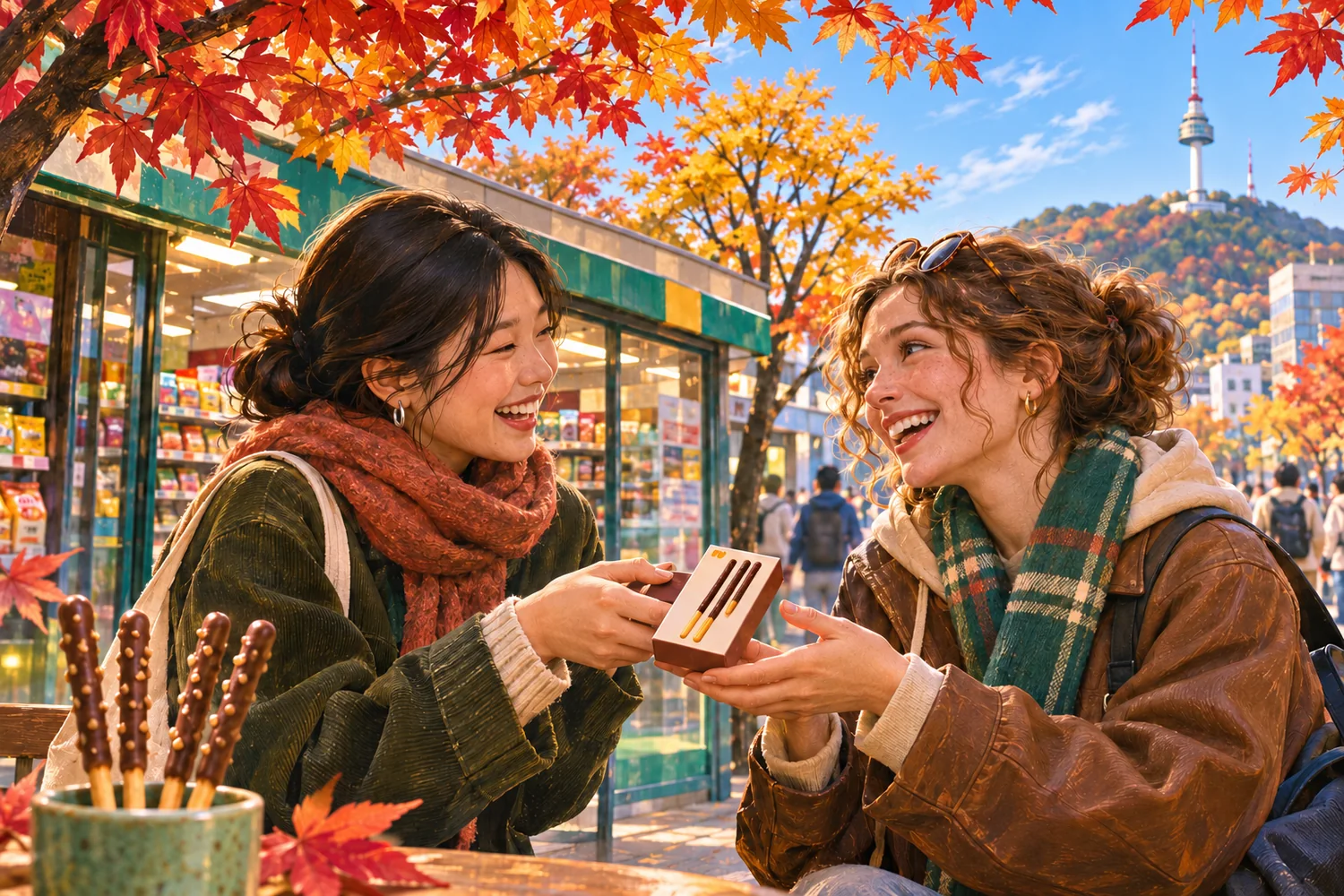
In early November, a quick stop for a drink can turn into a browse through towers of snack boxes and elaborate gift sets. The occasion is Pepero Day, when people give each other the long, chocolate-coated biscuit sticks sold under Lotte's Pepero brand.
It falls on November 11 every year, which is Wednesday in 2026. Written as 11/11, the date resembles four upright sticks. Couples exchange them, but so do friends and family. A box is not automatically a declaration of love. Korea.net's introduction to Pepero Day
For a visitor, joining in can be as simple as picking up a box for someone you are spending the day with. There is no need to build an itinerary around it.
Where the tradition came from
Pepero was launched in 1983. The familiar origin story places the gift exchange among schoolgirls in the Busan area in the 1990s, before it spread through retail promotions. Even early newspaper coverage presented that school story as a reported origin rather than a proven first event. Korea JoongAng Daily's 2004 account
Lotte's own later history says the precise beginning is uncertain. What is clear is the connection between the shape of the snack and the date, and the company's role in building a large annual campaign around it. Think of Pepero Day as a modern gift-giving custom with a substantial commercial side. Lotte's brand history
It is an unofficial occasion, not a public holiday. You do not need to plan for a national shutdown or a family ceremony.
What you will see in shops
Convenience stores are an easy place to start. Expect a choice between ordinary snack boxes and more elaborate bundles, whose higher price may reflect a bag, toy or other merchandise as well as the snack.
That distinction is particularly useful in 2026. This year's convenience-store campaigns include character collaborations and gifts packaged with practical accessories. The display may look like a wall of different snacks when some of the main differences are the packaging and extras. Current reporting on the 2026 store campaigns
Our suggestion: choose the person before choosing the box. For someone who just enjoys a sweet snack, a straightforward pack is enough. A collector may care more about the character on the package.
Check the actual contents and shelf price rather than judging value by the size of the outer box. Stock and promotions vary by branch, so a photo of a limited edition online does not mean your nearest shop has it.
Which Pepero should you try?
The choice is about texture as well as flavour. Some sticks have a smooth coating, others add nuts or cookie pieces, and one puts the chocolate inside the biscuit. These six varieties are a useful starting point:
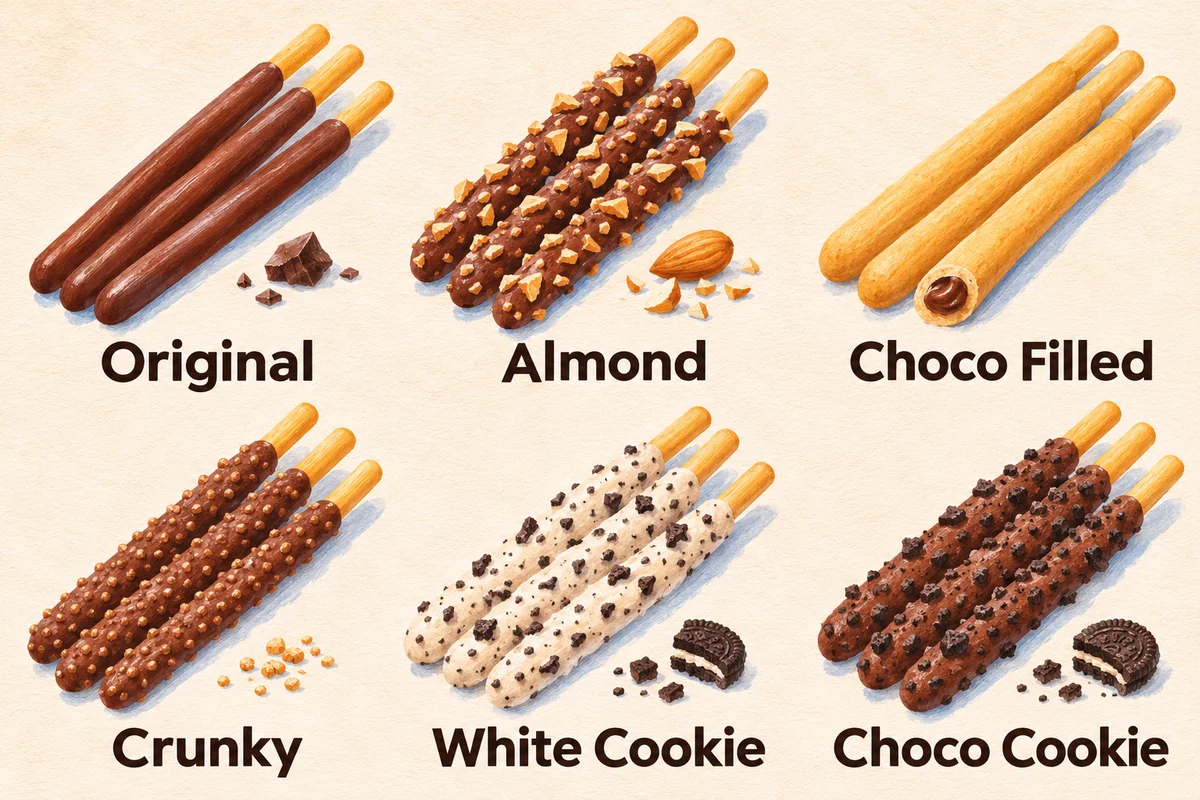
- Original / 초코 or 오리지널: the familiar biscuit stick with a smooth chocolate coating.
- Almond / 아몬드: chocolate coating with almond pieces for a nutty crunch.
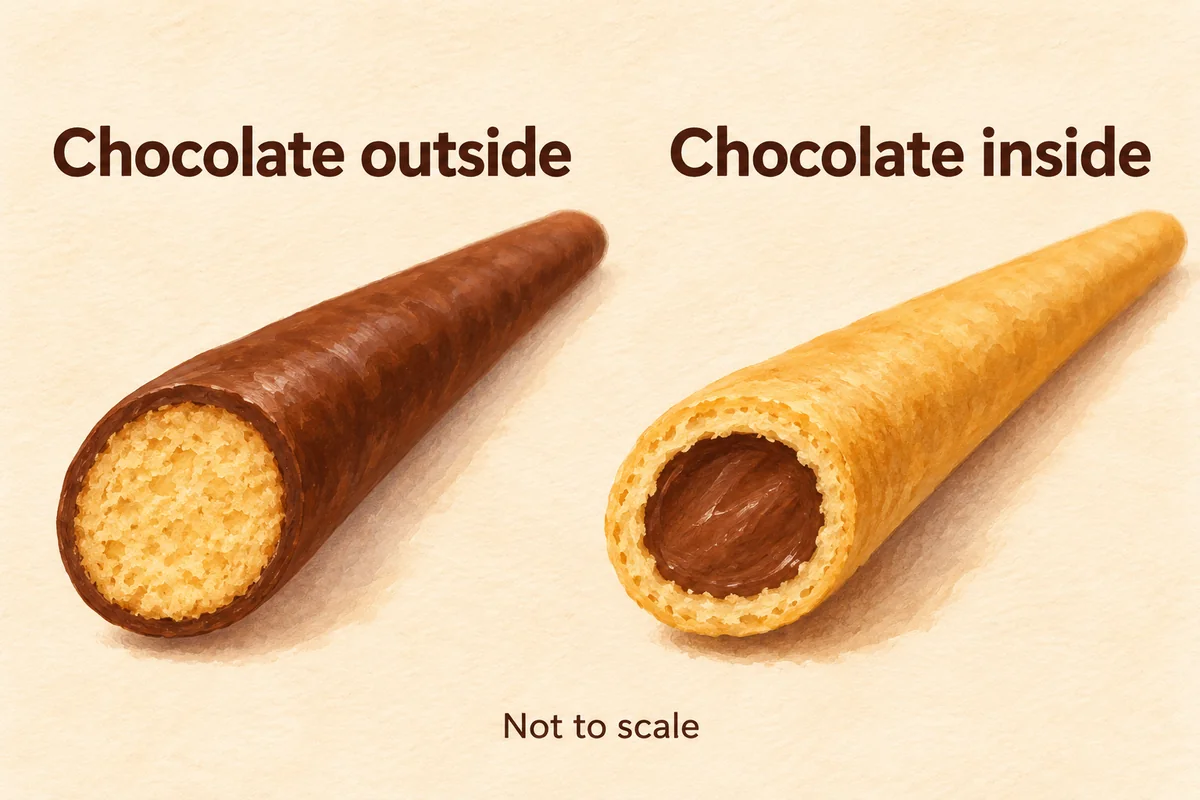
- Choco Filled / 초코필드: a biscuit shell with chocolate filling inside. You may also see it called “Nude” on English-language listings.
- Crunky / 크런키: a chocolate-coated version with small crunchy pieces, for a more textured bite.
- White Cookie / 화이트쿠키: a white coating dotted with dark cookie pieces.
- Choco Cookie / 초코쿠키: chocolate coating with dark cookie pieces.
These are the six varieties highlighted in Lotte’s Pepero brand guide. The Korean labels can help when a character design or seasonal sleeve makes the boxes harder to tell apart.
There are other options to explore. When we checked in November 2026, Lotte’s Korean shop also listed Strawberry and Double Rich Salty Vanilla. Treat them as things to look for, rather than a promise of what every branch will carry. A flavour pictured by an overseas seller or in an old promotion may not be part of the current Korean selection.
Is Pepero the same as Pocky?
If the shape looks familiar, you may be thinking of Pocky. Pocky is Glico’s biscuit-stick brand, first released in Japan in 1966; Pepero is Lotte’s brand. Both include chocolate-coated biscuit sticks, but they have their own product ranges. Check the brand and flavour on the box rather than treating the names as interchangeable. Glico’s introduction to Pocky
Japan also marks Pocky & Pretz Day on November 11, an occasion Glico established in 1999 around the shape of the snacks. It is a useful parallel to know, while the Korean custom discussed here is Pepero Day. Glico’s Pocky history
For a casual tasting with friends, compare the same kind first, such as each brand’s chocolate-coated version. Then try a topping or filling that interests you. Which you prefer is a matter of taste.
Giving Pepero without making it awkward
Keep the gesture close to the relationship you already have.
- For a friend or travel companion: offer a box with a short note or share it during a break.
- For a group: bring something people can share, after checking whether food is welcome in that setting.
- For a partner: choose a flavour they like. A larger gift is an option, not a requirement.
These are suggestions, not rules every Korean follows. If you are joining a class or workplace exchange, ask a friend or colleague what that group usually does.
You can simply say, “Happy Pepero Day!” A short Korean note could be 빼빼로데이라서 준비했어요, meaning “I got this for Pepero Day.” You do not need a formal greeting.
If someone gives you a box, thank them and enjoy the gesture without assuming a romantic message or rushing to buy an equally priced present. When the meaning matters, the relationship and conversation will tell you more than the snack.
Check the label before sharing
For food allergies or dietary restrictions, check the exact product rather than relying on the flavour name or an old online ingredient list. Keep the packaging with the gift so the recipient can read it too.
Ask before bringing homemade treats for someone whose requirements you do not know. If you cannot establish that a snack is suitable, a friendly note is a better choice than a guess.
November 11 also has a rice cake connection
The same date is Korea's Farmers' Day. It is also associated with Garaetteok Day, a campaign encouraging people to share and eat rice cakes made with Korean rice. The Rural Development Administration explains that Farmers' Day was established in 1996 and the rice-cake campaign followed in 2006. Official background from the Rural Development Administration
Garaetteok is the long, cylindrical white rice cake used in dishes including tteokguk and tteokbokki. It gives you another food connection to explore if chocolate sticks are not your thing. Korea.net's guide to the two food occasions
An easy way to take part
If you will be in Korea on November 11, keep it small: choose one person, check what they can eat, pick a snack and add a few words. Then carry on with your day.
You can enjoy the seasonal shop displays without buying anything, too. Understanding why the boxes are everywhere is already a little window into everyday life in Korea.
Sources checked November 5, 2026. Shop ranges, stock and promotions can change.
Sources and further reading
- Korea.net's introduction to Pepero Day
- Korea JoongAng Daily's 2004 account
- Lotte's brand history
- Current reporting on the 2026 store campaigns
- Official background from the Rural Development Administration
- Korea.net's guide to the two food occasions
- Lotte’s Pepero brand guide
- Lotte’s Korean shop
- Glico’s introduction to Pocky
- Glico’s Pocky history
Prepared with AI assistance, checked against the linked sources and independently reviewed by an AI reviewer. Publication decisions remain with PIN-AGENCY KOREA.