
You have found a tea house in Seoul, settled into a seat, and opened a menu full of unfamiliar names. The easiest place to start is with the flavor you already enjoy. Try yuja if you like citrus, omija if you like a tart fruit drink, or daechu if you want something gently sweet and richer. If you prefer a drink without added sweetness, ask for plain leaf tea.
That choice matters more than learning a long list of tea names. A Korean tea-house menu can include drinks made from fruit, berries and spices as well as tea leaves. A pot of green tea and a cup of citron tea can be very different orders, even though both are called cha (차).
Start with the flavor you want
Start with these five names. Recipes vary, so ask about the house version before ordering.
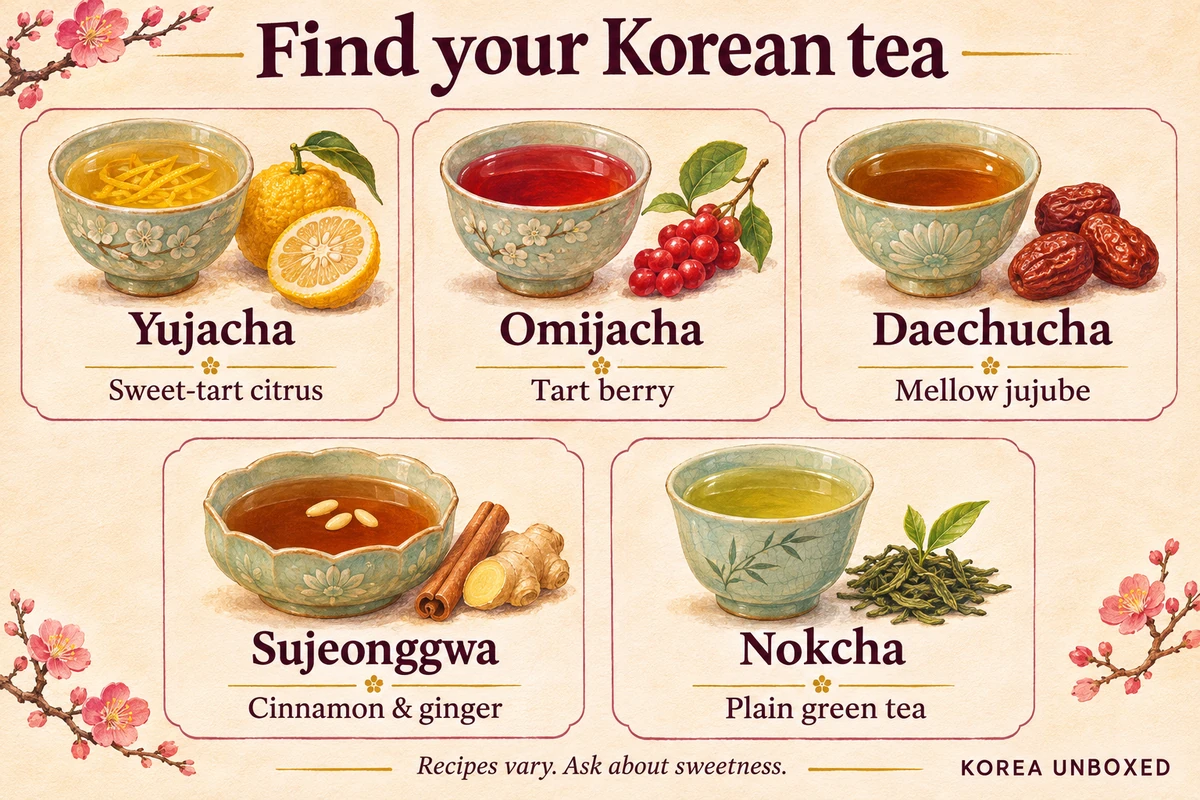
Yujacha (유자차): citrus and sweetness. Yuja is an aromatic citrus fruit. For yuja tea, the fruit is commonly preserved with sugar or honey, then mixed with water. Expect a fragrant drink with the sweet-tart appeal of a citrus preserve. Try it if you enjoy lemon-based drinks.
Omijacha (오미자차): a more tart fruit drink. Omija tea is made from omija berries, whose name refers to five flavors: sweet, sour, bitter, salty and spicy. Choose it when you want to explore a sharper fruit flavor, and ask how sweet the house version is.
Daechucha (대추차): jujube and gentle sweetness. Jujubes are small fruits often sold dried. Daechu tea is made by simmering them; some recipes include ginger or pear, and others use a concentrated preparation. If you would rather have a rounded fruit flavor than a tart one, this is a good starting point. Ask whether the version on the menu is thick or more lightly brewed.
Sujeonggwa (수정과): cinnamon and ginger. This traditional cinnamon punch is usually served cold, despite its warming spice flavors. It may come with dried persimmon, jujube or pine nuts. Choose it if cinnamon appeals to you.
Nokcha (녹차): green tea. If you want tea made from leaves rather than a sweet fruit preparation, look for green tea and confirm that you are ordering plain tea, not a latte or a sweetened blend. It can also be a useful choice alongside dessert. Green tea contains caffeine; “traditional tea” is not a caffeine-free category. The FDA's caffeine guide notes that the amount varies between products. If avoiding caffeine matters to you, ask about the actual drink rather than relying on its name.

The question that prevents an unexpectedly sweet order
Before asking for “less sugar,” find out whether the drink is already made from a sweetened base.
Yuja tea is the clearest example: the fruit preserve itself contains sugar or honey. A staff member might be able to use less preserve, but that also changes the citrus flavor. It does not necessarily make an unsweetened version possible.
Show this question on your phone:
설탕이나 꿀이 미리 들어가 있나요?
“Does it already contain sugar or honey?”
If you would prefer something without added sweetness, try:
달지 않은 차를 추천해 주세요.
“Please recommend a tea that isn't sweet.”
The same principle applies to ingredients. A fruit name alone does not tell you whether a drink contains honey, a leaf-tea blend or a garnish. If you have a dietary restriction or allergy, name the ingredient and have the staff confirm the preparation. A translated menu can help you start that conversation, but it cannot confirm what is in the cup.
Make a complete order in four steps
First, check the seating before settling in. Some tea houses use low tables and floor cushions, while others have chairs. If floor seating is uncomfortable, ask about an alternative before ordering. Follow the signs or staff's directions about shoes rather than assuming the same rule applies throughout the building.
Next, choose your drink and temperature. Some items have both hot and cold versions; others do not. Pointing to the Korean name is enough to identify the drink, then use 따뜻하게 주세요 for “Please make it hot” or 차갑게 주세요 for “Please make it cold.” The staff can tell you whether that option is available.
Third, ask what the order includes. A menu price might be for one cup, a pot, or a tea-and-dessert set. Check whether each guest needs to order a drink and whether sweets are included. You can ask:
차 한 잔 가격인가요, 세트 가격인가요?
“Is that the price for one cup of tea or for a set?”
1인 1음료 주문인가요?
“Does each person need to order a drink?”
Finally, if a pot, strainer or timer arrives, ask for a quick explanation. The staff's instructions for that tea are more useful than a generic brewing time. Confirm whether more hot water is included before treating it as a refill.
A simple order for two people
Imagine the following hypothetical scenario: two friends stop for tea after exploring Insadong. One likes citrus drinks; the other prefers something less sweet. Both want to try a small dessert.
A sensible starting order would be one yuja tea, one plain green tea and a dessert to share, if the menu and house policy allow it. They would confirm the tea's serving size and the dessert price before ordering. This gives each person a drink that suits their taste rather than asking both to share a single pot they may not enjoy equally.
If yakgwa is available, it is a useful dessert name to recognize. It is a fried Korean confection usually finished with honey or syrup. The Korea Tourism Organization's traditional dessert guide introduces yakgwa and other sweets you may encounter at cafés. Choose based on the actual menu.
Three central Seoul tea stops for different preferences
Choose a stop according to the setting and tea selection you want. Venue details below were checked against the linked official tourism or operator pages on November 4, 2026. Recheck the listing before setting out, particularly for a holiday or an evening visit. All times are Korea Standard Time.
Chamasineun Teul for a traditional-house tea break
Also written as Chatteul, Chamasineun Teul (차마시는뜰) in Bukchon serves traditional and fruit teas with snacks in a hanok, or traditional Korean house. Visit Seoul specifically describes its floor-table seating, making the seating style something to consider before choosing it.
- Address: 26 Bukchon-ro 11na-gil, Jongno-gu, Seoul, first floor.
- Listed hours: 10 AM–7 PM (10:00–19:00), last order 6:10 PM (18:10).
- Listed closures: Tuesdays and Chuseok.
- Planning note: Choose it when floor seating is part of the experience you want. If you need a chair or step-free access, confirm that before visiting.
See the Visit Seoul listing and map.
Find Chamasineun Teul: Google Maps (listed as Chaddeul) · Naver Maps.
Beautiful Tea Museum for a wider tea choice in Insadong
The Beautiful Tea Museum (아름다운차박물관) combines tea-related displays and ceramics with a tea shop in a hanok. Its selection includes teas from Korea and other countries. If your goal is specifically to try a Korean tea, ask which selections are Korean rather than assuming everything on the menu is.
- Address: 19-11 Insadong-gil, Jongno-gu, Seoul.
- Listed gallery hours: 11:30 AM–8 PM (11:30–20:00), open year-round.
- Planning note: Museum admission is free. Check the tea shop's current service hours and menu separately.
See the Visit Seoul listing and map.
Find Beautiful Tea Museum: Google Maps · Naver Maps.
Osulloc Bukchon for a modern tea lounge
Osulloc Tea House Bukchon (오설록 티하우스 북촌점) is a different kind of stop: a modern tea space in a remodeled house, with a tea lounge, tea-based drinks and desserts. The operator also lists a separate private tea-brewing experience, so distinguish an ordinary café visit from a reserved session.
- Address: 45 Bukchon-ro, Jongno-gu, Seoul.
- Listed hours: Monday–Thursday, 11 AM–8 PM (11:00–20:00); Friday–Sunday, 11 AM–9 PM (11:00–21:00).
- Planning note: Use the operator's page for the current menu and reservation options.
See the official Osulloc Bukchon page.
Find Osulloc Tea House Bukchon: Google Maps · Naver Maps.
Tea workshops in Seoul: learn to brew, taste, or serve
Want to try brewing tea yourself? These options offer guided participation. Book the specific class; an ordinary café visit does not include a lesson.
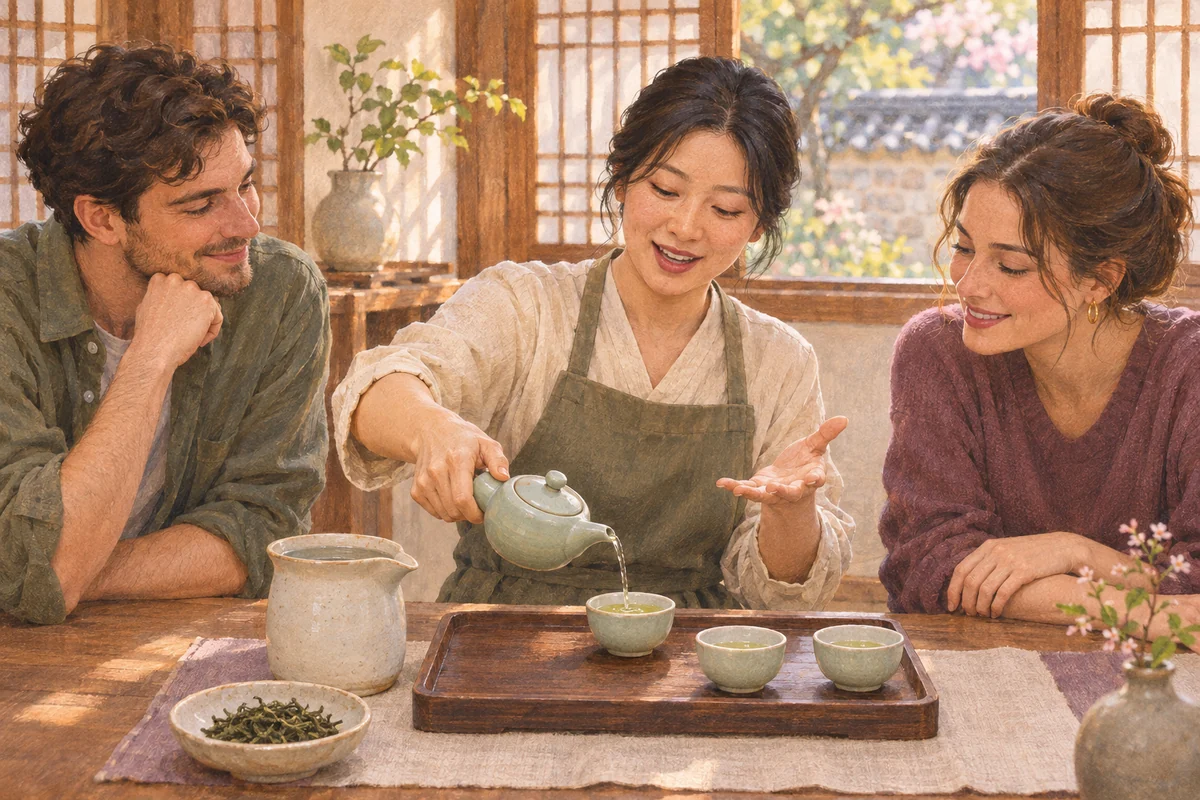
Cha Cha Tea Club: a relaxed introduction in Bukchon
Cha Cha combines a sommelier-led Korean tea tasting with traditional sweets, tea mocktails, and a chance to brew tea yourself. Its English-language experience takes place at the Bukchon Lounge, 103-7 Gyedong-gil. The operator’s class page links to an Airbnb experience that solo travelers can join, making this a useful starting point if you want a small-group introduction rather than a private event. Check your chosen session’s length and price when reserving.
Heesum Tea Room: hands-on brewing near Myeongdong
At Heesum, you can choose a loose-leaf tea ceremony or a session using malcha, a Korean powdered green tea. Both involve preparing tea yourself with guidance in English. The venue says floor sitting is not required, which may help if a low tea table would be uncomfortable. Find it in Unit 215 on the second floor of 25 Sogong-ro 3-gil, Jung-gu. Contact the venue directly through its booking inquiry form, then wait for confirmation before planning around the session. Heesum asks guests to arrive five minutes early.
Rakkojae: tea etiquette with a hanbok experience
If wearing hanbok, Korea’s traditional clothing, is also on your Seoul wish list, Rakkojae’s Hanbok Tea Class brings the two experiences together. The listed program includes hanbok rental, a guided introduction to the hanok, tea-brewing and etiquette instruction, and three seasonal teas paired with three traditional sweets. English is available. The Culture Lounge is at 16 Bukchon-ro 11ga-gil, but follow the meeting instructions in your confirmation. Guests must be at least eight years old, and the listing says children’s hanbok sizes are unavailable. Arrive on time: late arrivals do not receive extra session time.
Before paying, check the current price, session length, language, cancellation terms, and confirmed meeting point. Ask about food allergies, seating, and access needs in advance. These listings were checked on November 4, 2026; individual dates and seats still need confirmation.
Keep the visit easy
An ordinary tea stop does not require you to memorize a ceremony. Read the menu, follow the seating rules, and ask when you are unsure about the tea service.
Keep conversations and calls considerate of the room, and ask before photographing staff or other guests. If you are there to take pictures of the setting, order first and keep aisles and other tables clear. A tea house is easier to enjoy when the people around you can enjoy theirs too.
For help exploring nearby places and translating unfamiliar menu text, our Papago guide explains the app's translation tools and its separate Trend discovery feature. Use the Korean venue name and address when checking the exact place you intend to visit.
Key takeaways
- Choose by flavor: yuja for citrus, omija for a tart fruit drink, daechu for gentle fruit sweetness, and sujeonggwa for cinnamon and ginger.
- Ask for plain leaf tea if you do not want a sweet fruit preparation. Confirm caffeine and ingredients when those matter to you.
- A preserved-fruit base may already contain sugar or honey, so “less sugar” is not always a simple adjustment.
- Check seating, serving size, whether each guest needs a drink, and whether dessert or extra hot water is included.
- Pick one tea stop that fits the area you are already exploring. You do not need to turn a relaxing break into a tour of every tea house in Seoul.
Sources and further reading
Sources checked November 4, 2026. Venue details come from the linked listings; ordering suggestions are editorial guidance.
- Korea Tourism Organization: Citrus Tea, yuja preserve and preparation.
- Korea Tourism Organization: Omija Tea, berry ingredients and the meaning of its name.
- Korea Tourism Organization: Jujube Tea, daechu preparation and recipe variations.
- Korea Tourism Organization: Cinnamon Punch, sujeonggwa ingredients and usual cold service.
- FDA: Caffeine in Food and Drinks, caffeine in green tea and variation between products.
- Korea Tourism Organization: Traditional Korean Desserts, yakgwa and other traditional sweets.
- Visit Seoul: Chamasineun Teul, floor seating, address and listed hours.
- Visit Seoul: Beautiful Tea Museum, tea selection, admission, address and gallery hours.
- Osulloc: Bukchon Tea House, address, hours, tea spaces and reservation options.
- Cha Cha Tea Club: official class information. Program outline, Bukchon location, languages, and group-booking routes.
- Cha Cha Tea Club: operator-linked Airbnb experience. Booking product, English instruction, and hands-on brewing.
- Heesum Tea Room: official program guide. Loose-leaf and malcha sessions, seating, arrival guidance, and linked location.
- Heesum Tea Room: direct booking inquiry. Request a session and await the venue’s confirmation.
- Rakkojae Culture Lounge: Hanbok Tea Class booking page. Operator-branded booking listing, inclusions, language, age restrictions, and arrival policy.