For your first Korean soup, order Busan dwaeji-gukbap if you want a pork-and-rice meal, Naju gomtang if you like a clear beef broth, or Seoul-style seolleongtang if you want a milky beef broth you can season at the table. The three names tell you different things: gukbap describes how soup and rice are served, while gomtang and seolleongtang describe families of broth. Here’s what to expect, how each became a local specialty, and how to make a version at home.
Cover illustration, left to right: pork gukbap with rice, Naju-style gomtang, and seolleongtang. The bowls show typical differences, not a rule for broth color.
Pick your first bowl
Pick seolleongtang for a mild, milky beef broth, Naju-style gomtang for a clearer beef soup, or dwaeji-gukbap for a pork-and-rice meal. Taste the broth before adding the table seasonings.
| Look for | What to expect |
|---|---|
| 돼지국밥 Dwaeji-gukbap | Pork soup with rice. The rice may be in the soup or in a separate bowl. A good starting point in Busan. |
| 나주곰탕 Naju-style gomtang | Clearer beef broth with slices of meat. A useful option if you want a mild beef soup without the milky broth. |
| 설렁탕 Seolleongtang | Typically milky beef broth from long simmering, often with sliced beef. Season it to taste if salt and green onions are on the table. |
What the three words mean
Busan dwaeji-gukbap: a pork-and-rice meal
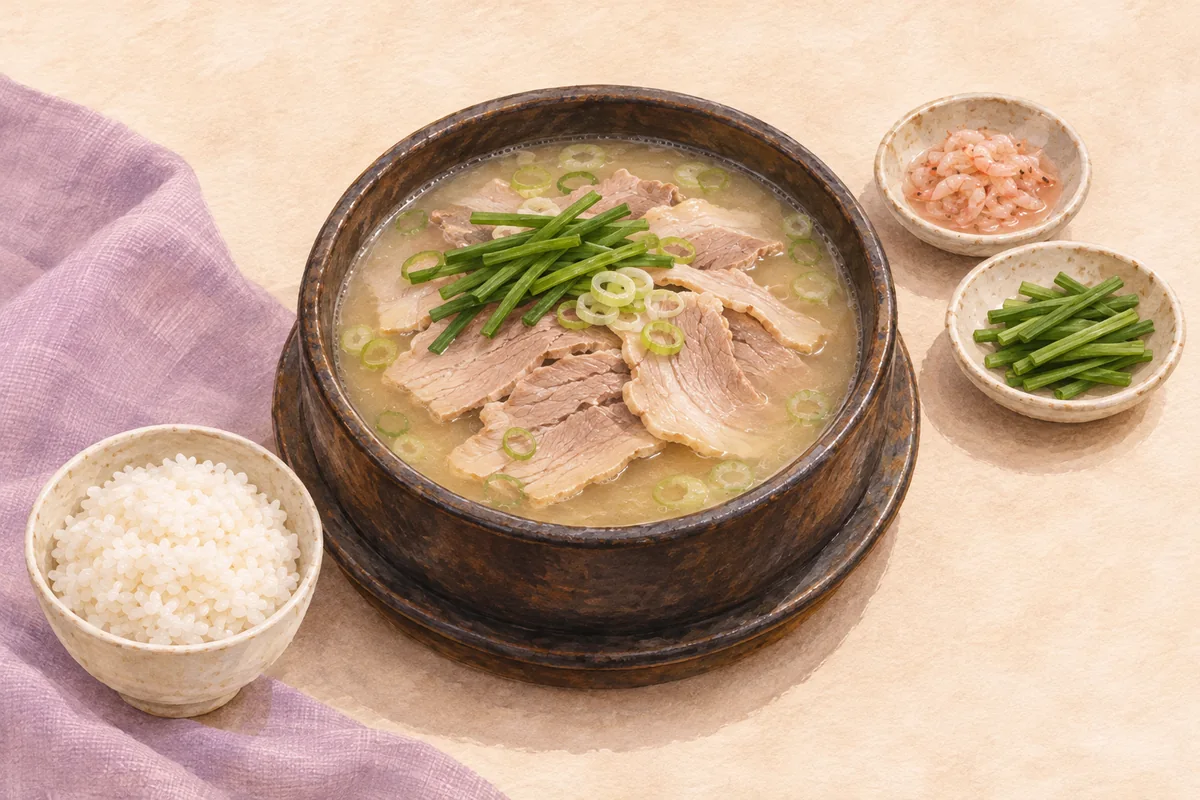
Guk is soup, bap is cooked rice, and dwaeji means pork. The Academy of Korean Studies traces gukbap to convenient market meals: hot soup and rice could be served together in a single bowl. Busan’s pork version can have a lighter stock made from pork meat or a richer stock made with bones. At some restaurants, ttaro-gukbap (따로국밥) means you get the rice separately.
How it became a Busan staple: VisitKorea recounts one origin story in which Korean War refugees made the soup in Busan with pork that was available at the time. Its longer Busan guide highlights a later shift: expanding pork production from the 1970s made pork and other cuts from processing plants cheaper and helped the dish spread. The wartime account is a story about its beginnings; the rise of inexpensive pork helps explain how it became an everyday meal.
When to eat it: Order it when you want a filling meal in one stop. It’s an everyday order at market stalls and dedicated soup shops; some Busan shops serve it around the clock. You may see a traditional technique called toryeom (토렴): hot stock is poured over the rice and drained off several times to warm the rice before the bowl is filled.
Naju gomtang: a clear beef broth from a market town
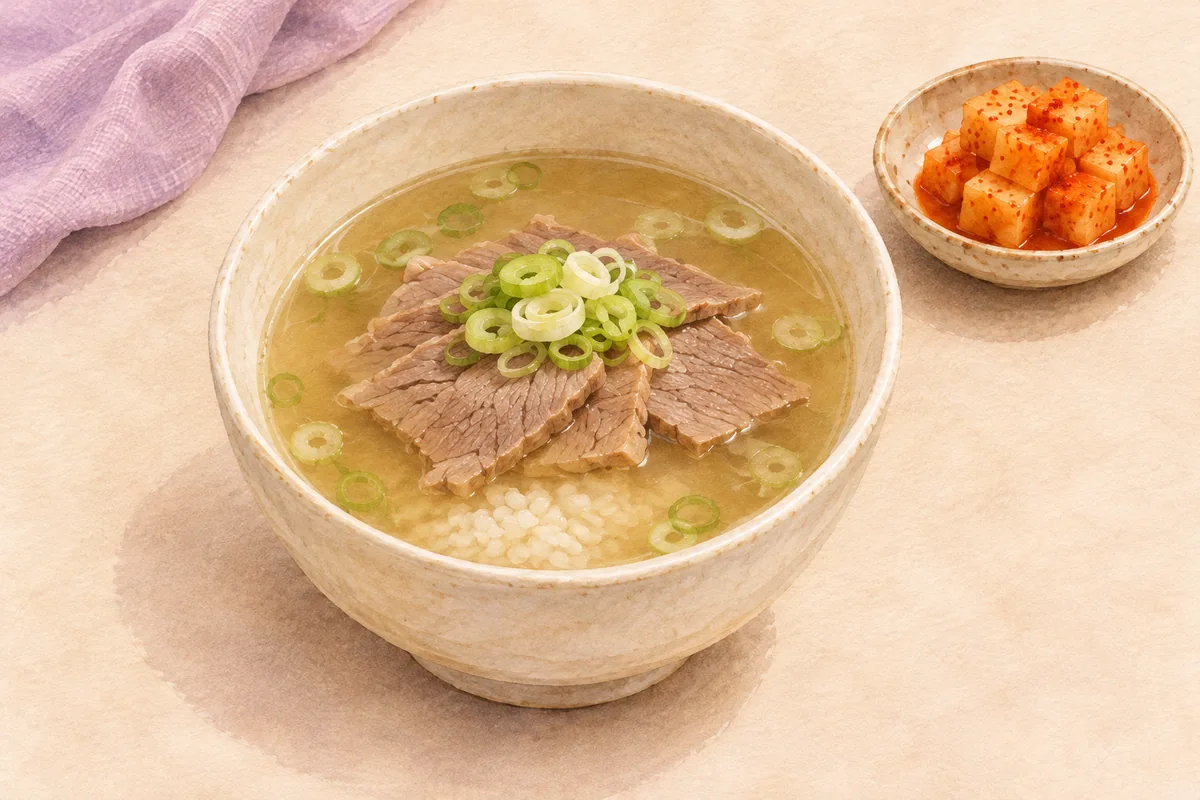
Gomtang is a broad family of long-cooked beef soups; meat, bones, and the resulting broth vary. Naju’s is the one to look for if you want a clear bowl. VisitKorea explains that brisket and shank, rather than bones, are the main ingredients in the regional stock. Rice often comes in the broth, so the bowl can also fit the description of gukbap.
How it became a Naju staple: The Korea Foundation ties it to Naju’s periodic markets, several of which claim the specialty. One long-running shop traces its beginnings to a market restaurant in 1910. That date comes from the shop’s history, rather than establishing when the soup was invented.
When to eat it: Think of it as a market meal that became a reason to visit Naju. Rice makes it filling, and the meat-based broth is a good choice when you want clear beef flavor. In Naju, the soup is an everyday restaurant dish as well as a regional specialty.
Seolleongtang: Seoul’s milky beef soup

The Academy of Korean Studies describes seolleongtang as a Seoul specialty made by cooking beef bones and cuts of beef for an extended time. As the pot boils, tiny droplets of fat and other material from the bones and meat disperse through the liquid, giving the soup its cloudy look. It doesn’t need milk. Depending on the shop, you may find noodles in the bowl as well as rice in the soup or on the side.
A royal-rite story, with an important distinction: One account links seolleongtang to royal farming rites at Seoul’s Seonnongdan altar, where the king ceremonially plowed a field. In the story, beef soup and rice fed participants after the rite. The Academy records other explanations, including a possible connection to Mongolian cooking, so the altar story shouldn’t be treated as a settled origin. The modern link is documented: Dongdaemun District’s 2026 Seonnong Daeje program listed a reenactment of the rite and a separate seolleongtang sharing event.
When to eat it: At a soup shop, seolleongtang is an everyday meal. It’s especially inviting when you want something hot and mild. A bowl may taste deliberately understated before you add salt and green onions, so try it as served before seasoning.
Taste first, then season
Try a spoonful of broth as served. At a seolleongtang shop, add a little salt, ground pepper or chopped green onion at a time if they’re available. With Busan pork gukbap, the small dish of saeujeot (새우젓) contains salted shrimp. It can season the soup quickly, so start with a little if you want it and can eat shrimp. Chili seasoning may also be served on the side. Kimchi and kkakdugi, cubed radish kimchi, are good between spoonfuls when they’re served.
If you avoid an ingredient, ask about both the broth and the toppings. Pale broth doesn’t tell you what went into it, and asking staff to leave out a topping doesn’t change a stock that has already been made.
Two Korean phrases you can show the server
- 맵지 않은 국물은 어떤 거예요? Which soup isn’t spicy?
- 밥은 따로 나오나요? Does the rice come separately?
If you’re ordering a bowl you already recognize, point to the menu and say 이거 하나 주세요. It means “One of these, please.” For help with other words on the menu, see our guide to reading Korean menus.
Three Korean soups to make at home
If you’re outside Korea and still want to try these dishes, here’s how to make all three at home. Start with the pork and rice soup for a hearty bowl, the Naju-style gomtang for a clear beef broth, or the seolleongtang shortcut when you only have 20 minutes. Each recipe makes two main-course bowls and uses 1½ cups cooked rice. Short-grain white rice is the closest fit, but use the rice you have. Start cooking it while the broth heats.
1. Busan-style pork gukbap
Allow about 1 hour 45 minutes to 2 hours. This home version gets its flavor from pork shoulder. Choose boneless shoulder with some marbling so the meat stays moist during the simmer. A small boneless pork butt works too.
Ingredients
- 1 lb (450 g) boneless pork shoulder
- 5 cups (1.2 L) water, plus more if needed
- ½ medium onion, peeled; 3 garlic cloves, peeled and lightly crushed
- 1½ cups cooked rice
- A small handful of garlic chives or 2 scallions, thinly sliced
- Salt, to taste; optional: saeujeot (salted shrimp) or gochugaru (Korean red pepper flakes)
Method
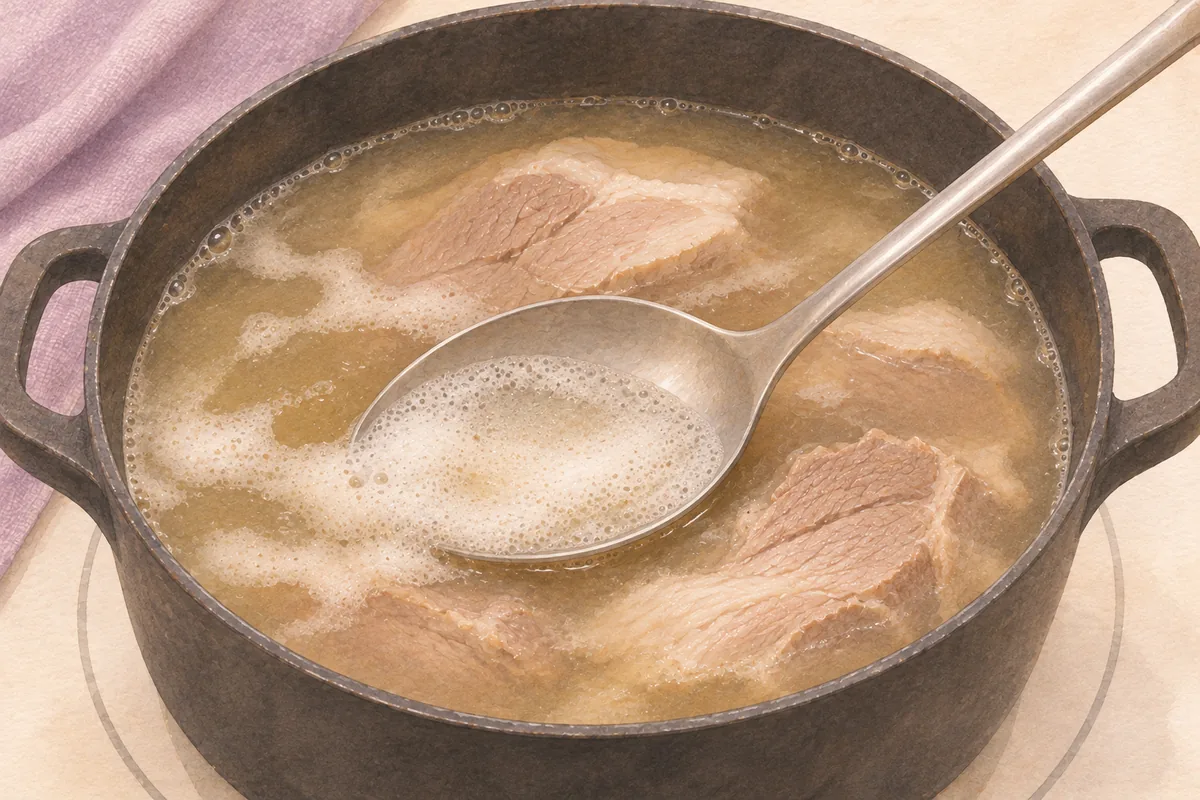
- Prep the pork and start the broth. Trim off any thick cap of fat, leaving the marbling. Cut the pork into two roughly equal pieces. Put them in a saucepan with the water, onion, and garlic. Choose a pot narrow enough for the water to cover the meat. Bring it just to a boil over medium-high heat, then use a shallow spoon to lift the gray foam from the surface and discard it.
- Simmer until fork-tender. Turn the heat down to a steady simmer: small bubbles should break the surface regularly, without the whole pot churning. Set the lid slightly ajar and cook for 75 to 90 minutes from the start of the simmer. Top up with a little hot water if the meat starts to stick out. Check the thickest piece with a fork. If it still resists, simmer another 10 to 15 minutes and check again.
- Slice the pork and adjust the broth. Rest the pork on a clean cutting board for at least 3 minutes. Find the lines running along the meat and cut across them into slices about ¼ inch (6 mm) thick. Strain out the onion and garlic. Aim for roughly 3 cups (710 mL) of broth: add a splash of hot water if it’s too concentrated, or simmer uncovered a little longer if it tastes weak. Salt lightly once it tastes right.
- Serve with rice and season at the table. Put the sliced pork in two bowls, ladle in the broth, and scatter the chives or scallions on top. Add rice to the bowl or serve it separately for ttaro-style gukbap. If using salted shrimp, taste first and stir in a little at a time. Skip the shrimp if you avoid shellfish; salt works on its own.
2. Naju-style clear-beef gomtang
Allow about 1 hour 45 minutes to 2 hours 15 minutes. This version uses beef brisket for the broth and the sliced topping. Boneless beef shank also works. It may need extra simmering time to become tender.
Ingredients
- 1 lb (450 g) beef brisket or boneless beef shank
- 5 cups (1.2 L) water, plus more if needed
- ½ medium onion, peeled; 2 garlic cloves, peeled and lightly crushed
- 1½ cups cooked rice
- 2 scallions, thinly sliced; salt and ground black pepper, to taste
Method
- Start with cool water. Cut the beef into two roughly equal pieces. Put them in a pot with the water, onion, and garlic. Heat until small bubbles start to rise, then skim the foam before it disperses. Lower the heat before the pot reaches a rolling boil.
- Keep the surface mostly still. Partially cover the pot and simmer for 90 to 120 minutes. Look for an occasional bubble breaking the surface. If the broth bubbles vigorously, turn the heat down. Add a little hot water when needed to keep most of the beef submerged. The beef is ready when a fork goes into the thickest part easily. Let it rest for at least 3 minutes and slice it across the grain.
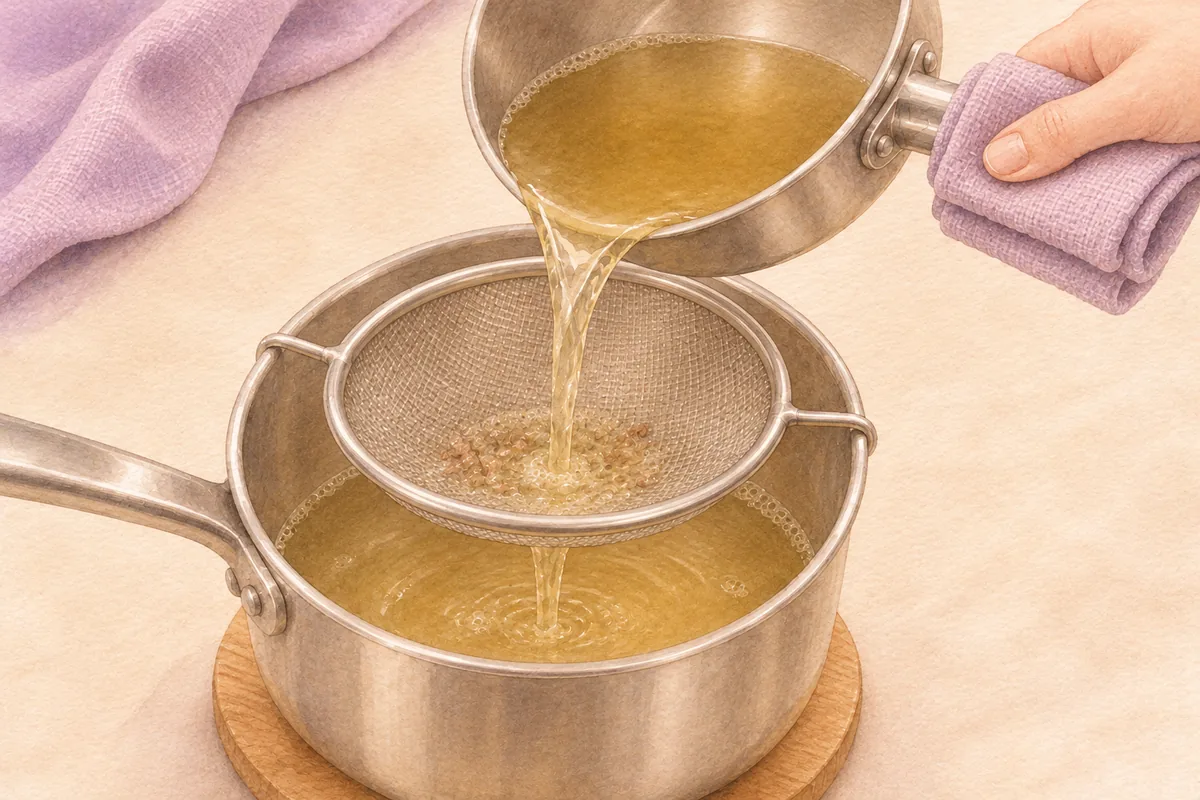
- Strain and season. Set a fine-mesh strainer over a heatproof bowl or clean pot. Pour or ladle the broth through it and discard the solids. Don’t squeeze them through the mesh. Aim for about 3 cups (710 mL). If you see a heavy slick of fat, skim some off with a spoon. A slightly cloudy batch will still taste good; keep the heat lower next time if you want a clearer broth.
- Ladle over hot rice. Return the broth to a simmer and season lightly with salt. Divide the cooked rice and sliced beef between two bowls. Pour the broth over both, then add scallions and black pepper.
3. Weeknight seolleongtang with prepared bone broth
Allow about 20 minutes. Look for plain Korean beef-bone stock labeled 사골육수 or 사골국물 at a Korean market or online. Choose an opaque, pale stock if you can; ordinary clear beef stock won’t give you the same milky broth. If you buy a concentrate, dilute it according to the package before measuring. Unsalted is easiest to season, but a salted one works if you taste it before adding anything.
Ingredients
- 3½ cups (825 mL) prepared Korean beef-bone stock
- 6 oz (170 g) beef sirloin, sliced thinly, or plain shaved beef
- 1½ cups cooked rice
- 2 scallions, thinly sliced; salt and ground black pepper, to taste
- Optional: kkakdugi (cubed radish kimchi), to serve
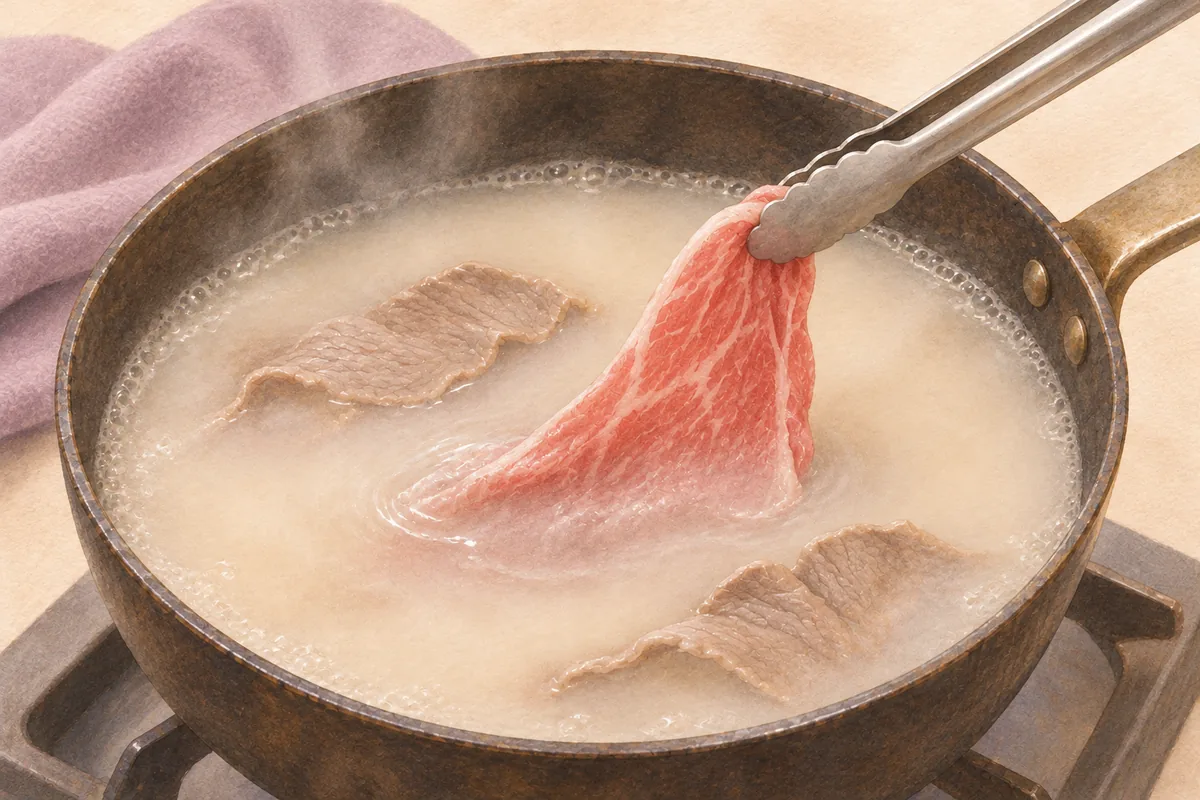
Method
- Cut thin slices. If you bought a whole steak, use a sharp knife to cut across the grain into slices about ⅛ inch (3 mm) thick. Korean barbecue or hot-pot beef is already thin enough. Separate the slices before they go in the pot. Use a clean board and utensils for your scallions and any other toppings.
- Simmer the beef in the broth. Bring the stock to a steady simmer over medium heat. Lower a few slices at a time into the liquid, giving them a gentle stir so they don’t clump. Return the broth to a simmer before adding more if the pot cools down. Cook until the beef reaches at least 145°F (63°C), typically 2 to 3 minutes after a batch returns to a simmer for very thin slices; thicker slices take longer. Turn off the heat and let the beef rest in the broth for at least 3 minutes before serving.
- Taste, then serve. Divide the beef and broth between two bowls. Serve with rice in the broth or on the side. Put out the scallions, black pepper, and salt so each person can adjust their bowl. If the stock already tastes salty, dilute it with a splash of hot water before serving.
For the long-cooked version: Korea.net’s traditional seolleongtang recipe uses beef bones and several cuts of beef. It starts with a short blanch and takes most of a day on the stove.
Cooking and leftovers: The USDA minimum for whole cuts of beef and pork is 145°F (63°C) with a 3-minute rest. For the long-cooked soups, keep going until a fork goes into the meat easily. Divide leftover soup into shallow containers and refrigerate within 2 hours, or within 1 hour above 90°F (32°C). Use refrigerated soup within 3 to 4 days or freeze it. When reheating, bring the soup to a boil.
Cool the rice separately. Chill cooked rice quickly, ideally within an hour, and use it within 24 hours if refrigerated. Reheat it only once, until steaming hot throughout.
Start with the broth you’re in the mood for: Busan-style dwaeji-gukbap for a hearty pork-and-rice bowl, Naju-style gomtang for clear beef broth, or seolleongtang for a mild, milky bowl. At a soup shop, taste the broth before you season it. At home, choose the recipe that fits your time, then set out the rice and seasonings so everyone can finish their own bowl.
Sources
- Academy of Korean Studies: Gukbap
- Academy of Korean Studies: Seolleongtang
- VisitKorea: Dwaeji-gukbap in Busan
- VisitKorea: Gomtang
- VisitKorea: Naju and its clear-broth gomtang
- VisitKorea: Pork and rice soup and the wartime origin story
- VisitKorea: How Naju gomtang gets its clear broth
- Korea Foundation’s Koreana: Dishes that grew out of Korea’s traditional markets
- Dongdaemun District: 2026 Seonnong Daeje program
- Korea.net: From-scratch seolleongtang recipe
- USDA Food Safety and Inspection Service: Handling leftovers
Sources checked November 19, 2026.