What feels rude in Korea can be hard to judge when you are still learning the local etiquette. This guide looks at everyday situations such as quiet interactions with strangers, personal questions and direct feedback, with suggestions for responding without assuming the worst.
Use these examples as context, not rules about every Korean person. An unfamiliar interaction may not mean what you first assume, but you can still ask for clarity, set a boundary or say that something made you uncomfortable.
Door-holding can feel less automatic
Door-holding habits vary by person and setting. A missed gesture is not enough to establish someone’s attitude toward you.
Hold the door when it helps someone and pay attention in a busy entrance.
A small courtesy is still welcome even when it is not mirrored every time.
Thanks may be expressed differently
You’ll still hear thank you in Korea, usually as “감사합니다” (gamsahamnida), but it’s used differently. It’s not repeated in every small interaction the way it often is in English-speaking cultures.
For example, when you order food, receive it, and leave, there might only be one thank you or sometimes none at all. The idea behind this is that politeness is already built into the way people speak and behave, so repeating it constantly isn’t necessary.
These small differences are easier to understand when you consider the relationship and setting.
Strangers don’t engage in small talk
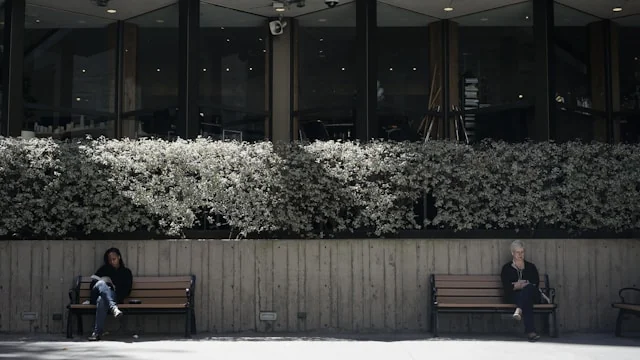
If you’re used to chatting with baristas, cashiers, or people in line, Korea can feel quiet.
Most interactions are direct and functional. You order, pay, receive your item, and move on. No one is trying to be unfriendly. There just isn’t an expectation to connect with strangers in those moments.
Some people are quiet with strangers and warm with friends. Others are outgoing from the start. Avoid treating one response as a national rule.
With that being said, however, don't think that Korean's won't engage in small talk if you do approach them.
You cannot know from a brief interaction whether someone is shy, busy, uncertain about the language or simply uninterested in talking.
Shared interests and repeated meetings make connection easier. A class or community group can be a gentler starting point than a random approach.
Personal questions come early
This is one of the biggest culture shocks. Someone you just met might ask your age, your job, or even your relationship status within minutes.
Questions about age or work may help someone choose a form of address, but can still feel personal. You can answer briefly or say you would rather not discuss it.
If someone asks your age, they’re usually trying to decide whether to speak casually or more formally. It’s less about curiosity and more about structure and not coming across as offensive.
People interrupt or talk over each other
Conversations in Korea can feel a bit chaotic if you’re not used to them. People might jump in while someone else is speaking or finish each other’s thoughts.
Overlapping conversation may be comfortable among close friends, but interruption can also be unwelcome. Follow the people in front of you and let them finish.
If you wait too long for a perfect pause, you might never speak. It’s more about finding your moment and stepping in.
For more examples of joining a conversation and noticing the people around you, read our guide to nunchi and reading the room.
Blunt feedback is normal
If you ask for an opinion, you might get a very direct answer.
Comments about appearance can feel intrusive even when presented casually. You do not have to agree with or welcome them.
A simple “I would rather not talk about my body” is a reasonable boundary.
Physical contact in public spaces
On crowded streets, in subways, or in elevators, people will bump into you without apologizing. Sometimes they’ll push past you to get through.
It can feel aggressive at first, especially if you’re used to people saying “excuse me” for even the smallest thing.
Crowding may explain an accidental bump; it does not make pushing or disregard for others acceptable.
Not giving up seats (unless it’s expected)

On public transportation, there are designated seats for elderly, pregnant, or injured passengers. Outside of those, people don’t always offer their seat, even if someone looks tired.
Pay attention to designated priority seating and people who need a seat. Courtesy does not depend on guessing someone’s exact age.
If someone clearly falls into a category that needs a seat, people usually respect that. Otherwise, it’s more ambiguous.
Hierarchy changes how people act
Korea has a strong sense of hierarchy based on age and position. This affects many aspects of social behavior from words to body language.
For example, someone younger might appear overly formal or reserved around someone older. In the opposite direction, an older person might speak more casually or even a bit bluntly.
Terms such as 언니 (eonni), 형 (hyeong), 오빠 (oppa) and 누나 (nuna) depend on the speaker, the older person and their relationship. Ask how someone prefers to be addressed rather than using a term with every stranger.
Age and workplace roles can affect forms of address and expectations, but experiences differ between groups.
Hierarchy does not make bullying or harassment acceptable. Seek appropriate support when behaviour crosses that line.
Learn the local conventions while keeping your boundaries and asking direct questions when needed.
Dating can feel more direct or more distant

Dating behavior can go in two directions that both feel unusual at first.
Expectations about messages and time together differ between couples. Discuss them rather than assigning one rule to all Korean relationships.
Also, questions like “Have you eaten?” or “What are you doing?” can function as casual check-ins rather than literal questions. They’re small ways of showing interest.
Frequent contact can be welcome to one person and overwhelming to another. Agree on what works for both of you.
There are many aspects of a relationship that Korean's celebrate, such as 100 days together, which we don't really consider in the USA.
Do not assume someone’s relationship intentions from nationality. Ask about expectations and look for consistency between words and actions.
Control, isolation or pressure should not be dismissed as cultural routine.
This is a big topic, so I'll write a separate blog to explore and explain it in the near future.
People won’t always say “no” directly
This is a big one.
Instead of a clear no, you might hear something like “we’ll see” or “maybe later.”
This isn’t meant to mislead you. It’s often a softer way of declining without creating discomfort. Direct refusal can sometimes feel too harsh, especially in certain social contexts.
Koreans, on average, tend to try to avoid direct confrontation and conflict.
Over time, you start to recognize these patterns and understand what they usually mean.
If replies stop, you may not know the reason. Respect the lack of response and avoid building a broad cultural explanation around it.
I would still prefer a direct NO.
Final Thought
Context can soften a misunderstanding. It does not require you to accept hurtful behaviour or abandon your own preferences.
Once you stop taking these things personally and start seeing the logic behind them, daily life in Korea feels a lot smoother.
Where to go next
If an unfamiliar word is causing confusion, our guide to familiar English words with different meanings in Korea explains examples such as “service” and “meeting.” For evenings out, read about Korean drinking customs and setting your own pace. The Korea Knowledge Catalogue brings the practical essentials together.