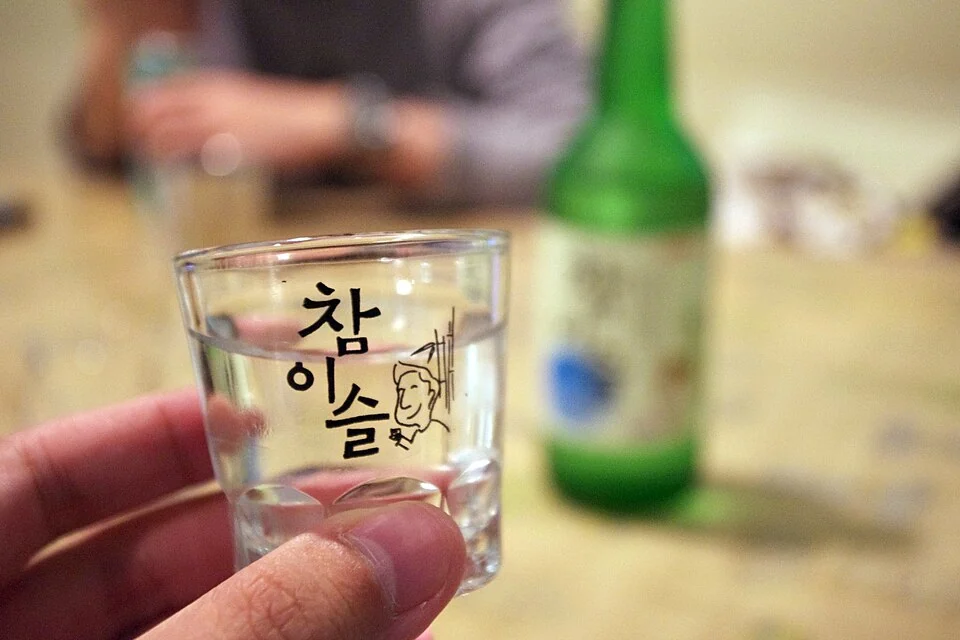
A first evening out in Korea can bring a few unfamiliar habits.
Not in a bad way, just different enough that you notice it.
A lot of it comes down to habits that people follow without really explaining them. If you don’t know what’s going on, it can feel a bit blunt or strange at first.
But most of it has a reason behind it. In this blog, we're going to cover some situations you might encounter when drinking with Koreans.
Someone pours your drink without asking
In some groups, people offer to pour for one another.
An empty glass may prompt an offer, but ask before refilling someone else’s drink.
Pouring for others can be a friendly gesture. It is not a rule that overrides anyone’s preference.
At first it can feel like someone is interrupting or overstepping, especially if you weren’t planning to drink more.
The gesture may be intended as care or inclusion, but the person receiving it decides whether to accept.
You can decline a refill directly, cover your glass briefly or ask for a non-alcoholic drink. You do not have to accept alcohol to be polite.
An empty glass may prompt another offer
Along with that, people tend to notice when your glass is empty.
If it stays that way for too long, someone will usually say something or just refill it.
Shared drinking can create pressure even when someone intends inclusion. Your choice about drinking still stands.
Say clearly when you do not want more. Leaving liquid in the glass is not the only option.
People might insist you have “just one more”
At some point, someone will probably tell you to have one more drink.
Sometimes more than once.
An invitation may be friendly, but repeated pressure after a refusal is still pressure.
A respectful group accepts your decision. You do not owe an explanation about health, medication, religion or personal preference.
Choose social settings that fit your preferences. Staying sober is a valid option for socialising and dating.
Drinking is rarely done without food
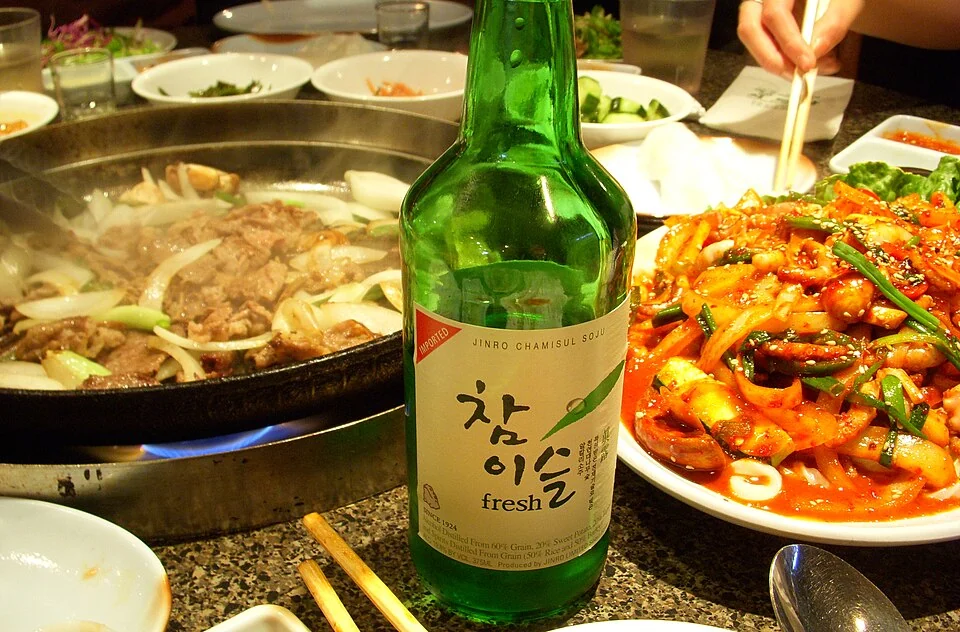
If you sit down to drink, there will almost always be food on the table.
Something like Anju (안주 - food intended to be consumed with alcohol) is expected, even if it’s just a simple dish.
Sometimes it's nuts, or a hot dish, or even dried squid.
Many pocha have minimum food orders. Ask about the actual venue’s requirements; the word alone does not establish every rule.
If you’re used to just ordering drinks on their own, this can feel unnecessary at first.
But it changes the pace completely. People eat, talk, drink, and stay longer. It keeps things from feeling rushed.
Bills don’t always split the way you expect
When it comes time to pay, it’s not always evenly split.
Sometimes one person covers a round, and someone else gets the next one somewhere else (Round Robin style).
Ask how the group wants to divide the bill before spending beyond your budget.
Splitting bills and taking turns both happen. The relationship and group’s preference matter more than a universal rule.
Taking turns does not always balance out. Clarify costs if the group changes or venues differ in price.
With my larger groups, we often split the bill. Ask staff what payment arrangement the venue can handle.
The night doesn’t end after one place
In a lot of places, you go out, have a few drinks, and call it a night.
In Korea, it’s common to move around.
You might start with food (and drinks), then go somewhere else for drinks (and food), then maybe one more place after that.
Koreans call it Round 1, 2, 3, etc. Usually, it won't go past round 5 unless you're with a really thirsty crowd.
If you’re expecting a clear endpoint, it can feel like things are dragging on. But for most people, that progression is the night.
Some groups finish with a soup such as haejangguk. Treat it as a meal, not a way to reverse intoxication or justify more alcohol.
You might feel like you can’t leave early
Depending on the group, leaving before everyone else can feel a little awkward.
Especially in work settings.
It’s not always explicitly said, but there can be a sense that you stay together until a certain point.
With friends, it’s usually more relaxed. But the feeling still shows up sometimes.
You can leave when you need to. A social custom does not create an obligation to keep drinking or stay out.
People don’t always say “cheers” the same way
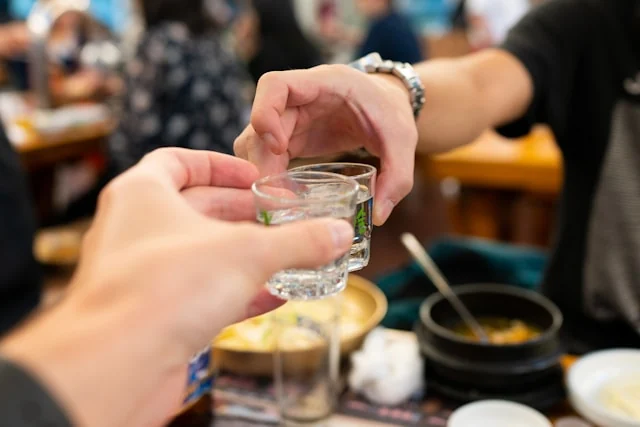
There’s no single, consistent “cheers” moment like you might expect.
Sometimes people say something, sometimes they don’t.
Instead, there are smaller gestures, like how you hold your glass or how you drink in certain situations, that carry more meaning.
It’s subtle, and easy to miss if you’re not looking for it.
건배 (Geonbae)
This is the standard one.
It’s the closest equivalent to “cheers” and works in almost any situation. Work dinners, casual nights out, mixed groups.
If you don’t know what to say, this is always safe.
짠 (Jjan)
This is the casual version, which you'll hear a lot more often with friends.
You’ll hear it more with friends, especially in relaxed settings. It’s short, easy, and usually said right when glasses clink.
Think of it as the informal default.
위하여 (Wihayeo)
This one is a bit more expressive.
It means something like “for [this moment / this occasion].” People use it when they want to add a bit more meaning to the toast.
You’ll hear it at team dinners, celebrations, or when someone wants to set the tone.
건승 (Geonseung)
More formal, and not as common in everyday casual settings.
It’s closer to wishing success or prosperity. You might hear it in business settings or more traditional gatherings.
원샷 (One Shot)
This isn’t really a “cheers,” but it shows up at the same moment.
It means “drink it all in one go.” Sometimes it’s said jokingly, sometimes not.
You’ll hear it a lot in louder, more energetic groups.
Some groups cheer a one-shot invitation, but you can join the toast without finishing the drink.
Declining does not make you a bad guest. Choose your own pace or avoid alcohol entirely.
소맥 한잔? (Somaek Hanjan?)
Not exactly a cheers, but worth knowing.
This is more like “shall we have a drink?” specifically referring to a soju + beer mix.
It often leads into a toast right after.
Conclusion
Some unfamiliar gestures have a friendly intention. Others may still cross a boundary.
Understanding the custom helps you respond clearly without feeling obliged to participate.
The best shared evening leaves everyone comfortable with what they drank, spent and agreed to.
Where to go next
Plan the rest of the evening with the nightlife guide and getting home by taxi. For shared dishes, see ordering food. The Korea Knowledge Catalogue brings the practical essentials together.